

Four years after the European Union launched a plan to break its dependence on Russian oil and gas and accelerate the clean energy transition, an audit presented by the European Court of Auditors (ECA) on Wednesday said the bloc’s plan is falling well short of its ambitions.
ADVERTISEMENT

ADVERTISEMENT
Russian oil imports have plunged following EU sanctions and gas imports have declined, the ECA auditors noted, but they urge caution against attributing all of that progress to REPowerEU, the plan launched by the European Commission in 2022 to achieve energy sovereignty and end all dependence on Moscow.
“In our view, other factors also contributed to lower gas consumption – and consequently imports – which are not causally linked to the REPowerEU plan. These include mild winters, as well as reduced consumption by households and businesses in response to high energy prices,” reads the ECA report.
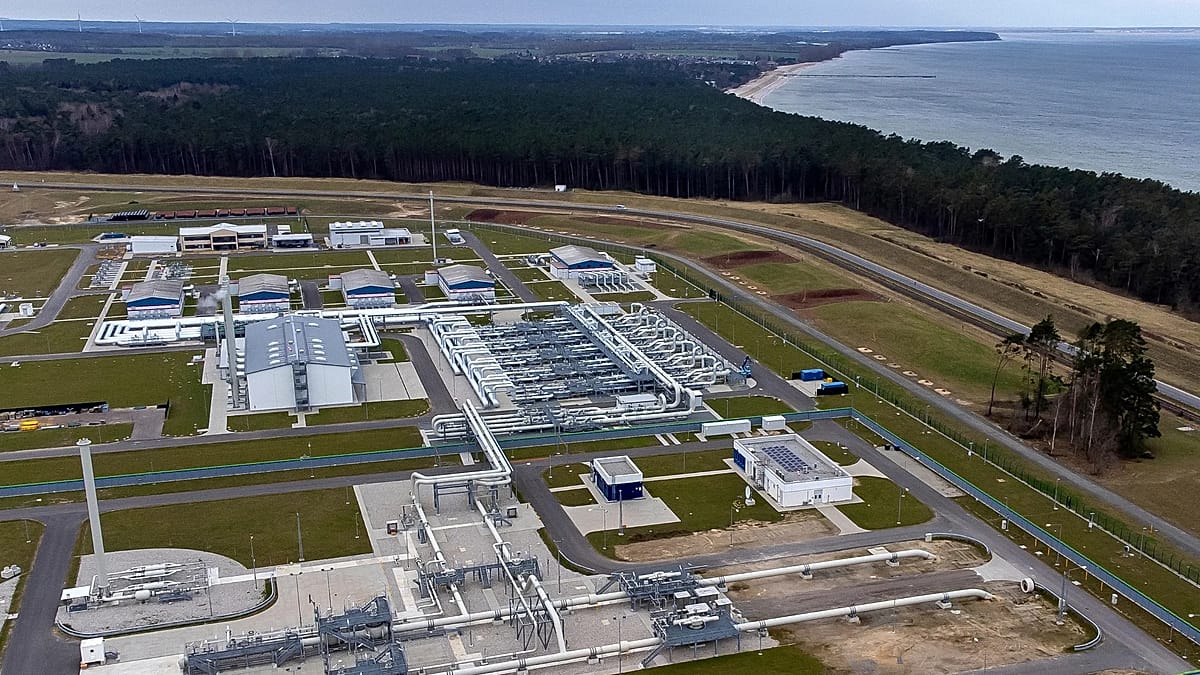
The 2022 Nord Stream pipeline sabotage, which disrupted a major route for Russian gas to Europe, further accelerated the EU’s push to diversify away from Russian energy and exposed the vulnerability of Europe’s fossil-fuel infrastructure.
Commenting on the ECA report, a Commission spokesperson argued that the REPowerEU “contributed to a drastic reduction of EU imports of Russian natural gas, falling from 152 billion cubic metres in 2021 to 36 billion cubic metres in 2025, reducing the share of Russian gas imports from 45% to 12%”.
While the Commission allowed some exceptions to the Russian ban, a complete phase-out of Russian LNG imports takes effect on 1 January 2027, and for Russian pipeline gas in September 2027.
Clean power and grids
The ECA also flagged insufficient renewable energy capacity, which the report describes as “negligible” compared with the Commission’s 103GW goal, and grid infrastructure, particularly cross-border electricity connections, as the plan’s most striking weakness.
While the EU added more than 200 GW of solar and wind capacity between 2022 and 2024, the ECA auditors said the renewable capacity directly generated by REPowerEU measures was negligible against the 103GW target.
The report warns that the EU risks replacing one form of energy dependence with another by moving away from Russian fossil fuels without building clean domestic generation and the grids needed to support it.
The Commission and several EU countries, such as Portugal and Spain, have consistently flagged the latter as a major hurdle to establishing a fully integrated energy system across the bloc.
Several critics argue that without progress on that front, the EU won’t reach its climate and energy goals, and that pouring money into clean energy could lead to curtailment, shutting down electricity generation and driving negative prices – the EU’s true energy conundrum.
The ECA audit comes as a blow to Brussels, which seized Russia’s invasion of Ukraine to ditch reliance on cheap imported fossil fuels from Moscow, the EU’s top supplier until 2022, and accelerate the bloc’s Green Deal, its flagship plan for energy and climate transition, to become climate neutral by 2050.
“Four years after its launch, REPowerEU has stalled, even though several hundred billion euros have been made available”, said Mihails Kozlovs, the ECA auditor leading the report.
“We must learn the right lessons now, as the new geopolitical tensions and their impact on energy markets underscore the need to accelerate diversification and prevent future over-reliance on a single supplier.”
No money, no EU energy integration
As is often the case in Brussels, the biggest hurdle to an integrated European energy system is a lack of funding.
The EU auditors found that EU countries have committed just €54.3 billion of the €300 billion in additional funding made available through the EU recovery fund – less than one-fifth of the investment initially deemed necessary to meet the plan’s goals.
“Informal replies sometimes say that it is cheaper for member states to borrow and get loans. There’s also an administrative burden attached – there are issues between grants and loans since grants do not count toward national debt and member states are reluctant to commit to this,” Stefano Sturaro, an EU auditor, told reporters on Wednesday.
However, the Commission spokesperson defended the funding, saying it played a “pivotal role” in accelerating implementation of the REPowerEU priorities.
National energy and climate plans were supposed to translate REPowerEU into concrete action, EU auditors warned, but EU countries included few or no specific measures or targets to advance their clean energy goals.
For the EU auditors, Brussels has excelled at promoting energy independence more than financing and building the infrastructure required to sustain it.
However, with a clear investment gap in sight, the Commission’s plan now depends on whether EU countries are willing and able to pay for it.
The next political battleground is underway as EU co-legislators, the European Parliament and the Council, gear up to lock negotiations on the future of the bloc’s power grids by the end of the year.