
Blue whiting, mackerel and golden redfish could prove more decisive at the ballot box than US President Donald Trump’s expansionist ambitions, Russia’s looming threats or European politicians’ sweet nothings.
ADVERTISEMENT

ADVERTISEMENT
In Iceland, where the sea shapes the economy, livelihoods and national identity, the most significant crossroads of the last decade ultimately comes down to one thing: fish.
On 29 August, Icelanders will vote on whether to resume negotiations to join the European Union, restarting a process that was frozen in 2013. If voters approve, negotiations with Brussels will kick off again – with the prospect of joining the EU sooner than other countries on the waiting list.
At first glance, the geopolitical timing seems obvious. The United States’ renewed interest in Greenland, combined with the long war in Ukraine, has pushed the Arctic higher on Europe’s strategic agenda, while Icelanders appear increasingly caught between two great powers.
Yet beneath the headlines, the campaign tells a different story. This referendum is being fought over economics, sovereignty and, above all, control of Iceland’s fishing grounds, according to Eirikur Bergmann, politics professor at Bifröst University and one of the country’s best-known political writers.
“Icelanders are split in half,” he said, arguing that public debate still centres, as it always has, on the benefits of adopting the euro and the risks facing the fishing industry.
Fishermen’s concerns are Iceland’s concerns
While fishing’s share of Iceland’s GDP is declining, it still accounted for about 8% in 2024. It remains one of the country’s largest export industries and the backbone of many coastal communities.
This isn’t the first time Icelanders have fought over the sea: during the three “Cod Wars” between 1958 and 1976, Reykjavík successfully defended its maritime claims against the United Kingdom.
Today, the threat comes from the EU’s Common Fisheries Policy (CFP), which manages fishing resources among member states. The “shared fish stocks” that fall under the jurisdiction of more than one state, with a division of catch quotas, are the biggest concern for the Icelandic fishing industry, prompting exemptions or special arrangements if the country joins the EU.
Iceland’s fishing industry is indeed built around one of the world’s most sophisticated quota systems. It sets scientifically based catch limits and allocates fishing rights to each vessel, with quotas that can also be traded.
For fishermen in coastal towns such as Ísafjörður or Vestmannaeyjar, local media report that the question is not only how much fish Iceland can catch, but also who should have the right to decide who catches it.
As Foreign Minister Þorgerður Katrín Gunnarsdóttir said in a recent interview, fisheries and agriculture are likely to become the toughest chapters in any renewed accession talks.
Like fishermen, Iceland’s farmers also operate under one of Europe’s most protected agricultural systems, supported by public subsidies designed to compensate for the country’s harsh climate and small domestic market.
For them, the feared acronym is CAP (Common Agricultural Policy), the EU agriculture overhaul which distributes subsidies according to common rules and could disrupt the entire domestic system.
Supporters of EU integration are also betting on economic advantages for their campaign.
The biggest is the eventual adoption of the euro. This would eliminate exchange-rate volatility caused by the Icelandic krona, bringing down inflation, interest rates and the cost of international trade, as highlighted in a recent report from the Organisation for Economic Co-operation and Development (OECD).
A referendum born by chance
This renewed interest in Europe is not a response to Trump’s repeated statements about Greenland and expansion ambitions in the Arctic region.
While the United States has long been Iceland’s principal security guarantor through NATO and cooperation with the EU becomes more attractive if Washington becomes less predictable, the security issue has neither shaped domestic politics nor is it dominating the discussion on the referendum.
“I wouldn’t say that has properly filtered into the debate yet,” Bergmann said, arguing that the country decided to hold the referendum after the 2024 election.
“This is prior to the second term of Donald Trump and prior to these geopolitical changes. The security defence issue was not a part of that decision,” he said.
The referendum is the consequence of a change in government rather than a dramatic shift in public opinion.
A Eurosceptic coalition came to power in 2013, suspending negotiations and later withdrawing Iceland’s application altogether, without consulting the electorate. The pendulum swung back in 2024, and a coalition of pro-European parties pledged to let Icelanders decide whether negotiations should resume.
“The only reason Iceland is moving ahead now is that we have a change in government. But the EU question had nothing to do with these parties coming to power,” Bergmann said.
He believes this explains why opinion polls remain finely balanced, with Icelanders revisiting a question that has divided the country since the early 2000s.
Trump and Russian President Vladimir Putin may have reminded Iceland that the international order is changing, but voters entering polling stations are likely to think less about Greenland or Russia’s ambitions in the Arctic than about domestic economic concerns.
A clear path to the EU
While Icelanders remain divided over whether negotiations should even resume, Iceland would probably face a smoother accession process than many candidate countries in the Western Balkans or Eastern Europe.
Iceland is already deeply integrated into Europe: it’s a member of the single market through the European Economic Area (EEA), and enjoys free movement of people, goods, services and capital within the Schengen area.
Negotiations would not start from scratch, but would be built on the results of the previous agreements.
By the time Iceland withdrew its application in 2013, 27 negotiating chapters had been opened, 11 of which had been provisionally closed.
If negotiations resume, the European Commission will first need to assess the legislative changes that have taken place in Iceland over the past decade before discussions can formally restart.
“Beyond the technicalities, it is clear that Iceland would be going into the negotiations one step ahead, compared to another candidate country,” an EU official told Euronews.
The Nordic country is also largely aligned with the EU on democratic standards, according to Valérie Hayer, leader of the liberal Renew Europe group in the European Parliament and one of the staunchest supporters of Iceland’s accession.
“It is already a highly capable democratic partner (which) shares common values and (which) already plays a pivotal role in North Atlantic security,” she said, claiming that adding Reykjavík would reinforce the EU’s geopolitical reach.
European politicians and EU officials stressed that Iceland has nothing to lose in EU membership talks and that joining the Union poses no threat to the Icelandic language: it would enjoy the same official status as other EU languages, despite being spoken by fewer than 400,000 people.
Even so, for many Icelanders, the referendum on Europe raises deeper questions of identity. Some fear joining a supranational institution would result in a gradual erosion of Iceland’s political autonomy, a particularly sensitive issue for a country that achieved full independence from Denmark in the 20th century.
The future of Iceland’s relationship with Europe may ultimately depend on emotional considerations, another EU official familiar with the matter told Euronews.
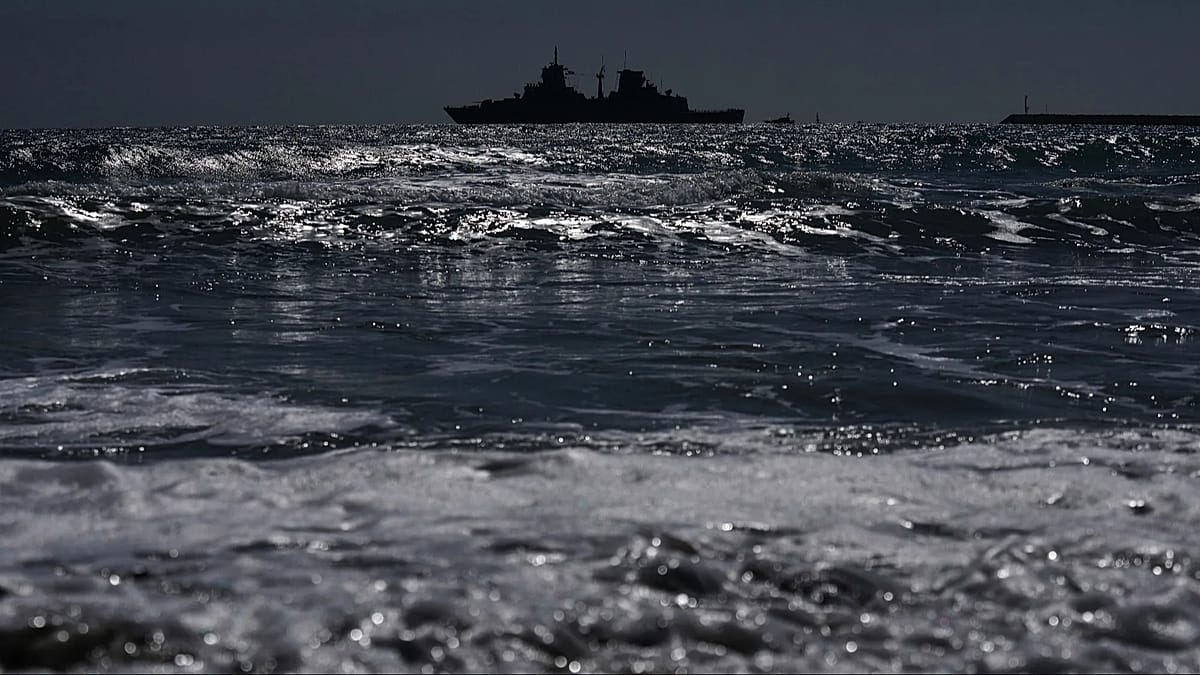
“Voting will take place on the mainland, but people will vote looking at the sea.”