




Published on
The boa constrictor, which can grow to more than 3 metres in length, actually lives in South America, where it is found from Colombia to Argentina.
ADVERTISEMENT

ADVERTISEMENT
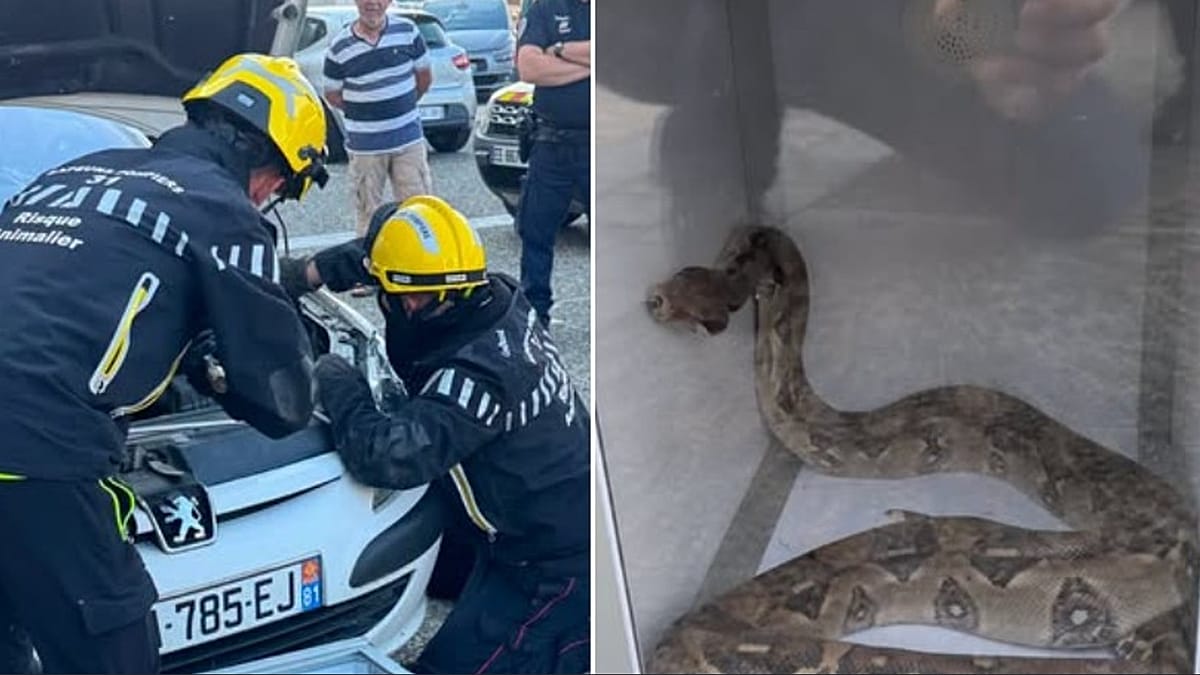
So a motorist in Colomiers, a suburb of Toulouse in France, got quite a shock when he discovered a 1.5-metre-long snake of this species under his car bonnet. The discovery was made when the driver was about to change the battery of the car, which had not been driven for a month, according to the Haute-Garonne fire brigade’s Facebook page.
Five firefighters, two of them from the RAN (Animal rescue firefighter) specialist unit for incidents involving animals, managed to carefully transfer the boa from the car’s engine compartment into a glass container.
The fire brigade also shared the operation on social media in an effort to find out where the constrictor came from. The animal was handed over to a local veterinary school.
Boa constrictors like warm conditions. France’s successive recent heatwaves are therefore likely to have made it easier for escaped exotic boas to survive in the wild.
Rescue services also stress that keeping snakes in France is subject to strict rules that must be followed.
A few days after the car bonnet boa incident, animal experts from the Toulouse fire brigade were called out to Montesquieu-Volvestre, where another 1-metre-long boa had escaped from a vivarium.
Is the boa constrictor dangerous to humans?
A few years ago an American woman had to call the emergency services after her pet boa constrictor latched on to her face.
Normally, boas, which feed mainly on insects, spiders and smaller animals such as lizards, do not pose a danger to adult humans. This species of snake has no venomous fangs. A bite can be painful, but above all the boa constrictor, as its name suggests, kills its prey by swiftly coiling its body around it and constricting it to death.
Constrictor snakes are among the protected vertebrates and fall under the Washington CITES agreement (Convention on International Trade in Endangered Species of Wild Fauna and Flora). In addition, the European Union has further legal provisions that must be complied with when buying, keeping and breeding boas.