When students from a school in Créteil, in the southeastern suburbs of Paris, joined their teachers in protest to call for more resources and staff, they could not have predicted that their action would trigger a nationwide movement.
ADVERTISEMENT

ADVERTISEMENT
The campaign began on 17 September and quickly gained momentum after videos of the protests spread across social media, prompting students across France to join the call for government action to address overcrowded classrooms, teacher absences, outdated facilities and other grievances.
More than two weeks on from the first protest, student unions have called for pupils to assemble for a day of mass action on Tuesday. Meanwhile, hundreds of schools were totally or partially closed on Monday, after authorities determined that the necessary safety conditions were not in place.
Rioters, clashes, police forces
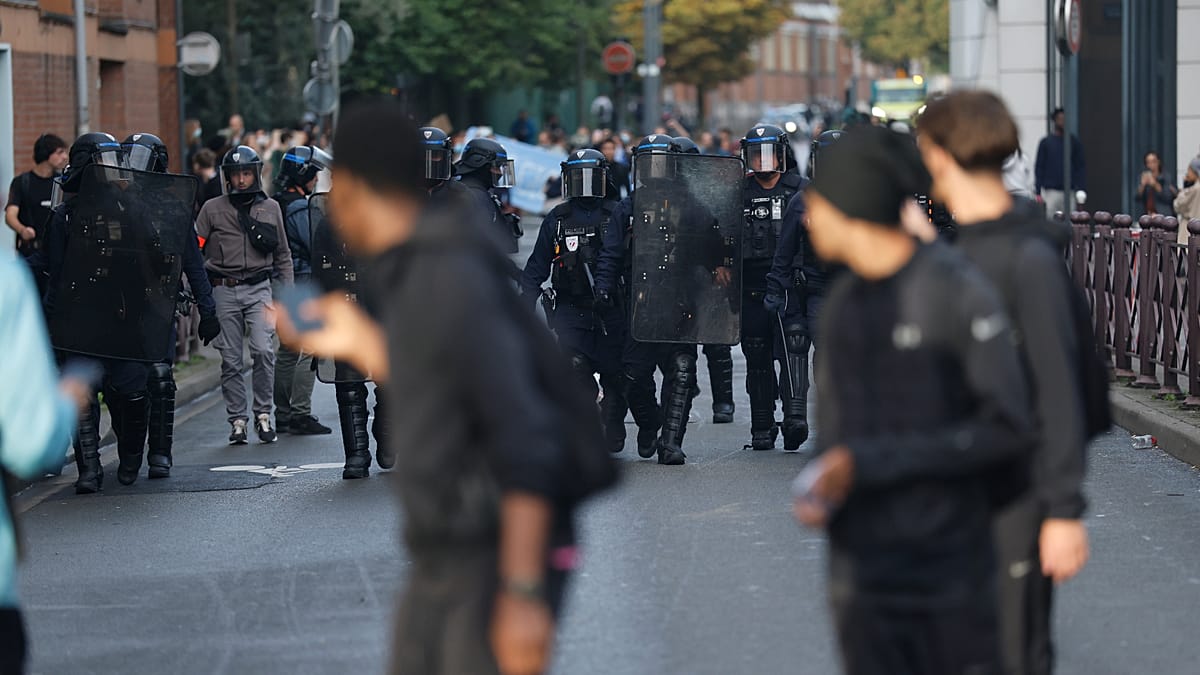
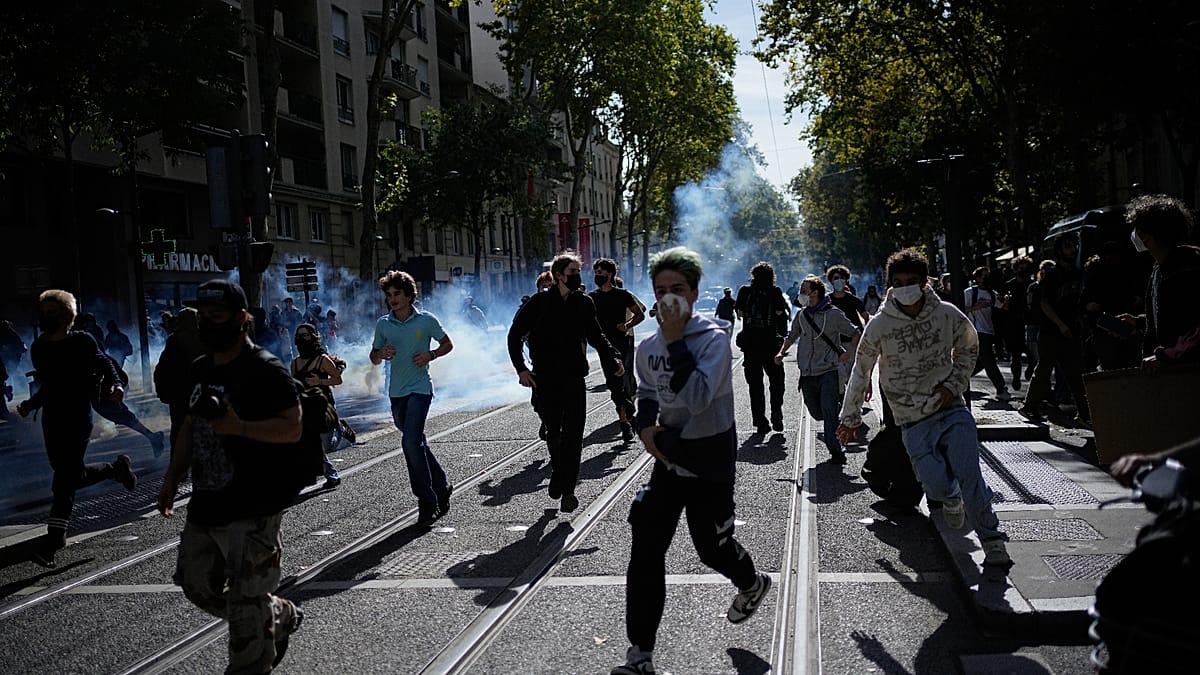
While many demonstrations have been peaceful, others have been marred by riots and clashes on the margins with law enforcement authorities. According to France’s Ministry of Justice, there have been more than 5,060 arrests, with 87% involving minors. Meanwhile, more than 170 pupils, 78 school staff and over 600 police officers have been injured over the course of the protests.
Across France, several schools have been damaged, burned or ransacked. In some cases, rioters have infiltrated the demonstrations.
On Monday, a 15-year-old was reportedly injured by a a police grenade in the northern French town of Lens, leading him to lose his hand. Public prosecutor Etienne Thieffry told the press that it had not yet been definitively established “whether the teenager picked up the grenade” or if it was thrown at him.
In the central French town of Tours, the family of a 16-year old schoolboy lodged a complaint for police violence on Sunday, after he lost sight in his right eye in the preceding days. According to the state prosecutor, the boy’s injuries suggest he could have been hit by a police rubber bullet. In both cases, an investigation is underway.
France’s Human Rights League (LDH) has denounced a “global deviation from the rule of law and a disregard for legal frameworks” during police interventions involving school students.
Speaking at a press conference on Monday, Nathalie Tehio, the organisation’s president said that international law was not only being “disregarded”, but in fact “completely trampled upon.”
Yet, Stanislas Gaudon, national secretary for Alliance Police Nationale, a major French police union told Euronews that the police remained focused on ensuring security around the perimeter of schools.
“When there are acts of aggression and the use of force, it’s a question of determining the proportionality and the legitimacy of the act.”
“If this is done against individuals who have fired at police officers or thrown acid, then the use of force to disperse is necessary. I don’t like using the term ‘repression’ or ‘suppression’ of student protests. That’s not the issue. If there is no disturbance in the public space, then there is no legitimate use of force by law enforcement”, Gaudon said.
Politicians drawn into the fray
The ongoing unrest has drawn politicians into the fray, increasing pressure on the government to resolve the situation and respond to students’ grievances.
On Friday, Education Minister Édouard Geffray held talks with school unions and staff, alongside parent bodies. That day, French Minister of Justice Gérald Darmanin, stated that violent protests had impacted 735 out of France’s 3,700 schools in “one way or another.”
On Sunday, French Prime Minister Sébastien Lecornu announced the government’s five-point action plan. He said that the government remained committed to preventing class cancellations, improving facilities in partnership with regional authorities, better organising school days, making Parcoursup more transparent (France’s platform for university applications), alongside a general pledge to support students.
The hard left has come out in staunch support of the protests, with Jean-Luc Mélenchon, leader of the France Unbowed party, declaring on Thursday, “what we want is for this country’s young people to emerge from this episode with their heads held high.”
His critics have accused the politician, along with his party, of stoking and manipulating young people for political gain. Meanwhile, he has stated that his party supports the movement, but isn’t organising it and wants it to be non-violent.
Teacher unions: ‘The school system is in crisis’
Speaking to Euronews, Jean-Rémi Girard, a teacher and president of the national union of schools and higher education (SNALC), stressed the dangers of politicising the protests.
“We really have to be very careful not to turn what is happening — regardless of the political side involved — into a political tool, because it is very dangerous.”
“We are the ones out there in the field, and we need to be looked after and protected. Because it’s already hard enough to recruit staff given the lack of appeal of our profession; if we aren’t protected on top of that, it’s going to be even harder to find teachers in the years to come.”
On Friday, a teacher was also sprayed with petrol during a protest near a school in the south of France. A 16-year old pupil has since been placed in police custody.
According to Girard, the grievances raised by students are far from new.
“We are increasingly struggling to replace teacher absences, French classrooms are among the most crowded in Europe, classrooms aren’t properly equipped during heat waves. These are things we already know.”
“The starting point is that the school system is in crisis, and it has been for a long time,” he stated, while underlining that a minority of individuals have perpetrated many of the most intense episodes of violence.
“They come here to cause trouble, and I’ve seen that.”
“We have a group of colleagues who are outside the school to talk to the students, in an attempt to prevent the situation from escalating. Anything can happen and in five minutes the atmosphere can change completely. We are familiar faces for the students, we have an established relationship with them and want to keep and ongoing dialogue.”
Many parents support the protests
While some parents have advised their children to stay away from the protests, in some cases forbidding them from going to school, the Federation of Councils of Parents of Students (FCPE), one of France’s largest parent associations, has expressed support for students on strike.
“We support calls for our children to study in better conditions”, Mustafa Ozcelik, Vice-President of the FCPE told Euronews.
Ozcelik stressed that many parents share their children’s concerns over overcrowded classrooms, teacher shortages and absences, difficulties recruiting teachers for certain subjects, a lack of school doctors and classrooms that become excessively hot in summer.
“School staff, parents and ultimately students themselves want to be able to return to school. Students are smart enough to know whether they should continue protesting or not, it is not up to us to decide. But from the moment they obtain the guarantees they want, everyone will return to school.”