Europe’s response to Moscow’s full-scale invasion of Ukraine has been a mixed bag, Latvia’s Defence Minister told Euronews, calling on the bloc to make speedier decisions on sanctions and collective defence as the fourth anniversary of the invasion draws near.
ADVERTISEMENT

ADVERTISEMENT
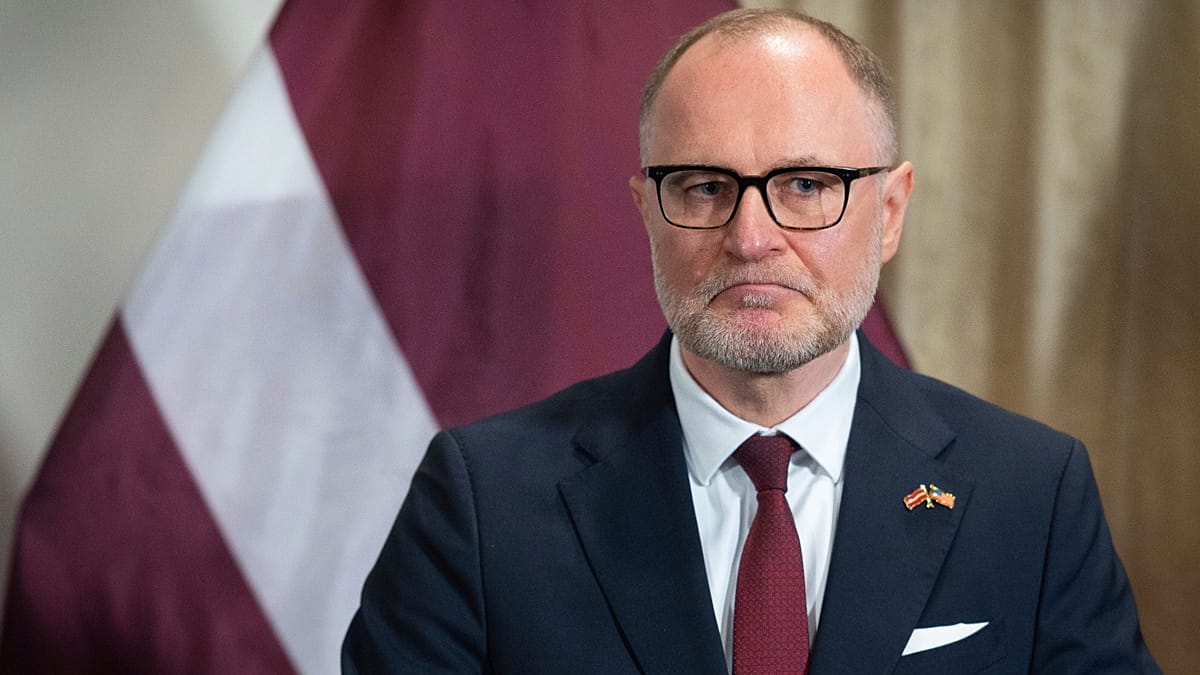
Andris Spruds rejected suggestions that Europe has failed Ukraine four years into the war, telling Euronews on the sidelines of the Munich Security Conference that while there is broad principled agreement within the EU and NATO on the need to back Ukraine, delivery has not always matched ambition.
“The glass is half full in terms of determination, inspiration, sharing the values and interests and supporting Ukraine in policies,” he said. “Where the glass might be a bit half empty, it is in the volumes and speed of the implementation.”
Europe is by far the main donor to Ukraine following Washington’s decision last year to stop all military and financial donations to the war-torn country, and is largely expected to remain so. The bloc agreed to cover €90 billion of Ukraine’s needs over the coming two years.
The EU is also currently discussing a 20th package of sanctions against Russia which it hopes can be approved by the fourth anniversary of the war, on 24 February. The main element of the package, put forward by the European Commission earlier this month, is a full ban on maritime services aimed at further weakening Russia’s energy revenues.
It also targets 20 Russian regional banks as well as companies and platforms trading in cryptocurrency, which the Kremlin has employed to bypass sanctions and create alternative payment systems.
Spruds told Euronews that sanctions to squeeze Moscow’s oil revenues “are fundamental,” and that conceded that “sanctions will most likely not change things immediately or dramatically. But as a part of the package, they are also important”.
Still, he argued that by launching the invasion, Russia has set itself on a path of long-term self-destruction, even if the consequences may take years to fully unfold. The war, he suggested, is undermining the country’s future development, weakening its social and political stability and deepening its isolation from the international community.
“Let’s push it, let’s impose those sanctions, let’s support first of all Ukraine. This is a long-term strategy, even if the peace settlement is achieved now, let’s be realistic what we are dealing with anyway in a long-term perspective,” he said.
‘We need grants’
Spruds said Europe must also move faster to strengthen its own defence capabilities, warning that progress in ramping up production has been uneven.
“The picture is mixed,” he said, acknowledging that while investment is increasing, far more needs to be done to build up capabilities across the continent. The effort is not only about sustaining Ukraine’s war effort, he stressed, but also about reinforcing Europe’s own armed forces amid concerns about long-term security threats.
With Washington repeatedly urging Europe to shoulder more responsibility for its own defence, Spruds said, EU member states must step up spending, procurement and industrial output.
There are, however, signs of improvement.
“We are in a positive direction in terms of ammunition, in terms of drone production, in terms of (other) capabilities,” he said. “We are investing and we are purchasing and we’re acquiring. And we also have to find ways to strategically specialise.”
Latvia, he noted, is focusing heavily on drone capabilities, particularly smaller systems, and is co-leading a European drone coalition. Riga has established testing grounds and is seeking to expand production and innovation in the sector. Other countries are concentrating on different categories of drones or complementary technologies, fostering what he described as a more integrated approach.
For Spruds, the challenge will be balancing national industrial ambitions with deeper European coordination to ensure the continent is better prepared for the years ahead. The EU’s Security Action for Europe (SAFE) instrument is therefore “an important part of the toolbox”, Spruds said.
SAFE, which is part of the Commission’s Readiness 2030 plan, is meant to boost the procurement of defence products in nine priority areas including ammunition and missiles, artillery systems, drones and anti-drone systems as well as air and missile defence systems.
To tap into the funds, member states have to procure together and primarily buy European products. But Spruds said the bloc will have to go beyond loans.
“We’re advocating also that we need some additional grants as well if we want to build a common European capabilities,” he explained/
Latvia, which is set to receive a total of €3.5 billion in SAFE funding, will spend it on strengthening air defence, cooperating with Estonia and Germany on IRIS-T systems, as well as on infantry fighting vehicles in cooperation with Spain, with other countries considering joining the project, Spruds said.
Spruds added that joint procurement efforts also cover armoured personnel carriers, in cooperation with countries including Finland, Denmark, Sweden and Germany.