



As the shortage of labour in the agricultural sector becomes increasingly evident across all Western European countries – and particularly in Greece – an interstate agreement that had remained inactive for several years is now moving into the implementation phase.
ADVERTISEMENT

ADVERTISEMENT
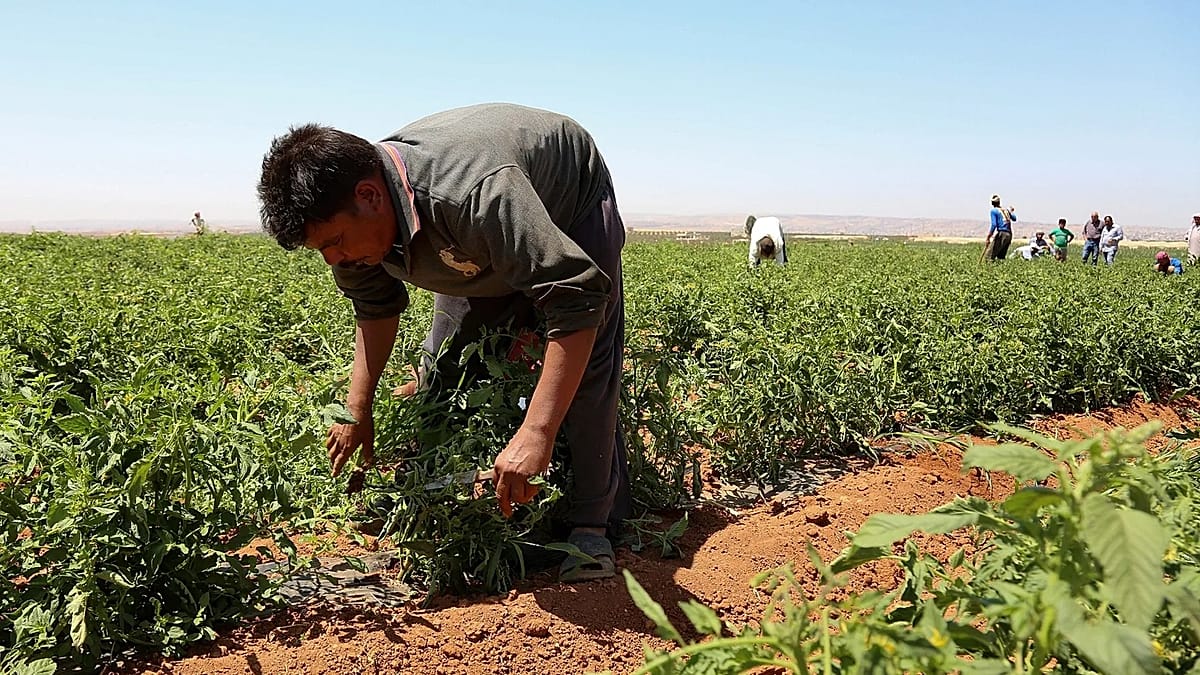
The deal between Greece and Egypt provides for the legal employment of up to 5,000 Egyptian seasonal farm workers in crops and agricultural work in various Greek regions.
According to Christos Giannakakis, a member of the Board of Directors of the Hellenic Union of Agricultural Cooperatives, the process is already underway.
As he told the Athens-Macedonian News Agency, around 150 prospective workers have been registered with the Decentralised Administrations, while the relevant approvals have been sent to the Greek embassy in Cairo so that the necessary checks and applicant interviews can follow.
This initiative is not just about moving workers from one country to another. It is part of Greek agriculture’s effort to address, in an institutional and organised way, a problem that has grown significantly in recent years.
From peach and cherry orchards to olives, kiwis and citrus fruit, the demand for labour during the harvest seasons often remains unmet.
“The agreement that was signed about three years ago is now beginning to be put into practice,” Giannakakis said, clarifying that while the initial provision is for 5,000 workers, there is scope for this number to increase if greater needs arise.
More than 36 employers have already expressed an interest in taking part in the scheme.
As part of preparations, the two sides met in Cairo to focus on the practical issues of implementing the agreement. The discussions centred on how to communicate with the workers, coordination with Greek employers, the procedure for their transfer and the mechanisms for linking the parties involved.
According to Giannakakis, the Egyptian deputy labour minister also took part in these discussions.
From the Greek point of view, Egypt is seen as a particularly important source of labour. With a relatively youthful population of more than 110 million, the country shows strong interest in opportunities for legal work abroad. At the same time, the wages offered by the Greek agricultural sector act as a strong incentive for many Egyptian workers.
“There is strong interest on the Egyptian side in people coming to work legally in Greece,” Giannakakis said, underlining that the aim is to meet the needs of the market through legal and supervised procedures and not through informal routes of entry into Greece.
A key element of the scheme is the possibility for workers to move according to seasonal production needs. In this way, a worker will be able to be employed successively across different crops and regions, following the harvest cycle from Macedonia and Halkidiki to the areas producing kiwis and citrus fruit.
The maximum length of stay for seasonal workers is set at nine months. However, as Giannakakis noted, after their first period of employment, workers will have the chance to apply for a longer-term permit that may last for up to five years. In that case, the worker must leave the country at the end of each nine-month period and return after a three-month absence without the procedure having to start again from scratch.
Beyond the administrative procedures, particular emphasis is being placed on workers’ living conditions. Giannakakis pointed out the need to examine subsidy programmes for the purchase of ISO-box type prefabricated units, which could offer decent accommodation and basic hygiene facilities. He also stressed that living standards are a key factor both for protecting workers and for maintaining a stable and returning workforce.
Despite the progress made, there are still administrative and bureaucratic hurdles that need to be overcome. He believes that “patience and effort” are still required, but considers that the implementation of the agreement is approaching a stage where procedures will be able to operate more quickly and efficiently.
Within the Hellenic Union of Agricultural Cooperatives, the prevailing view is that this cooperation framework could serve as a model for future agreements between Greece and other countries outside the European Union.
As Giannakakis noted, the initiative is also being followed by European organisations, which are considering using it as an example of organised and legal labour mobility.
For the country’s primary sector, the success of the project has a dual significance: on the one hand, securing the necessary workforce for the harvesting and care of crops and, on the other, creating a stable, transparent and legal employment system.
At a time when labour shortages can directly affect production and harvesting, the activation of the agreement with Egypt is seen as an important development for the farming community.