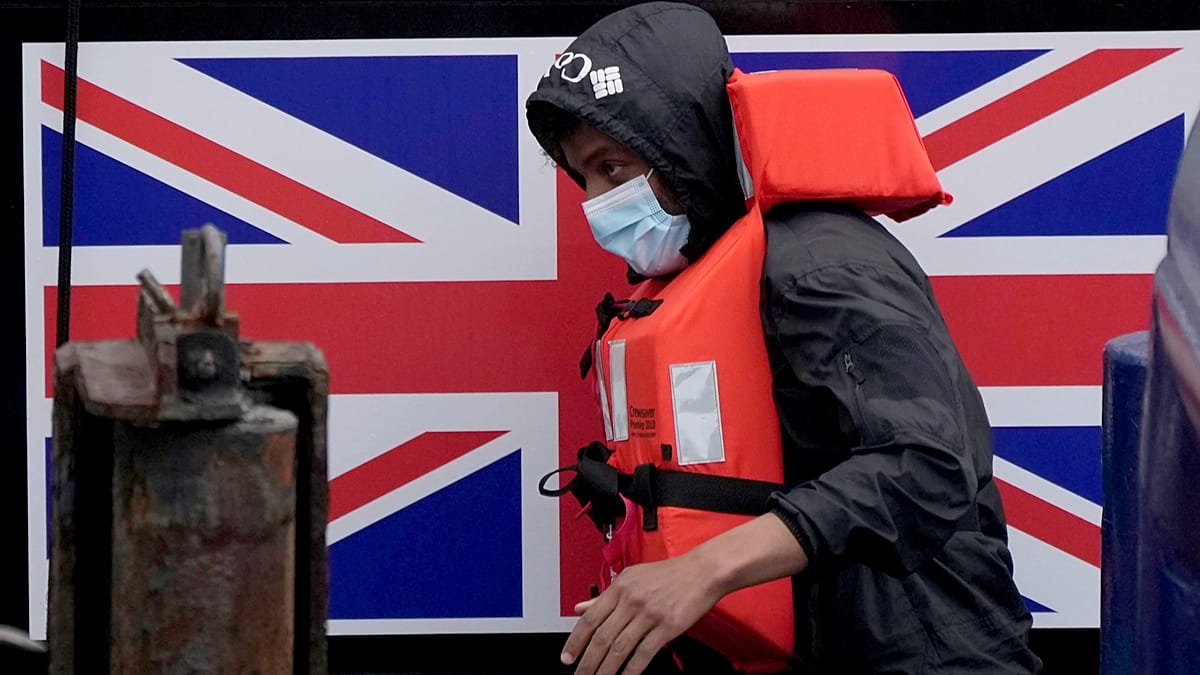




A spectre is haunting Europe, or at least, its external borders: the Entry/Exit System (EES), an automated mechanism for registering foreign nationals entering and leaving the Schengen Area, which risks ruining the holiday season for millions of travellers.
ADVERTISEMENT

ADVERTISEMENT
The EES is gradually replacing passport stamps with a digital system that records when travellers enter and exit the Schengen Area for short stays, collecting biometric information such as facial images and fingerprints, along with personal data from travel documents.
It is now in place at all the external borders of all 29 countries in the free-travel area, meaning all EU countries except Cyprus and Ireland, plus Switzerland, Liechtenstein, Iceland, and Norway.
Who does it apply to?
The system applies to non-EU/Schengen citizens travelling to Schengen or EU countries for short stays.
A “short stay” means a period of up to 90 days within any 180 days, and it is designed for tourism, business trips, or visiting family. Foreign individuals must apply for a “short-stay” visa before travelling to Europe and, once entered, cannot exceed the permitted period.
People coming from certain countries, such as the US, UK, Australia, or Latin American states, are not required to get a visa, but they are still subject to the EES system.
Citizens of EU and Schengen member states are exempt from the checks, as well as nationals of Andorra, San Marino, Vatican City, and Monaco.
Other exceptions apply to foreign nationals with long-term visas or residence permits from a Schengen country, train and plane crew members on international journeys, and armed forces personnel.
Why has the EES been put in place?
The EES is meant to make border checks faster and more efficient while improving security by giving border officers and national authorities access to travellers’ information and therefore helping them spot risks related to transnational crime and terrorism.
One of the main goals is to obstruct irregular migration. The EES tracks entries and exits by recording fingerprints and facial data in a digital database, which should help prevent people from overstaying in a Schengen country or using fake identities.
Since the rollout, more than 40,000 people have been refused entry due to reasons such as expired or fraudulent documents, or an inability to fully justify the reason for their visit, according to the European Commission.
More than 1,000 people have also been identified as posing security risks to Europe.
What’s the problem?
The EES became fully operational on 10 April 2026, following a phased rollout which began on 12 October 2025. The implementation has been progressive over six months, after all Schengen states had given their “declaration of readiness” to implement the system. However, it is not going smoothly.
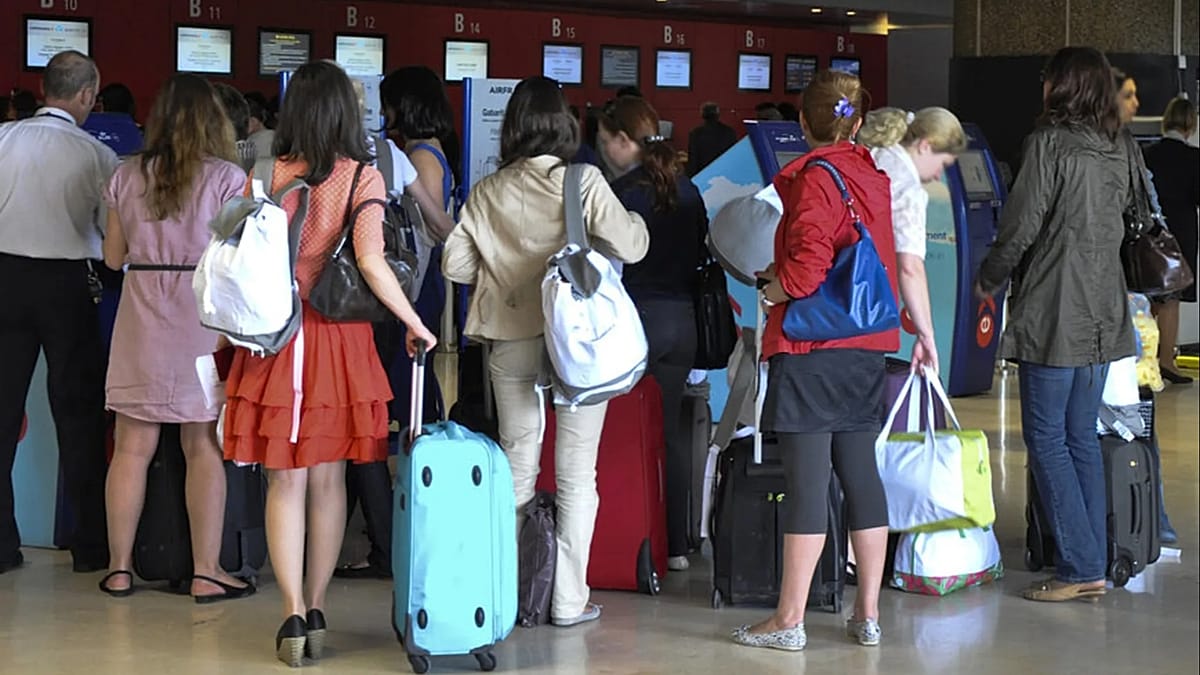
EES is in force at land, sea, and air borders, but its implementation is creating hiccups and bottlenecks mostly at airports, with long queues and complicated procedures.
Airports and airlines are experiencing operational disruption, with flight delays and missed connections, both in Europe’s largest hubs and in smaller airports serving major tourism destinations, as some terminals do not have enough operational capacity, including border guards, appropriate infrastructure, and automated border control machines.
The consequence is several half-empty planes at gate closing time, while passengers are still stuck in border control queues. Waiting times at border control have increased significantly, sometimes reaching five hours during peak traffic periods and impacting millions of passengers.
According to a letter sent to the European Commission by associations representing airlines and airports, the situation has “reached a critical point.”
Airlines for Europe, ACI Europe, and the International Air Transport Association requested an “immediate intervention” and asked for flexibility to completely suspend EES in July and August “whenever passenger volumes exceed the operational capacity of border control facilities”.
During the next two months, as the holiday season hits its peak, European airports are expected to handle approximately 40 million more passengers than during May and June.
Uku Särekanno, a deputy executive director at EU border agency Frontex, said that the situation will stabilise in one or two years, as getting fingerprints from non-EU travellers on their first entry to the Schengen Area is “probably the most challenging part” of the rollout.
What is the Commission doing?
According to the rules, Schengen states are granted a certain degree of temporary flexibility to suspend the collection of biometric data when their border control authorities cannot cope with the volume of travellers.
However, no broader exemptions are allowed.
Greece considered stopping the collection of biometric data from British visitors due to pressure on its small island airports during the holiday season, but the European Commission clarified that suspension of the system is permitted only during periods of high passenger traffic at specific entry points and cannot apply to any group of nationals.
Responding to criticism from the aviation sector, European Commission spokesperson Markus Lammert said that all efforts are being made to limit the impact on travellers within the EU, claiming that in most EU airports the impact is limited.
“The Commission continues to support member states and the aviation industry in the implementation of the new system,” he said, adding that another meeting with representatives of the industry will take place in the coming days.