
Times Network New Zealand
  • Home
  • Local News
  • World
  • Business
  • Lifetyle
  • Entertainment
  • Technology
  • Travel
  • Food
  • Editor’s Choice
  • Press Release
What's On
As AI use surges across the EU, who are the countries and age groups using it most?

As AI use surges across the EU, who are the countries and age groups using it most?

February 17, 2026
Commissioner Šuica to represent EU at Board of Peace meeting in Washington

Commissioner Šuica to represent EU at Board of Peace meeting in Washington

February 17, 2026
Watch the video: EU’s defence clause – yes, it does exist, and now everyone talks about it

Watch the video: EU’s defence clause – yes, it does exist, and now everyone talks about it

February 16, 2026
What do you need to know to pass EPSO? Ask the Euronews AI chatbot

What do you need to know to pass EPSO? Ask the Euronews AI chatbot

February 16, 2026
Europe Today: Interview to Fabrice Pothier and the Munich Security Conference

Europe Today: Interview to Fabrice Pothier and the Munich Security Conference

February 16, 2026
Facebook X (Twitter) Instagram
Web Stories
Facebook X (Twitter) Instagram
Times Network New Zealand
Subscribe
  • Home
  • Local News
  • World
  • Business
  • Lifetyle
  • Entertainment
  • Technology
  • Travel
  • Food
  • Editor’s Choice
  • Press Release
Times Network New Zealand
Home » Migrant returns: Which EU countries are increasing repatriations?
World

Migrant returns: Which EU countries are increasing repatriations?

By Press RoomJanuary 17, 20263 Mins Read
Migrant returns: Which EU countries are increasing repatriations?
Share
Facebook Twitter LinkedIn Pinterest Email
Migrant returns: Which EU countries are increasing repatriations?

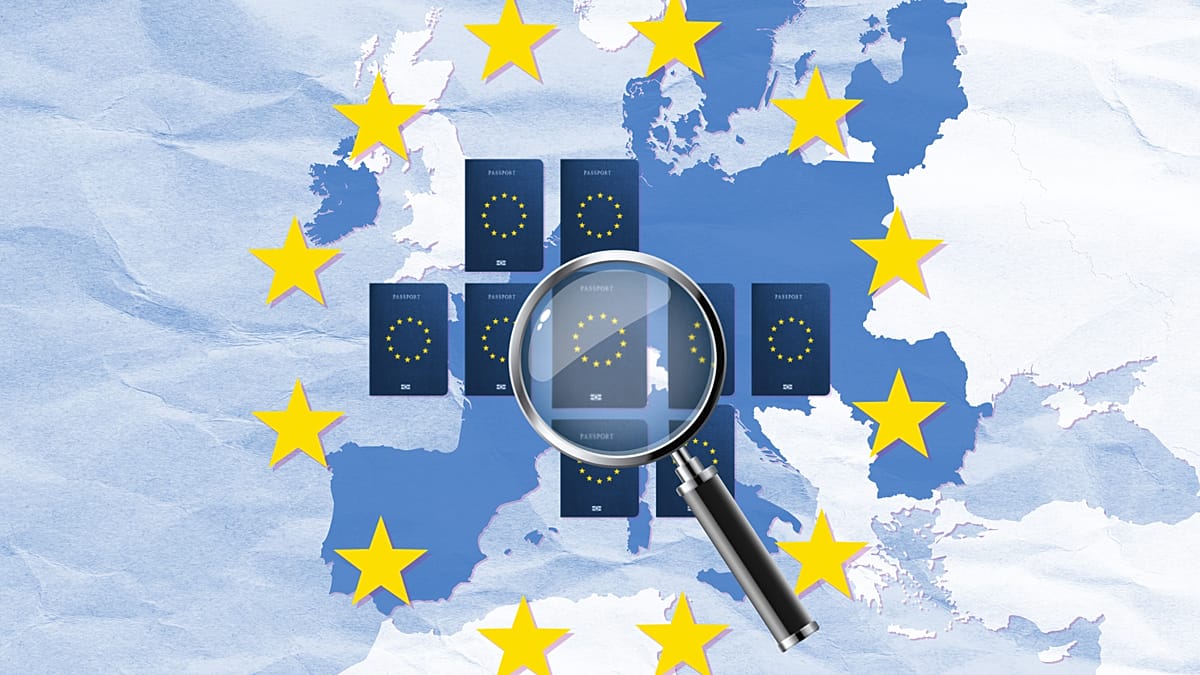
More and more migrants in the EU are being sent back to their home countries or returned elsewhere, according to the latest Eurostat data.

In the third quarter of 2025, nearly 42,000 non-EU citizens were expelled by member states.

That’s a 19% increase compared to the same period in 2024, when member states carried out around 35,000 repatriations.

The vast majority (82%) left the European Union, while about 18% of these returns were to other EU countries.

Among them, Germany has decisively scaled up operations.

In the past year, Berlin has tripled the amount to nearly 12,000 in Q3 2025, moving ahead of France (with almost 5,000) and the rest of the EU.

Neighbouring Belgium seems to be taking a similar direction, with returns of non-EU citizens almost doubling from Q3 2024 (730) to Q3 2025 (1,210).

Which nationalities are being sent back the most?

The largest repatriation numbers across the EU in Q3 2025 were reported among Algerians (12,325) and Moroccans (6,670).

Compared with the previous quarter, rates increased the most for Turkish citizens (+15%), Syrians (+9%), Russians (+7%), Georgians (+5%) and Albanians (+2%).

Eurostat says 40% of all returns were classified as “forced”, meaning a substantial share of people who received an order to leave did not follow through voluntarily but were compelled in some way.

These figures, however, vary significantly across the EU.

Denmark has the highest rate of forced returns (91%), followed by Romania (82%) and Bulgaria (80%).

In fact, Italy reports an even higher rate — 100%. However, such a rounded figure may reflect differences in reporting practices between EU countries, amid existing fragmented repatriation procedures.

According to Eurostat, around 77% of all returns entail some kind of financial assistance. For example, help with buying tickets or cash allowances upon departure or arrival.

Why are comparatively few repatriation orders being executed?

There’s a significant gap between the number of repatriation orders issued by member states and those which are ultimately carried out: 41,890 or about 36% of the total.

France, for example, issued the most orders — nearly 34,000 in Q3 2025. However, it effectively carried out just 14% of them, a rate similar to Greece (14%) and Spain (13%).

The gap can be explained by several factors.

In some cases, authorities are unable to establish a migrant’s country of origin. In others, returns may be delayed or suspended due to health issues, or because be invididual is an unaccompanied minor.

Earlier in December, EU countries approved draft legislation aiming to speed up returns.

Under the new framework, member states would be allowed to enter into bilateral agreements with third countries to establish migrant hubs abroad.

These centres would be used to host migrants while their applications are processed and their statuses checked.

Human rights organisations, however, argue that moving these centres away from EU soil might lead to illegal returns and arbitrary detentions.

Share. Facebook Twitter Pinterest LinkedIn Tumblr Email

Keep Reading

As AI use surges across the EU, who are the countries and age groups using it most?

As AI use surges across the EU, who are the countries and age groups using it most?

Commissioner Šuica to represent EU at Board of Peace meeting in Washington

Commissioner Šuica to represent EU at Board of Peace meeting in Washington

Watch the video: EU’s defence clause – yes, it does exist, and now everyone talks about it

Watch the video: EU’s defence clause – yes, it does exist, and now everyone talks about it

What do you need to know to pass EPSO? Ask the Euronews AI chatbot

What do you need to know to pass EPSO? Ask the Euronews AI chatbot

Europe Today: Interview to Fabrice Pothier and the Munich Security Conference

Europe Today: Interview to Fabrice Pothier and the Munich Security Conference

Hungary’s opposition leader Magyar calls for privacy protection in latest campaign speech

Hungary’s opposition leader Magyar calls for privacy protection in latest campaign speech

Munich Security Conference: Six quotes to take away from the world’s biggest security conference

Munich Security Conference: Six quotes to take away from the world’s biggest security conference

Will Warsaw become the seat of a new EU agency? To be decided in March

Will Warsaw become the seat of a new EU agency? To be decided in March

Orbán’s assessment of the year: ‘Putining is frivolous and primitive, Brussels is the direct threat’

Orbán’s assessment of the year: ‘Putining is frivolous and primitive, Brussels is the direct threat’

Editors Picks
Commissioner Šuica to represent EU at Board of Peace meeting in Washington

Commissioner Šuica to represent EU at Board of Peace meeting in Washington

February 17, 2026
Watch the video: EU’s defence clause – yes, it does exist, and now everyone talks about it

Watch the video: EU’s defence clause – yes, it does exist, and now everyone talks about it

February 16, 2026
What do you need to know to pass EPSO? Ask the Euronews AI chatbot

What do you need to know to pass EPSO? Ask the Euronews AI chatbot

February 16, 2026
Europe Today: Interview to Fabrice Pothier and the Munich Security Conference

Europe Today: Interview to Fabrice Pothier and the Munich Security Conference

February 16, 2026
Latest News
As AI use surges across the EU, who are the countries and age groups using it most?

As AI use surges across the EU, who are the countries and age groups using it most?

February 17, 2026
Commissioner Šuica to represent EU at Board of Peace meeting in Washington

Commissioner Šuica to represent EU at Board of Peace meeting in Washington

February 17, 2026
Watch the video: EU’s defence clause – yes, it does exist, and now everyone talks about it

Watch the video: EU’s defence clause – yes, it does exist, and now everyone talks about it

February 16, 2026
Facebook X (Twitter) Pinterest TikTok Instagram
© 2026 Times Network New Zealand. All Rights Reserved.
  • Privacy Policy
  • Terms
  • Advertise
  • Contact

Type above and press Enter to search. Press Esc to cancel.