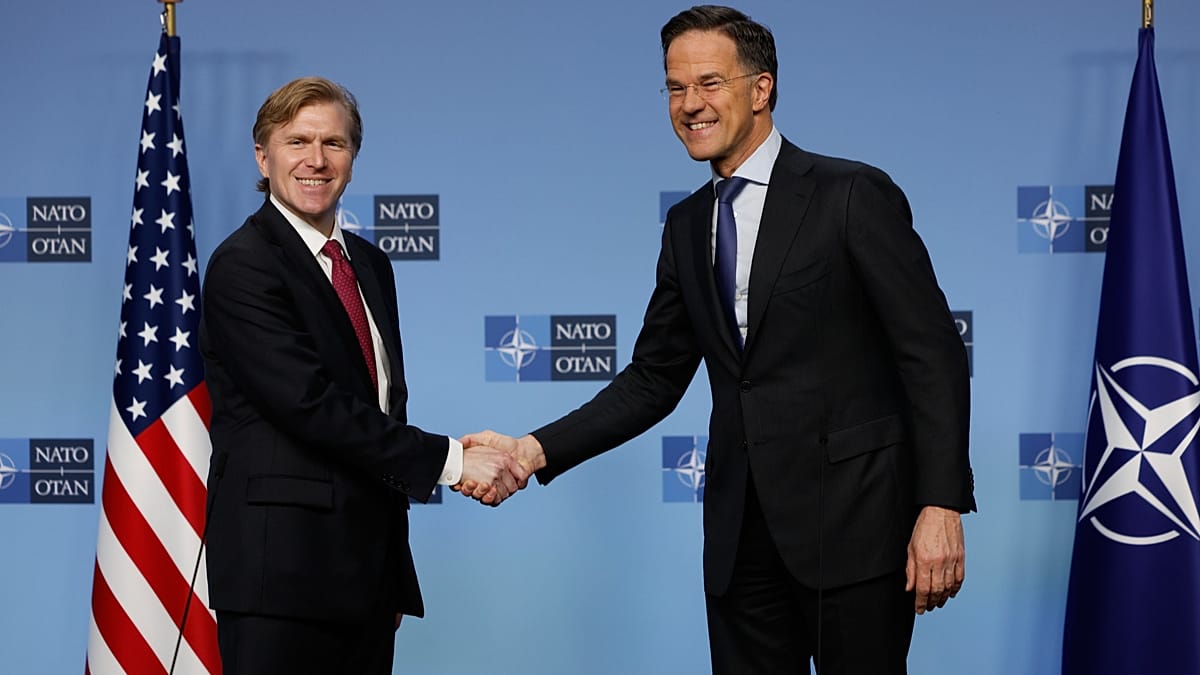
US and European defence ministers seemed to be in agreement on Thursday that, to survive, NATO needs to become more European. But their rationales for this shift, however, are probably not fully aligned.
ADVERTISEMENT

ADVERTISEMENT
“What is needed is a ”NATO 3.0′,” US Under Secretary of War Eldridge Colby told the NATO defence ministers gathering in Brussels. “This NATO 3.0 requires much greater efforts by our allies to step up and assume primary responsibility for the conventional defence of Europe.”
“It follows that Europe should field the preponderance of the forces required to deter and, if necessary, defeat conventional aggression in Europe,” he added.
The message from Colby, who attended the meeting in lieu of Defence Secretary Pete Hegseth, is hardly new. The US has been pushing for more burden-sharing for years, citing its desire to pivot towards the Indo-Pacific.
Europe has at times appeared less than enthusiastic about this. Yet as ministers gathered in Brussels they were ready to not only hear that message, but show they have already started to step up.
The result?
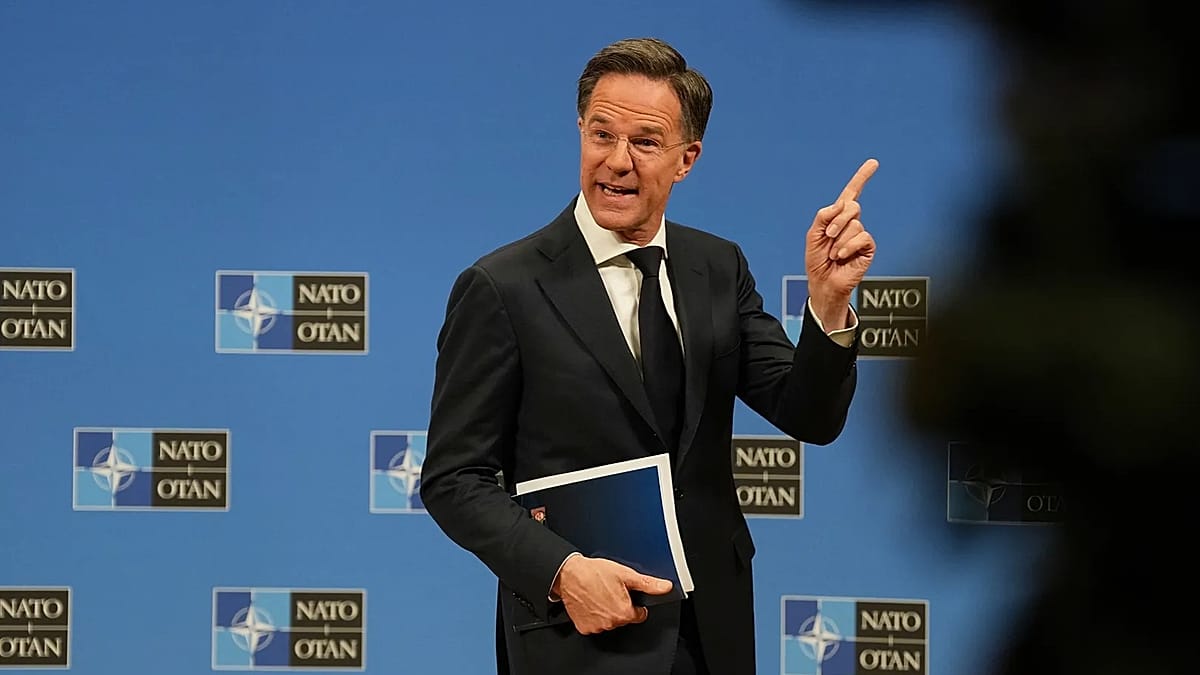
“This, for me, was one of the most pivotal meetings I’ve been part of,” NATO Secretary General Mark Rutte told reporters after the gathering. “Today, we also saw evidence of something else: A real shift in mindset. A unity of vision. A much stronger European defence within NATO.”
The NATO chief lauded a “major shift and uplift” in defence spending in 2025, praising Denmark, Estonia, Latvia, Lithuania and Poland for exceeding the newly-agreed target of spending 3.5% of GDP on defence each year a decade ahead of schedule.
The target was hashed out last summer after weeks of rhetoric from US President Donald Trump that cast doubt over his country’s commitment to NATO’s collective defence clause, with suggestions that Washington could decide not to assist an ally under attack if it was not meeting the spending threshold.
Make NATO more European
Thursday’s meeting comes just weeks after Trump threatened military action against fellow NATO ally Denmark to forcefully take control of Greenland. NATO has now launched an enhanced vigilance activity in the Arctic to mollify that concern while trilateral talks between Denmark, Greenland and the US continue.
“The US took the lion’s share of what has to be done for the European conventional deterrence and defence,” German Defence Minister Boris Pistorius told reporters ahead of the meeting. “Now the time has come for Europeans to take over more and more, step by step, in the years to come. That is absolutely normal and natural. I understand and support this direction.”
“In order to keep NATO transatlantic, it is necessary to make it more European, to take over more European responsibility,” he added.
His French counterpart, Catherine Vautrin, said that Europeans “have already begun” to take more responsibility to strengthen the alliance’s “European pillar”, while Romania’s Radu-Dinel Miruță urged Europeans to scale up defence production, noting that it should be done in collaboration with NATO and the US “but having in mind one very clear aspect: Europe should be able to protect Europe”.
Ruben Brekelmans of the Netherlands, meanwhile, called for a “no-surprise policy” between the two sides of the Atlantic to ensure any American pullback is matched by a European ramp-up.
“We all have seen, of course, the security strategy and defence strategy of the United States. We know their priorities. NATO is one of them, but (they) want to put more effort in the western part, the western hemisphere, as they call it, and the Indo-Pacific. But as long as we do this through an open dialogue, and we know what we can expect from each other, I think we can handle it very well,” he added.
Some rebalancing is already taking place. The US announced late last year that it would not replace an infantry brigade stationed in Romania after it’s rotated out, signalling the start of a pullback.
European allies have also taken on more leadership roles in NATO’s command structure, though the US has taken control over the Allied Maritime Command while maintaining leadership of Allied Land Command and Allied Air Command.
Rutte said on Thursday that Europe taking on the three joint force commands is “significant” but argued that it is “extremely important” that the person in charge of drawing up the alliance’s military plans, the Supreme Allied Commander Europe, remains “an American”.
This would ensure “you will always have a strong, conventional US presence in Europe” and “is exactly the sort of division of labour which is logical in an alliance where the US, as an economy, is over half of total NATO economy”.