


Published on
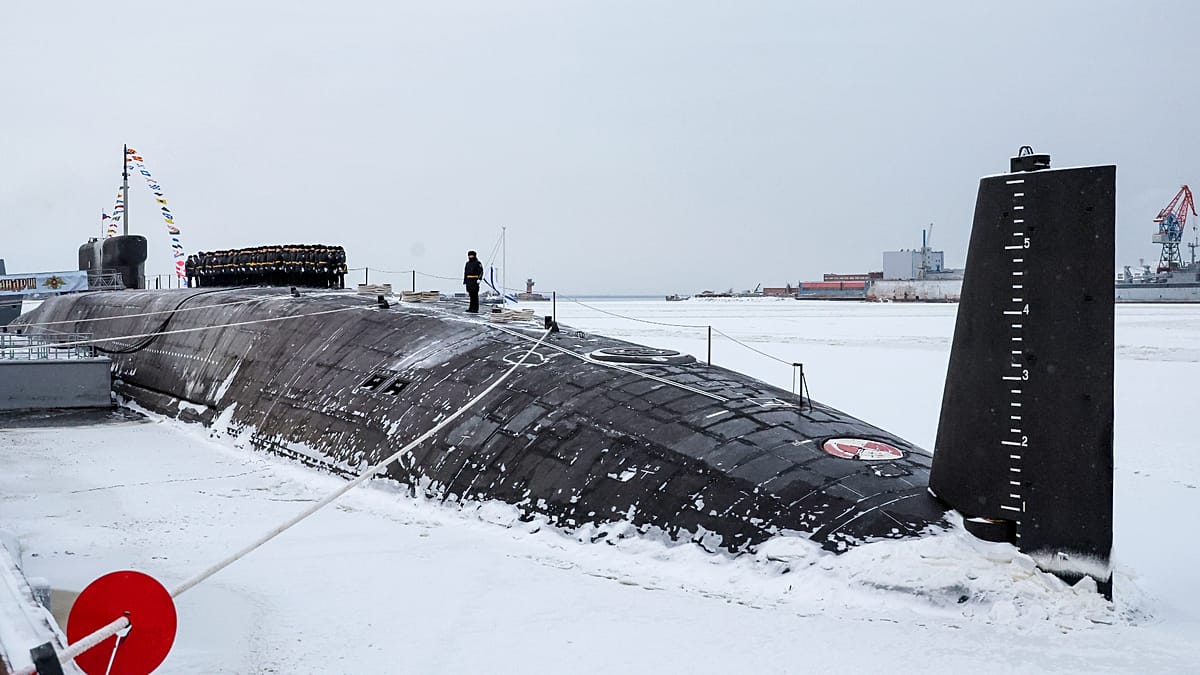
NATO allies have caught Russian submarines training to carry out undersea cable sabotage using a secret weapon that leaves no trace, Reuters has reported citing two Western officials.
ADVERTISEMENT

ADVERTISEMENT
This clandestine Russian operation was carried out by the highly secret GUGI, the Russian undersea warfare directorate, in Arctic waters near Norway’s Svalbard territories.
Britain said it had tracked and deterred three Russian submarines on an alleged month-long “covert operation” near vital undersea cables and pipelines connecting the Norwegian archipelago.
Following Euronews reporting on the operation that was announced in April, the discovery of the weapon, the location of the operation, and the US involvement have now been disclosed.
This joint operation between the UK, Norway, and the US successfully tracked and diverted Russian vessels before they could complete their exercise.
Secret weapon training
While Russia didn’t damage any cables, it carried out this exercise to simulate the deployment of the secret weapon, in the event of a conflict with NATO, officials told Reuters.
They refused to give any details over the weapon or technology used by Russia.
While the confrontations were taking place at sea, UK and Norway officials faced Moscow with their findings in an attempt to deter Russia of using the secret technology.
Targeting essential infrastructure
Undersea fiber-optic cables that are as thick as a garden hose are the main conduit by which almost all of the world’s internet traffic is channeled.
They are critical to global internet connectivity and financial transactions, which have increasingly made them targets for disruption of countries’ communications.
Russia’s Defence Ministry did not comment on the topic as the Kremlin has consistently denied conducting sabotage in NATO countries.
“Through our joint operation, we sent a clear message to Russia that they cannot operate covertly,” Norway’s Defence Minister Tore Sandvik said to Reuters.
“We have made it unequivocally clear to Russian authorities that any attempt to target our critical infrastructure will be detected and met with consequences,” he said. “It is in no one’s interest to escalate tensions in the High North.”
Increasing undersea Russian threat
Since the 2022 destruction of three of the Nord Stream subsea pipelines supplying Germany with Russian, NATO allies shifted their focus to undersea critical infrastructures.
Gradually more ships have been seen mapping undersea elements including pipelines, power cables and telecoms fiber-optic cables since 2023.
While it’s not illegal to conduct such surveys in international waters, some experts say it could be preparation for sabotage.
“In the last 25 years, Europe did two things simultaneously. It dramatically expanded the extent to which it relies on seabed infrastructure, and it dramatically shrunk its capacity to protect that infrastructure,” Bruce Jones, a senior fellow with the Brookings Institution told Reuters. “It’s belatedly rebuilding now, in the face of a burgeoning Russian threat.”
Contacted by Euronews, NATO refused to discuss specific details of the operation.