


Good morning. I’m Mared Gwyn.
ADVERTISEMENT

ADVERTISEMENT
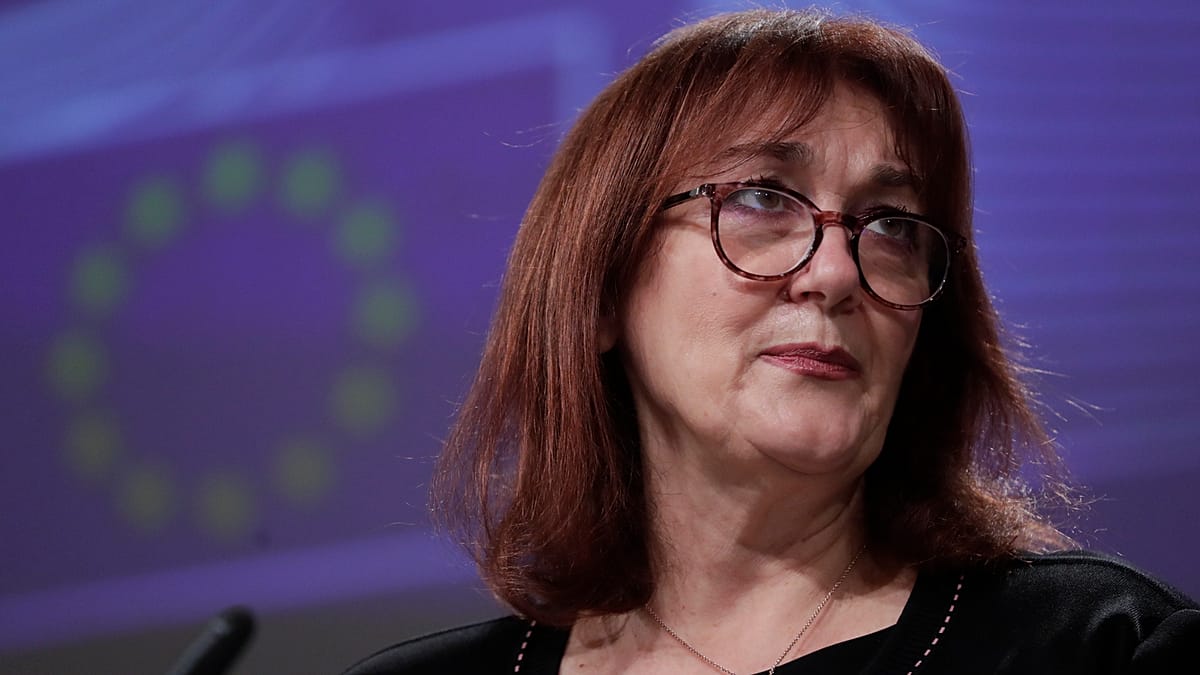
Today, as European Commissioner Dubravka Šuica joins the first formal meeting of US President Donald Trump’s controversial “Board of Peace” in Washington, there is deepening outrage in several European capitals.
As scooped by my colleagues Maïa de la Baume and Jorge Liboreiro, a raft of member states voiced criticism of Šuica’s trip – which was not coordinated with EU governments – in a closed-door meeting of ambassadors in Brussels on Wednesday.
France, Spain, Belgium, Ireland, Slovenia and Portugal were among those who raised strong objections. Germany, Sweden and Lithuania also spoke up.
France set the tone by arguing that Šuica’s attendance was in breach of the EU treaties as the Commission is not entitled to set foreign policy, diplomats told Euronews.
The harshest critics then pointed out that, as Commissioner for the Mediterranean, Šuica is a political representative and therefore her presence in Washington further compromises their own positions. A civil servant would have been a more appropriate pick, they said.
The fact that the EU, as an organisation, is not a member of the Board of Peace was also mentioned to discourage Šuica from travelling.
One diplomat put it bluntly, saying: “Member states were up in arms.”
Reminder: Only Hungary and Bulgaria have expressed the wish to join the Board as a sitting member, with Sofia since caveating that it will join only as a “non-voting member”. Since then, a raft of member states have signalled they will send a diplomatic representative to Thursday’s meeting as observers.
Reports on Thursday morning suggested Germany had also agreed to send a lower-ranking official to the gathering.
But major European powers continue to distance themselves from the board over fears Trump is trying to supplant the United Nations with a parallel institution centred around the broad concept of “global peace.”
The EU executive continues to defend the decision to send Šuica while maintaining it will not join the board due to persisting concerns over its sweeping international mandate and its governance structure, which would see Trump serve as lifelong chairman.
In a statement, a Commission spokesperson said sending Šuica was a way to remain “closely engaged on all aspects relating to the peace process and the reconstruction in Gaza”. Maïa, Jorge and I have the full story.
Meanwhile, Georgia’s former president Salome Zourabichvili has just told our flagship morning show that Georgia’s path to EU membership is on “thick ice because everything that is happening within Georgia today is distancing us from the European path.” She added that there is a “capture of the state by Russia.” Watch.
Also in this newsletter: Political jostling for the European Central Bank presidency begins amid rumours of Lagarde’s early departure; and an exclusive story on the new procedure agreed to select the host of the European Customs Authority.
Lagarde’s rumoured early ECB exit opens race for successor
Amid reports that Christine Lagarde could step down as President of the European Central Bank (ECB) before her mandate expires in October 2027, the Frankfurt-based institution has asserted that no decision has been made and that the president is focused on her mission, our business reporter Quirino Mealha writes in to report.
The decision to step down, if it transpires, could be driven by political timing. Lagarde reportedly aims to vacate her Frankfurt seat months before the official expiry of her mandate and before the French presidential elections in April 2027.
Macron is constitutionally barred from running for a third term, and polls currently suggest that the far-right Rassemblement National (RN) is in pole position to secure the French presidency.
Stepping aside early would ensure Macron and German Chancellor Friedrich Merz oversee the appointment of Lagarde’s successor, giving the current leadership of Europe’s top two economies the chance to shape the future of European monetary policy. Analysts however say a RN French presidency would have limited swayover the appointment.
Speculation over Lagarde’s replacement is already heating up among European economists.
Pablo Hernández de Cos, the former Governor of the Bank of Spain, who currently leads the Bank for International Settlements, is one of the favourites. Hours after the reports, the Spanish economy ministry stated the country wants to “actively work to ensure it holds an influential and meaningful position” at the ECB, adding that Spain seeks “a leadership role within Europe’s main economic institutions”.
Meanwhile, Klaas Knot, the former Dutch central bank chief, is also considered to be an excellent candidate in the race. He is viewed as a seasoned veteran who has transitioned from a strict inflation hawk to a more moderate, consensus-building figure.
EU agrees procedure to choose host country for future European Customs Authority
EU lawmakers have drafted a procedure to select the future host of the European Custom Authority, a new decentralised agency tasked with supporting and coordinating national customs administrations across the bloc, our Eleonora Vasques reports in an exclusive story.
The agency is expected to be set up in 2026 and operational in 2028. Many EU countries have put themselves forward as potential hosts, with Spain, France, Poland and The Netherlands considered frontrunners.
The need to establish a dedicated selection procedure arises from the fact that no predefined method exists for choosing the host country. As the location of an EU agency often becomes a politically sensitive contest among member states, the institutions have sought to design a detailed procedure aimed at ensuring the decision is as impartial and balanced as possible.
And with the business of customs management and trade surging in importance since US President Donald Trump imposed tariffs on countries worldwide, the debate over which country will host the future European Customs Authority has become particularly tense.
According to a draft procedure seen by Euronews, the European Parliament and the Council of the European Union will each independently select two preferred candidates before meeting in a joint session to reveal their selections. If at least one candidate appears on both shortlists, that overlapping candidate will be automatically declared the winner.
If there is no overlap, two or four candidates will move to three rounds of further votes, detailed by Eleonora in this exclusive story.
More from our newsrooms
Hungary and Slovakia halt diesel exports to Ukraine amid oil transit dispute. Both countries are accusing Kyiv of failing to restore the Druzhba pipeline through which Russian oil flows, despite the European Commission saying that their energy security is not at risk. Sándor Zsiros has the details.
Arrests in French far-right activist murder case follow misinformation about suspects’ identities. Conflicting narratives and misinformation about alleged suspects tied to the killing of 23-year-old Quentin Deranque in Lyon spread online, before the arrest of 11 suspects in connection. Estelle Nilsson-Julien and Noa Schumann report.
Ukraine sanctions Belarus’ Lukashenka, saying he will face ‘special consequences’. Announcing the move, Kyiv said it will “significantly intensify countermeasures against all forms of assistance in the killing of Ukrainians”. Sasha Vakulina has more.
WE’RE ALSO KEEPING AN EYE ON
- European Council President António Costa delivers a press conference with the Norwegian Prime Minister Jonas Gahr Støre
- EU Commissioner for defence Andrius Kubilius speaks before the Spanish parliament
That’s it for today. Jorge Liboreiro, Maia de la Baume, Quirino Mealha and Eleonora Vasques contributed to this newsletter. Remember to sign up to receive Europe Today in your inbox every weekday morning at 08.30.


