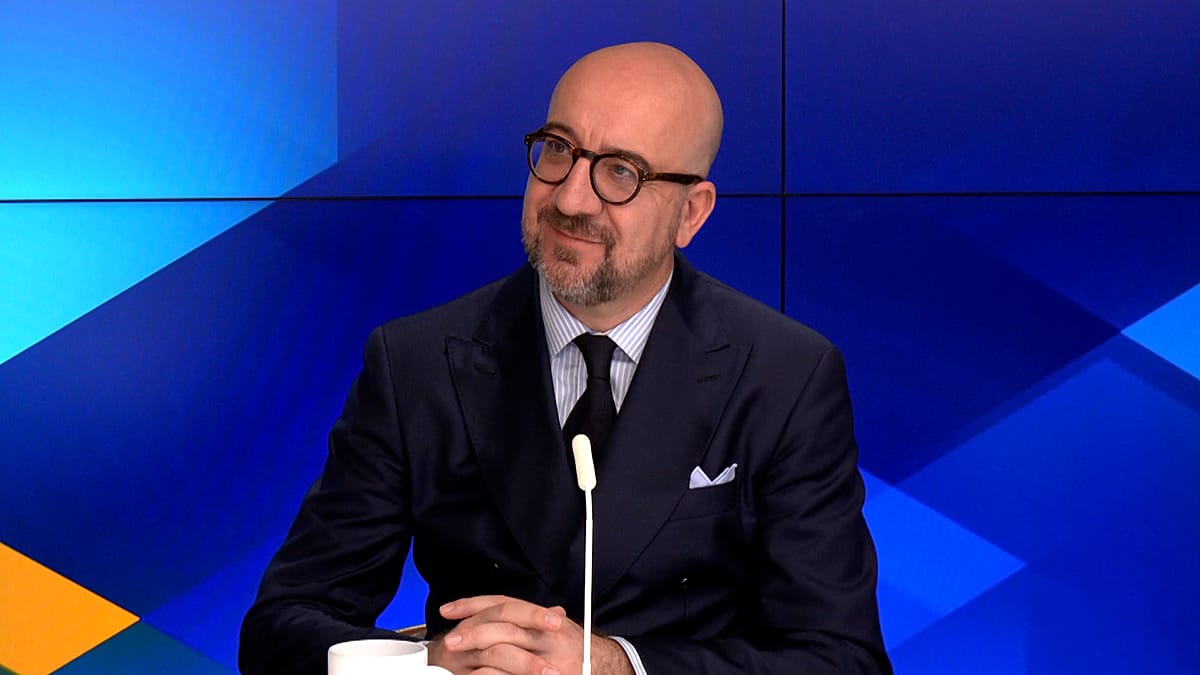
European Union Energy Commissioner Dan Jørgensen will join this week’s G20 energy meeting in Houston, Texas, alongside unexpected Russian and Venezuelan officials, exposing an increasingly uncomfortable rift between Brussels and Washington over what energy security actually means — and who should be responsible for delivering it.
ADVERTISEMENT

ADVERTISEMENT
The G20 energy ministerial meeting, hosted by the US administration from 14–16 September under the banner of “energy abundance,” reflects Washington’s push for a model centered on expanding oil and gas production, increasing electricity supply and rolling back environmental regulations viewed as obstacles to energy investment.
The approach stands in sharp contrast to the EU’s focus on climate policy and the clean energy transition.
Though the EU, the US and Russia are all full G20 members, Jørgensen will have to navigate Russia’s presence at the meeting, despite Moscow’s war against Ukraine and the EU’s efforts to end its remaining reliance on Russian fossil fuels. Venezuela will also be at the table as a controversial guest, bringing a major oil producer into the mix.
“For sure it’s a very uncomfortable situation, but he (Commissioner Jørgensen) will pass the EU’s message,” a Commission official who spoke on condition of anonymity due to the sensitivity of the matter, told Euronews. The official added that “Russia is part of the G20 and the ongoing Presidency was responsible” for whoever attends these meetings.
Washington used the G20 gathering to promote its own energy agenda, announcing plans to roll back US carbon-emissions limits on coal-and gas-fired power plants. Arriving in the US to represent the EU’s climate-focused approach, Jørgensen is likely to find himself in an increasingly uncomfortable position.
The EU’s energy strategy is increasingly focused on reducing Europe’s dependence on imported fossil fuels by accelerating electrification, expanding renewables, upgrading grids, improving energy efficiency and developing other domestic energy sources. Jørgensen has repeatedly framed energy independence as a strategic and security imperative, while arguing for a more electrified European economy.
For Washington, energy security comes from abundant production — particularly US oil, gas and electricity — while Brussels argues that dependence on volatile global fossil-fuel markets is a security vulnerability.
That message, however, may fall on deaf ears as US Interior Secretary Doug Burgum, who is attending the G20 in Houston, snubbed previous G20 ministerial meetings on energy, saying they were all about “climate extremism” and “how to stop energy production”.
“If you want to talk about affordability, this is actually a conference where we’re talking about increasing supply and increasing security,” Burgum told reporters.
A Russian in the room
The setting makes the clash even more politically charged, with a Russian official seated at the same table as Jørgensen.
The White House made the announcement recently but has not identified the Russian official. However, the representative is likely to be Energy Minister Sergey Tsivilyov.
It remains unclear whether the EU was informed about the last-minute participation. The European Commission has so far not responded to Euronews’ request for comment.
Russia’s participation is particularly striking given Moscow’s ongoing war against Ukraine and the EU’s efforts to end its remaining reliance on Russian fossil fuels.
The participation of Venezuela comes as Washington moves to deepen its energy relationship with Caracas and encourage a revival of Venezuelan oil production after ousting former President Nicolas Maduro.
However, the guest list risks turning the energy ministerial into something more than a discussion of supply and prices. It places the EU alongside the US, which is determined to expand fossil-fuel production, while also putting it in an awkward position between Washington and two countries whose oil and gas sectors are deeply entangled in broader geopolitical power struggles.
“The G20 is an opportunity for leading economies to align on pragmatic principles like these (deregulation, permitting reform) which will unlock energy abundance and strengthen global resilience,” reads the official G20 page.
If Washington uses its G20 presidency to build a coalition around a pro-production message, Brussels risks being cast as the outlier, with the bloc arguing that the answer to an energy crisis is to accelerate the transition away from the fuels at the centre of the crisis.
EU lawmaker Virgil-Daniel Popescu (Romania/EPP) urged Commissioner Jørgensen not to get into a dispute with Washington over the meeting’s name, which the Trump administration has rebranded as the “Energy Abundance Working Group”.
“The useful line is a shared one: more energy, more security, more production at home. Nuclear and renewables belong together. Gas that replaces a risky import is a security project, not a fight against the transition,” Popescu told Euronews.
“The test in Houston is whether we can talk abundance without amnesia — without forgetting Ukraine, and without forgetting that dependence, on fuel or on technology, is still the strategic risk.”
Decarbonisation vs abundant energy
In Houston, Jørgensen will be challenged to defend the EU’s own definition of energy security without appearing disconnected from the immediate problem confronting governments: high and volatile energy prices and fears over physical supply.
European gas prices climbed to around €75/MWh on 9 September, rising further above €83/MWh on 14 September, compared to pre-conflict levels of around €31/MWh before the US and Israel war against Iran. The spike in prices has prompted the European Central Bank to warn that gas prices were becoming an inflation problem.
Brent crude oil has also risen to over $100 per barrel amid escalation in the Middle East, with pump prices likely to rise again.
Brussels is likely expecting Washington to point to the US’s vast domestic energy resources and argue that expanding oil and gas production is the fastest way to shield consumers and industry from geopolitical shocks.
However, the EU’s longer-term answer of decarbonisation and electrification won’t be a quick fix for the soaring energy bills, exposing the EU’s fragility and giving political traction to the energy abundance concept.
EU lawmaker Roman Haider (Austria/Patriots of Europe) described the European energy policy as a “failure” and blamed it on the “ongoing industrial exodus”.
“The American approach of making energy as cheap and reliably available as possible is the order of the day. Exactly that should be the central task of the Commissioner, not moral grandstanding about who sits next to whom, where and when. That has its place in kindergarten,” Haider told Euronews.