The 27 leaders of the European Union are gearing up for a high-voltage summit in Brussels with a packed agenda devoted to Ukraine, climate targets and China, all of which could lead to fraught negotiations and delicate compromises in the room.
The all-day meeting on Thursday will also address defence readiness, competitiveness, the Middle East, irregular migration and, for the first time, the housing crisis.
Ukrainian President Volodymyr Zelenskyy will attend the gathering in person to plead for political backing for his strategy and fresh assistance for his armed forces, which is running dangerously low after US President Donald Trump halted all funds.
Trump’s diplomacy will loom heavily over the talks after his anticipated tête-à-tête with Russian President Vladimir Putin in Budapest was indefinitely postponed, prompting Europeans to close ranks behind Kyivand reassert their standing.
On Tuesday, a group of European leaders called for a ceasefire at the “current” battle lines, something Trump said he favours but that Putin outright rejects.
“We remain committed to the principle that international borders must not be changed by force,” they said in a statement.
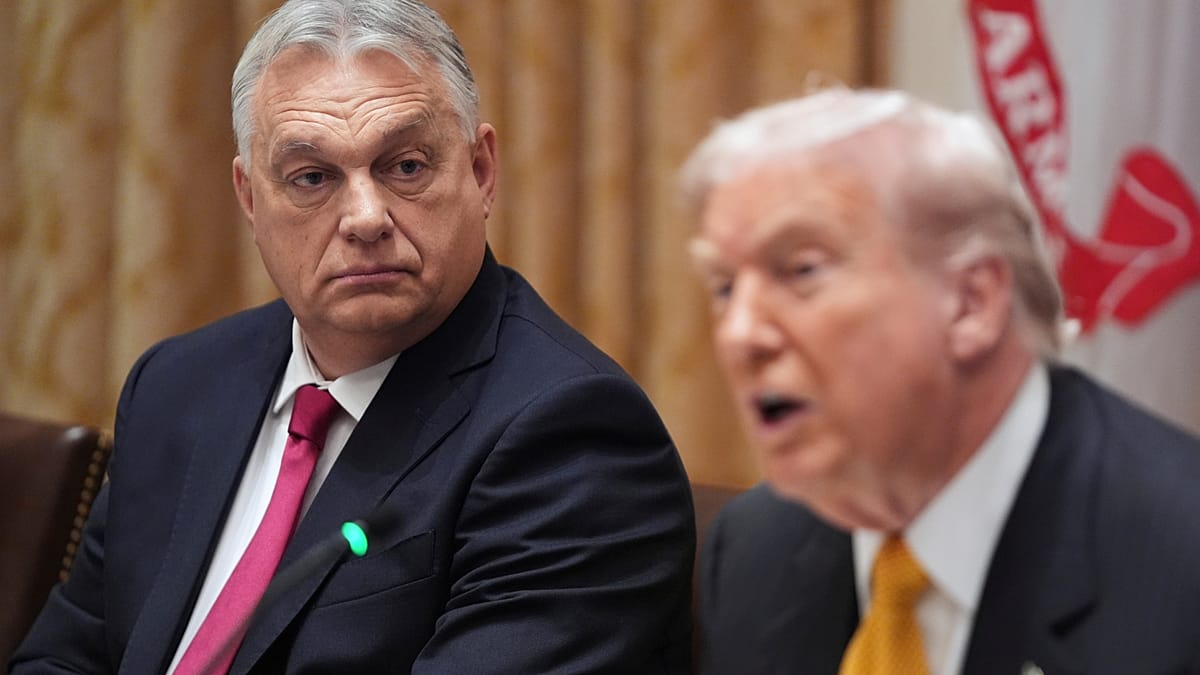
As is tradition now, the joint conclusions on Ukraine will be endorsed only by 26 member states as a result of Hungary’s much-publicised disagreements. Hungary, however, is not expected to be a protagonist on Thursday, with Prime Minister Viktor Orbán scheduled to arrive in the late afternoon due to a national holiday.
Instead, the prime focus will be on Belgium.
Heads of state and government will try to placate Belgian concerns over a bold plan to use Russia’s immobilised assets and issue a €140 billion interest-free loan to Ukraine to plug its budget deficit and provide reliable military support.
Belgium has a particular stake in the ground-breaking project because the bulk of the Russian assets are held at Euroclear, a central securities depository based in Brussels.
The country’s prime minister, Bart De Wever,has asked for “the maximum” of legal certainty, solidarity and accountability to ensure that potential risks, such as Moscow’s retaliation, are properly shared by all member states. De Wever has also requested “transparency” to locate the Russian sovereing assets held in other jurisdictions.
“I don’t think this is an unreasonable position,” he said earlier this month.
Diplomats and officials concede Belgium has legitimate interests and hope De Wever will ultimately agree to task the European Commission with developing a legal proposal so that Kyiv can start receiving the funds sometime next year.
The conversation will look into ways to ensure Ukraine’s military purchases under the loan benefit the European industry, a key goal for France. Others, by contrast, prefer to prioritise the immediacy of production and supplies, regardless of the country of origin.
“The aim of this loan is to keep Ukraine in the fight,” said a senior diplomat. “If they can spend the loan in Europe, even better.”
Climate fight
In parallel to De Wever, leaders will keep an eye on Robert Fico, the prime minister of Slovakia, who has vetoed the new package of sanctions against Russia.
Fico has no objection to the package itself, which targets Russian liquefied natural gas (LNG), oil infrastructure, the “shadow fleet” and cryptocurrency platforms, as well as the movements of Russian diplomats across the bloc, but has raised a series of unrelated questions about energy prices, the car-making sector and competitiveness.
In the lead-up to Thursday’s summit, ambassadors spent hours fine-tuning the conclusions to expand the language on precisely those issues.
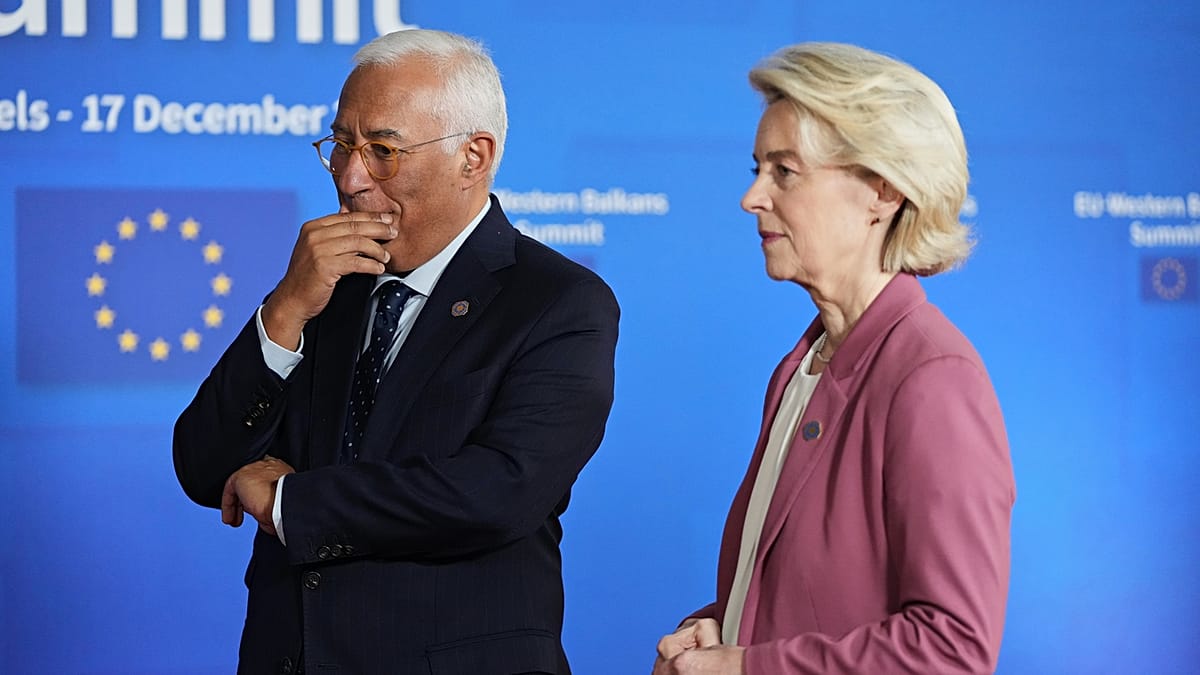
Commission President Ursula von der Leyen penned a letter to the 27, making several commitments to lower energy prices for households and accelerate a review of a law that will effectively ban sales of new cars with combustion engines by 2035.
The overtures appeared to have paid off: on Wednesday, Fico telegraphed his intention to lift the veto and agree to the sanctions. The package “does not concern us directly, but it is a good tool for negotiations”, he said, seemingly claiming victory.
The push to lobby Fico has been woven into a broader discussion on climate policy, which has become increasingly contested by conservative leaders such as Germany’s Friedrich Merz, Italy’s Giorgia Meloni and Poland’s Donald Tusk.
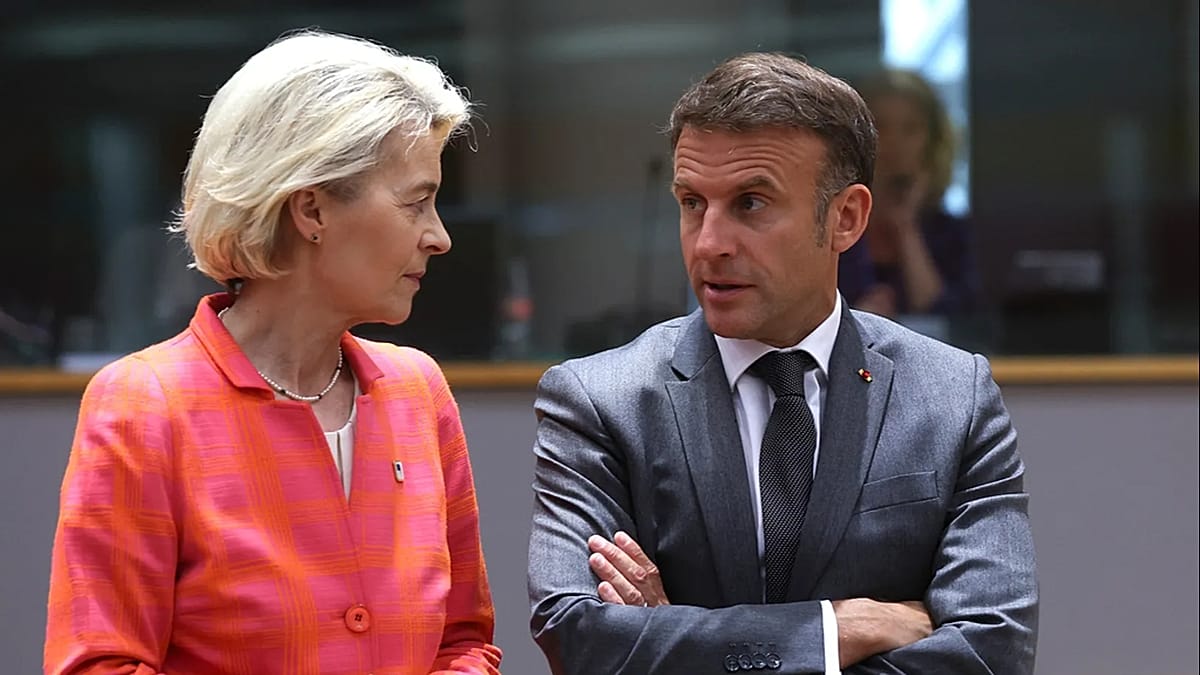
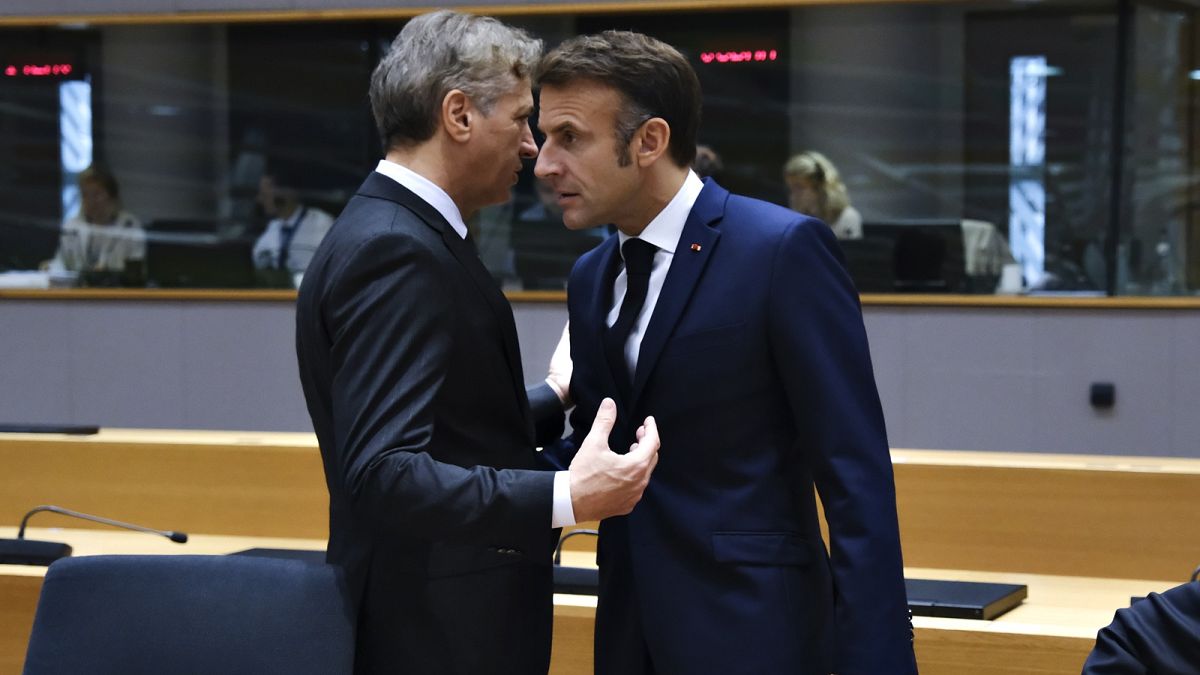
Even liberals, like France’s Emmanuel Macron, have raised questions. Macron had demanded leaders have a face-to-face debate on the need to establish an emissions reduction target for 2040 as a bridge to climate neutrality by mid-century.
The Commission has already proposed a reduction of 90% by 2040, but with certain flexibilities for governments and industry. The text faces an uphill struggle to be approved as the political backlash against environmental regulations deepens.
Another friction point is the new Emissions Trading System (ETS) that will put a price on the CO2 released by buildings and road transport. Some countries want the system, set to take effect in 2027, to be comprehensively reviewed or downright abolished.
With grievances mounting, Thursday’s exchange risks descending into a bitter clash over the Green Deal, the main legacy of von der Leyen’s first mandate.
“If a robust, resilient, sustainable and innovative economy is our goal, then dogmatically clinging to our existing business models, whether their past successes, is not the solution,” von der Leyen wrote in her letter.
Although not formally on the agenda, China will inevitably come to the table.
Beijing’s decision to reimpose and expand sweeping restrictions on rare earths, crucial for the defence and technology sectors, has rattled Europeans and fuelled calls from Germany, France and Poland to take a tougher stance.
Member states, however, continue to be sharply divided on how to tackle Beijing and fear that any escalation with the Asian giant could hit the European economy hard, still reeling from the painful impact of Trump’s tariffs.
This means that the prospect of triggering the “Anti-Coercion Instrument”, the bloc’s most powerful trade tool, remains a distant idea – for now.