


There is a golden rule in the EU’s criteria for accepting new members that officials often repeat: membership is “merit-based’, meaning no candidate country can join until fully aligned with EU laws and democratic standards.
ADVERTISEMENT

ADVERTISEMENT
But Ukraine may prove an exception.
President Volodymyr Zelenskyy is calling for a fixed deadline for Kyiv’s EU accession in US-brokered peace talks with Russia – forcing a major scramble in the EU executive to rethink its decades-old enlargement policy.
Speaking to reporters in a WhatsApp chat on Wednesday, Zelenskyy said Ukraine will “do everything to be technically ready for (EU) accession by 2027,” adding that he is “confident” that unless a date is included in a peace deal, Russia will “do everything to block” Ukraine’s accession.
EU leaders acknowledge that the deadline is impossible under the current rules. German Chancellor Friedrich Merz has described it as “out of the question.”
Several diplomats say committing to a deadline is unfeasible. But also concede that rejecting a date embedded in a prospective US-brokered trade deal is politically untenable.
In a bid to square the circle, the EU executive is now actively working on proposals to overhaul the enlargement process and make Ukraine’s swift accession possible, EU officials and diplomats with direct knowledge of the matter confirmed to Euronews.
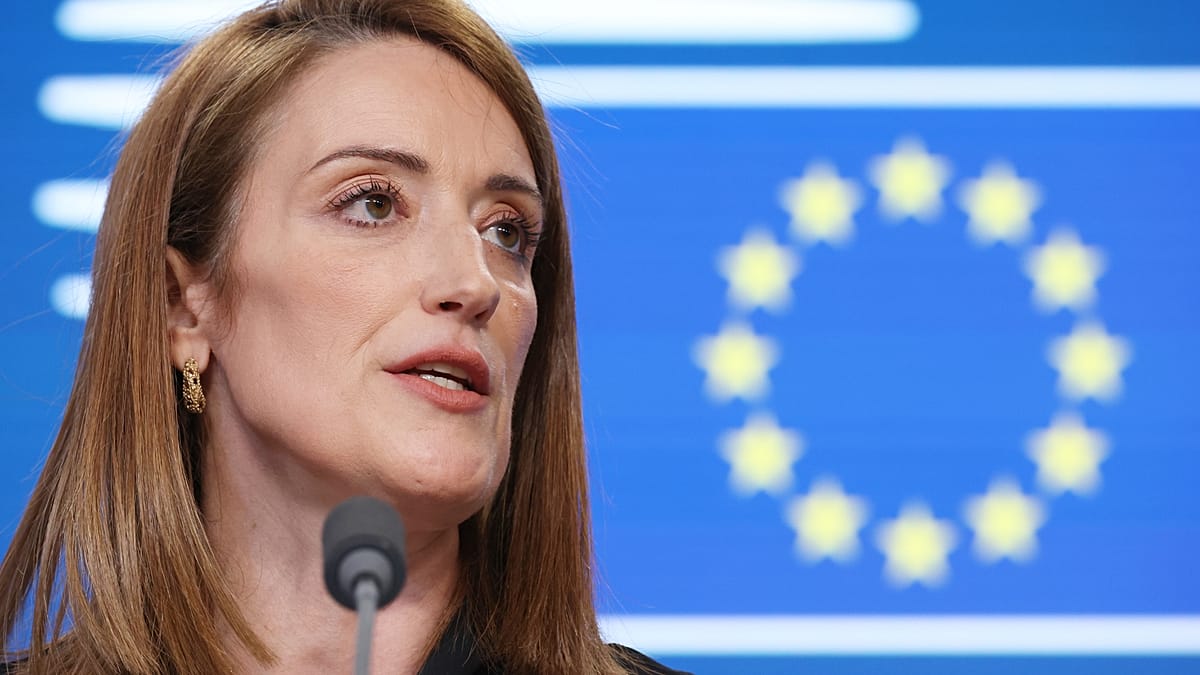
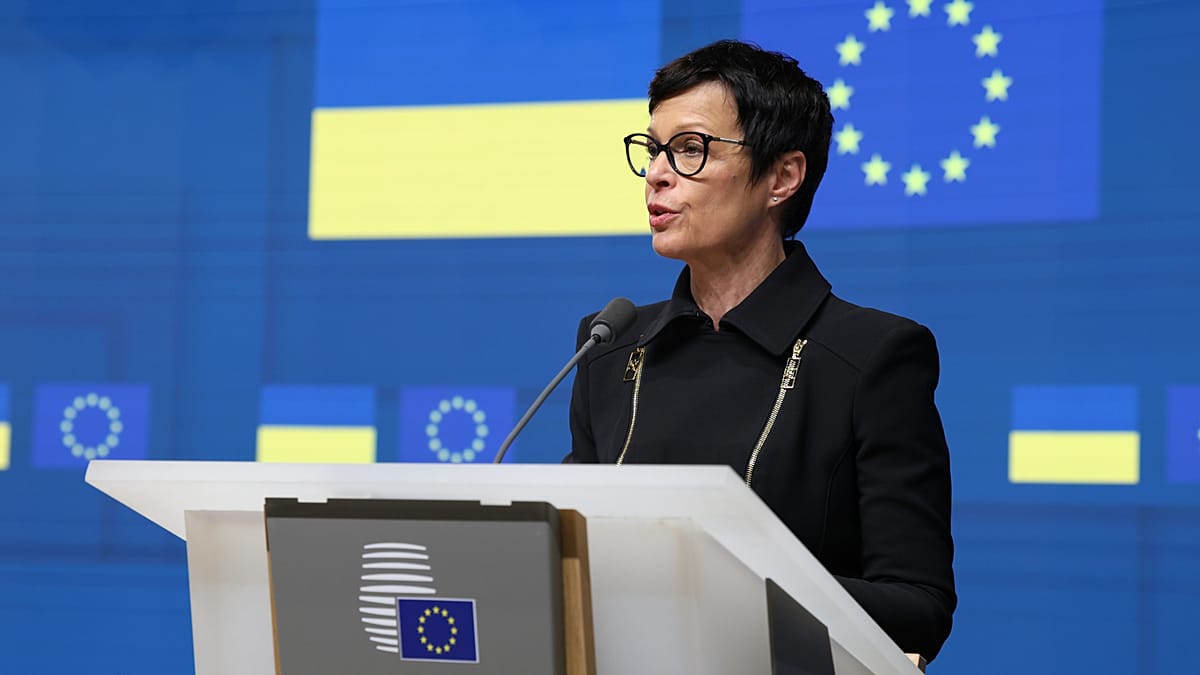
Speaking from Tallinn on Friday morning, the EU’s enlargement chief Marta Kos summarised the pressing challenge facing her executive.
“We face a growing tension between the time which is needed to apply a credible, merits-based approach and growing pressure from external players on our candidates – pressure intended to raise the political cost of moving forward on their EU path,” Kos said, adding that the current enlargement model is “increasingly unfit” to match the geopolitical reality.
“In short, our enlargement model requires time, stability and gradual reform. But today’s geopolitical environment is unstable and often coercive,” she added, later cautioning that the new “models” under consideration should always depart from the same “baseline”: that “full membership comes only after full reforms.”
Accession ‘in reverse’
One of the ideas on the table, officials say, is reversing the entire sequence by giving Ukraine immediate EU member or affiliate status but not allowing it to fully benefit from the EU budget or single market until it completes the necessary economic, legal and social reforms.
One EU official familiar with the discussions said that, under such a plan, as many as seven other candidate countries could get member status along with Ukraine – acknowledging that such a move could radically change how the EU works.
Candidate countries are currently at different stages on their path to becoming EU-ready, with Montenegro and Albania considered most advanced. The plan could mean a multi-tier European Union wildly at odds with the current system.
It also remains unclear what legal workaround the EU executive could explore to make the swift integration happen. For a country to be considered an EU member, a special accession treaty with the fine-print of membership conditions needs to be ratified by all of the EU’s 27 national parliaments.
Ensuring the backing of all 27 member states is a fraught political task, not least because of Hungary’s deep-rooted opposition to Ukraine’s accession. Each step of the accession process currently requires the unanimous backing of all members, meaning Budapest is currently single-handedly holding back Ukraine’s progress.
Prime Minister Viktor Orbán, who has previously cited corruption and the rights of the Hungarian minority and Ukraine to justify his opposition, said on Thursday that Ukraine’s accession in 2027 is “not up for debate”, insisting Hungary would not “finance, arm, or legitimise a threat to its own security.”
The debate is happening in parallel with a broader re-calibration of how the EU works, with leaders agreeing on Thursday during talks on the economy that the bloc may need to abandon its deep-rooted tradition of moving as a bloc of 27 to establish smaller groups of countries that embrace deeper reforms.
It’s what Belgian premier Bart de Wever recently described as the “European Onion” – a bloc that consists of a core and several outer layers, with countries who embrace deep integration benefitting most from membership.
Accelerating reforms, tackling ‘Trojan horses’
Officials are also clinging onto the principle that fully-fledged membership is only possible once candidates are fully aligned with the EU’s democratic rules and economic standards.
A functioning democracy, an independent judiciary and anti-graft measures are often cited as the non-negotiable factors needed for candidates to benefit from EU membership.
The Commission has drawn up a 10-point plan to accelerate Kyiv’s reforms, even though the process is officially stalled by Hungary’s veto on the talks. It means Ukraine is informally proceeding with the reforms it’s expected to implement with support from the Commission, allowing technical negotiations to continue despite Budapest’s entrenched opposition.
The process is referred to as “frontloading”, in the hopes that when Budapest eventually lifts its veto, Ukraine will have already ticked off many of the milestones and its integration can be swiftly finalised.
The plan places an emphasis on the fight against corruption, considered a priority after the Ukrainian government tabled, and then withdrew, a new law undermining the independence of two anti-corruption agencies, NABU and SAPO, over the summer, sparking a sharp rebuke from the EU executive.
The prospect of reforming the EU’s enlargement rules to accommodate Ukraine also offers the possibility for the bloc to introduce new rules to ensure new members don’t drift away from EU standards and rules once they have become full members.
“I plead that the next Accession Treaties should contain stronger safeguards against backsliding on commitments made during the accession negotiations,” EU enlargement chief Marta Kos said on Friday, adding that Montenegro’s treaty should be the first to contain new safeguards.
Experts say that while Croatia’s 2013 accession treaty did include certain safeguard clauses to protect its economic transition, the next treaties should include specific measures to prevent rule-of-law and governance failures.
“If new members respect the rules, they will not even notice those safeguards,” Kos added, describing it as an “insurance policy.”
The EU currently has the possibility to suspend certain members’ rights, including voting rights, in response to backsliding on the rule of law and democracy. But the process, triggered under Article 7 of the EU Treaty, is lengthy and considered to be politically sensitive.