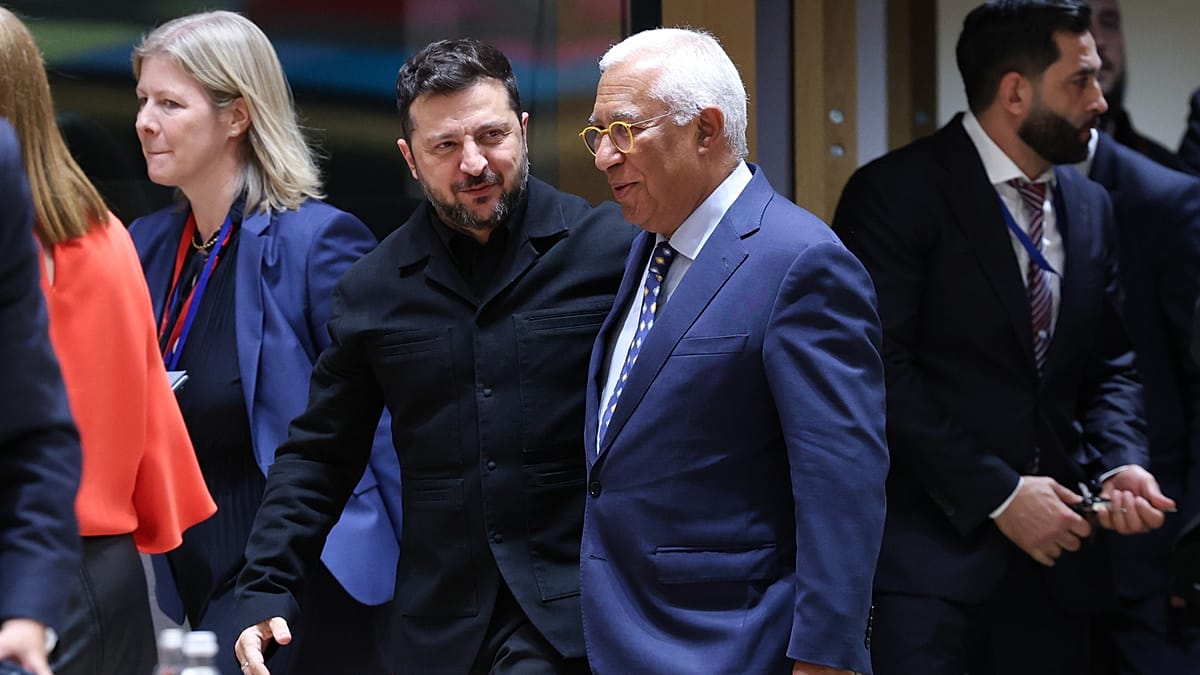
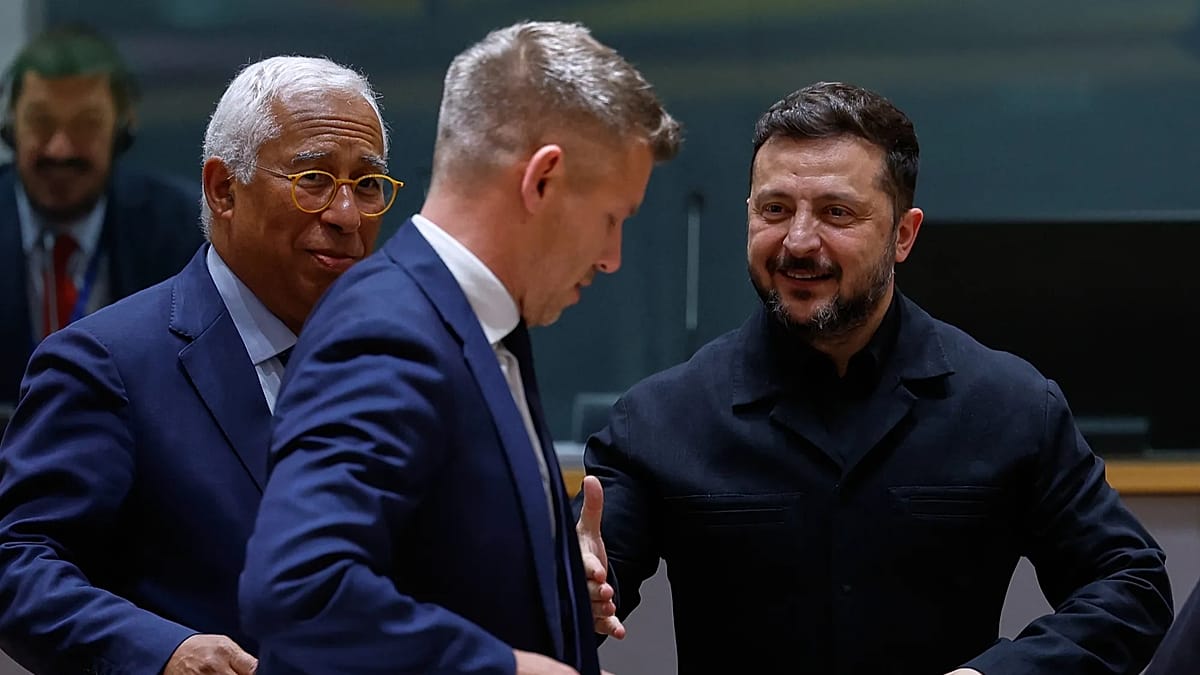
Zelenskyy’s plea: After a bruising week that has seen tensions between the Ukrainian leader and US President Donald Trump boil over once more, Zelenskyy is aiming to shore up further military assistance, strengthen Ukraine’s air defences and protect its energy infrastructure as he joins EU leaders for talks.
ADVERTISEMENT

ADVERTISEMENT
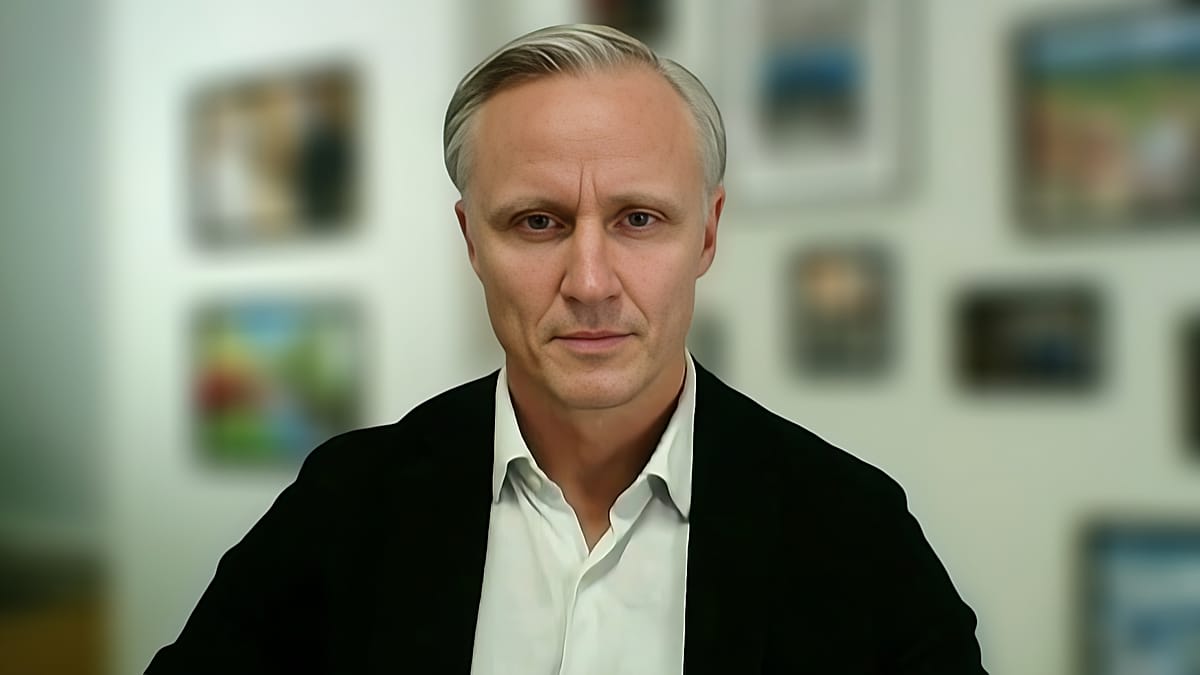
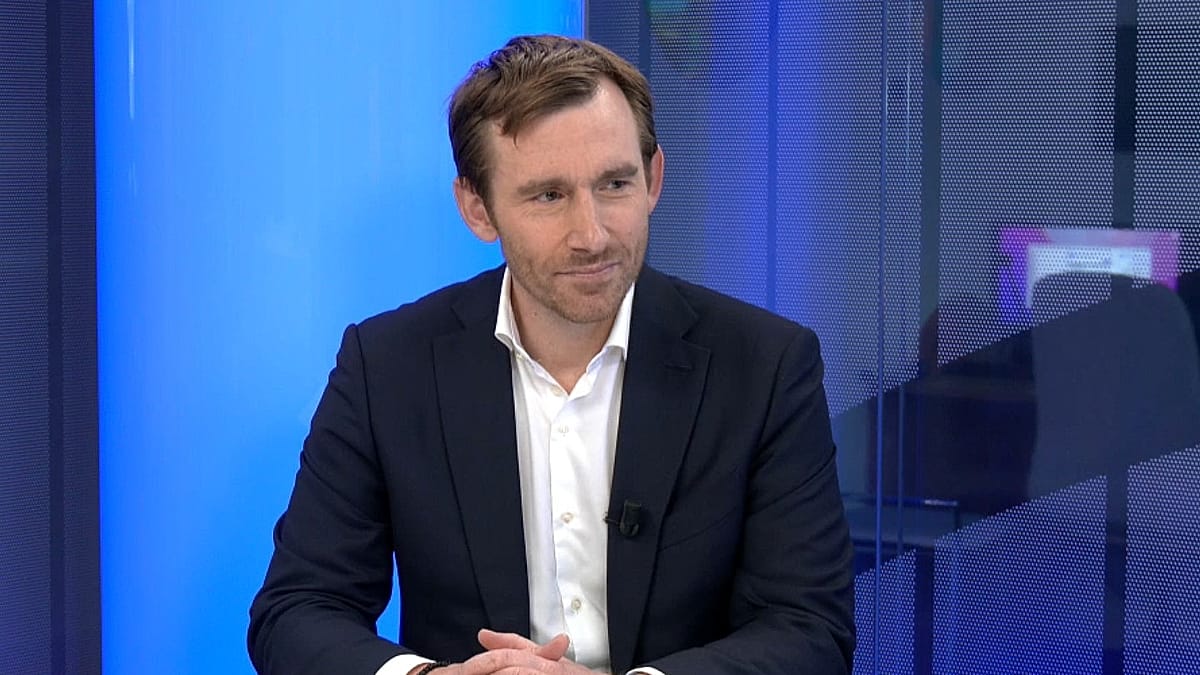
In an exclusive interview with our correspondent Sasha Vakulina ahead of the summit, Zelenskyy’s deputy chief of staff Ihor Zhovkva called forthe development of European alternatives to US anti-ballistic missile defence capabilities and Starlink satellite communications, both of which have been undermined by uncertainty over continued US support. Watch.
Zelenskyy’s participation in the summit is expected to be brief, with the Ukrainian President due to leave Brussels around lunchtime, Sasha reports. He will start the day with his first formal bilateral meeting with Hungarian Prime Minister Péter Magyar, as Kyiv and Budapest seek to reset relations after years of diplomatic disputes that have repeatedly complicated Ukraine’s EU accession process.
Financing needs: Leaders are later expected to hold an initial discussion on Ukraine’s financing gap for 2027, which the government in Kyiv estimates at $78 billion. An EU diplomat said that the bloc will be expected to fork up “tens of billions” from that figure. But tighter public spending and waning voter support for further aid make plugging the gap increasingly difficult.
Eyes on the assets: That’s partly why the prospect of channelling Russian state assets immobilised in EU countries as a loan to Ukraine is being revived, with several EU diplomats saying they believe the option should be firmly back on the table.
Reports emerged yesterday that US negotiators had last week pressured European counterparts to release the immobilised assets – which total €210 billion – into a financial vehicle to be controlled by Washington, to be used to unlock stalled peace talks.
‘Nein’: German Chancellor Friedrich Merz last night firmly rejected the American proposal. “This is our business and we are deciding over it,” Merz told reporters.
Belgium, where the bulk of the assets are held, is still seen as the main holdout, citing legal and financial risks.
Prime Minister Bart de Wever is understood to have discussed Ukraine’s financing needs in a bilateral meeting with Zelenskyy last night. But the Belgian premier has remained tight-lipped about his position on reviving the assets debate, saying instead that he had a “clear idea” of how Kyiv’s needs could be covered.
Budget battle deepens: If you missed yesterday’s marathon summit talks, Jorge Liboreiro has you covered with his key takeaways. EU leaders failed to reconcile their differences over the EU’s next seven-year budget, casting major doubts over whether a deal can be sealed by the end of the year.
“We are not reaching an agreement this month. Not next month. I don’t know even if it’s possible to reach an agreement before the end of the year,” Sweden’s caretaker Prime Minister Ulf Kristersson said. “I think we are not in a hurry.”
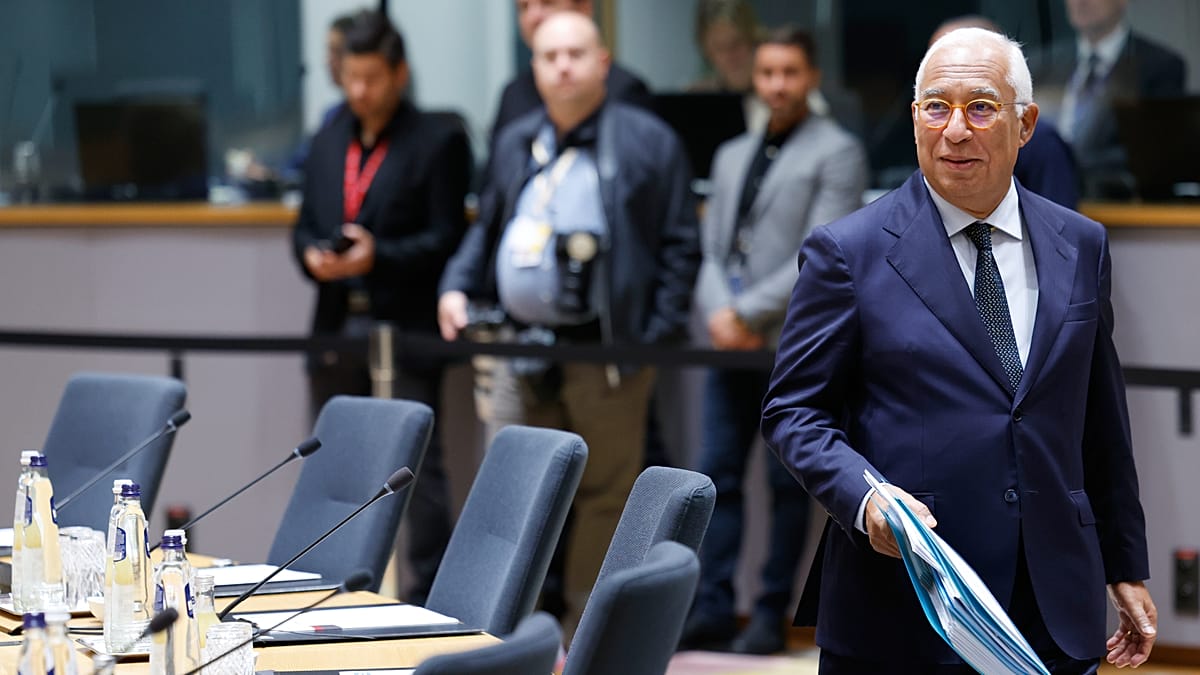
European Council President António Costa has been leading efforts to close negotiations by the end of this year, to avoid talks from being derailed by pivotal elections happening in major EU economies in the spring, particularly in France, where the National Rally’s Marine Le Pen is topping the polls. Le Pen has already threatened to drastically cut France’s contribution into the budget.
Costa is now expected to take the lead on the negotiations and present a fresh negotiating proposal in a few weeks, which is bound to follow a completely different logic from the Irish one tabled last week. EU leaders have been called in for a special summit on 26 November.
Speaking to our correspondent Shona Murray earlier, Ireland’s EU affairs minister Thomas Byrne insisted that the Irish proposal – known as the “negobox” – had been helpful. “Our assignment was to find a basis for a negotiation. I think we’ve actually done that,” he explained. “What we’re hearing for member states is, by and large, we’ve gone in the right direction.” Watch.
Energy fallout: Also last night, a plan by the four Visegrad countries — Slovakia, Hungary, the Czech Republic and Poland — backed by Italy and Greece to delay the next Emissions Trading System (ETS2) until 2030 hit a wall after hours of talks, our reporter Marta Pacheco writes this morning.
Diplomats said Council President António Costa couldn’t come up with a compromise due to the complexity of the file (as well as technical issues with printers!). But in the end, the six countries managed to include an impact assessment in the official summit conclusions urging the European Commission to do more to address rising electricity prices.
Germany pressures Croatia to resolve bilateral disputes with Montenegro over EU accession
Berlin has asked Croatia to constructively resolve the bilateral disputes that threaten to derail the accession of the EU’s most advanced candidate, Montenero, four officials with direct knowledge of the matter told Euronews’ Luca Bertuzzi.
Earlier this week, Zagreb circulated an eight-point list of grievances that it wants resolved before Podgorica can finalise its accession bid. Behind the scenes, Berlin has been manoeuvring to ensure that enlargement does not lose momentum.
Berlin also recently offered to mediate, but the offer has not been put into practice. The government of Chancellor Friedrich Merz is positioning itself as an honest broker, fearing that unresolved bilateral problems could jeopardise the enlargement process.
“There are issues which we have signalled to our Montenegrin neighbours for years,” Croatian Prime Minister Andrej Plenković told reporters ahead of the European Council summit in Brussels on Thursday.
Luca has the full story.
More from our newsrooms
Russia detains citizens as Moscow eyes future prisoner swap. Moscow’s federal security agency arrested two individuals – one on terrorism charges and the other on espionage charges – days after former president Dmitry Medvedev stated that Russia may need to “fill up the exchange pool with European and American idiots” to recover nationals abroad. Serguei Doubine and Euronews Russian have the details.
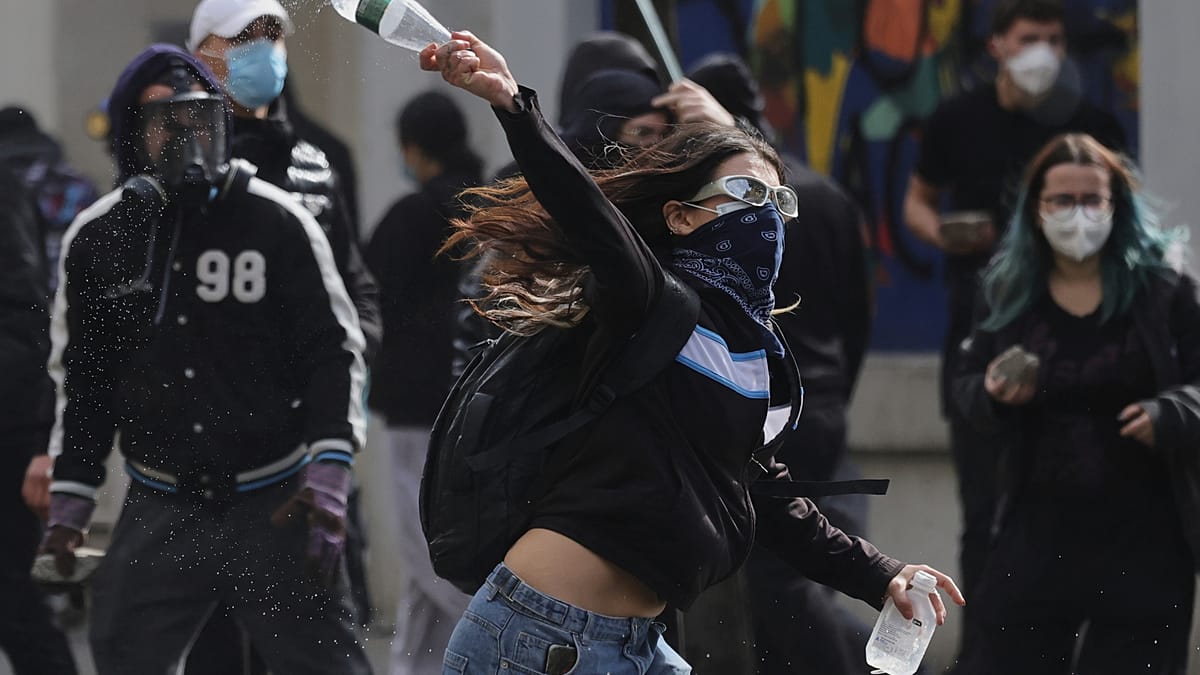
Albanian PM condemns ‘chaos’ as violent protests enter third day. Protesters and police clashed in Albania’s capital Tirana on Thursday for the third consecutive day over public anger regarding alleged government corruption and reforms. Prime Minister Edi Rama condemned the “chaos” following the violent demonstrations, which have damaged government buildings. Greta Ruffin has more.
Tears, hugs and continued fight for housing: Madrid’s Puerta del Sol after two weeks. After more than two weeks of camping in Puerta del Sol, demonstrators are battling exhaustion and the challenges of living outdoors, while solidarity keeps the protest – regarding affordable housing – alive, and Madrid’s regional government continues to call for their eviction. Christina Thykjaer has a report from inside the camp.
We’re also keeping an eye on
Our attention is fully on the final day of the European Council summit today. Here’s how the final day is expected to roll out:
- The 27 heads of state will arrive at the European Council building in the Belgian capital at 8.30 CET for their meeting to kick off at 10.00 CET.
- Leaders will discuss Ukraine, with President Volodymyr Zelenskyy to give an update on the battlefield situation. The 27 will also address European security and defence, with hybrid threats expected to occupy much of the spotlight, and migration will be discussed over lunch.
- European Council President António Costa and Commission President Ursula von der Leyen are expected to deliver a press conference from the summit.
That’s it for today. Angela Skujins, Jorge Liboreiro, Marta Pacheco, Peggy Corlin and Sasha Vakulina contributed to this newsletter.