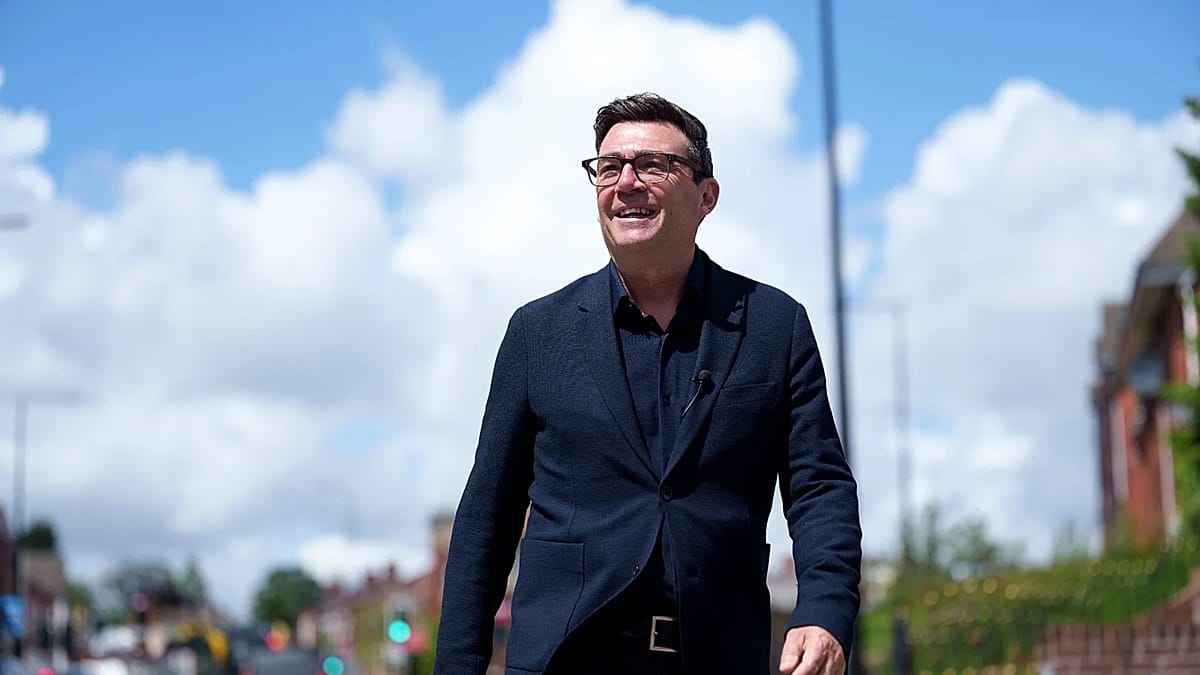


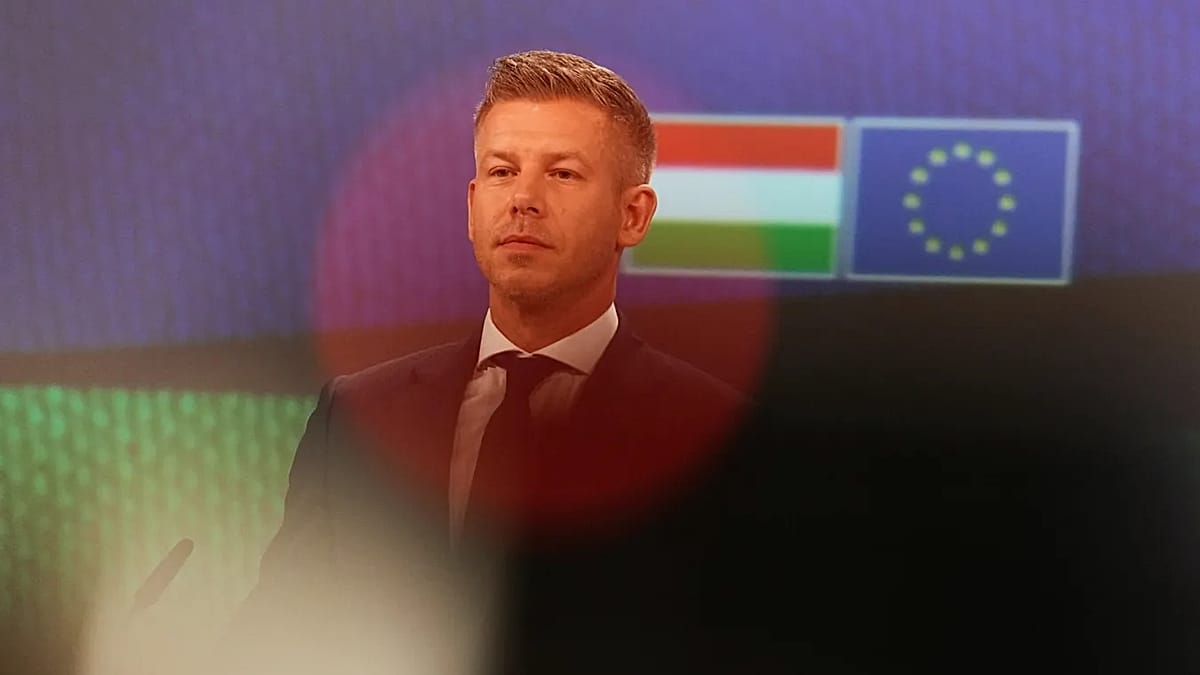
When Péter Magyar won Hungary’s parliamentary elections in March 2026, bringing an end to Viktor Orbán’s 16 years in power, there was palpable relief in many European capitals. His inaugural visit to Berlin to meet Chancellor Friedrich Merz (CDU) is set to be the next major test for his new government.
ADVERTISEMENT

ADVERTISEMENT
After the first wave of political relief, the focus shifted to specific, practical expectations for the new government.
The strained relationship between Germany, the European Union and Hungary has to be rebuilt. At the same time, Berlin and Budapest need to clarify how closely they intend to cooperate in the future on key European issues – from support for Ukraine to EU reforms.
“Chancellor Merz’s expectations of Prime Minister Magyar are likely to be fairly straightforward: if at all possible, Hungary should not cause political headaches in the foreseeable future,” Daniel Hegedüs, deputy director of the Institute for European Politics (IEP), told Euronews.
End of the Orbán era: what Berlin expects from Budapest
The “political headaches” Hegedüs refers to are most likely to arise over important EU-level strategic decisions. – “especially with regard to Ukraine and the next Multiannual Financial Framework (MFF)”.
Germany mostly hopes for a normalisation of Hungary’s European and foreign policy.
While Orbán repeatedly drew attention in the EU and NATO by wielding vetoes and cultivating close ties with Russia and China, Magyar’s Hungary is expected to become a predictable partner again.
“German expectations focus on a normalisation of Hungary’s European and foreign policy and on restoring Hungary as a reliable and constructive partner at European and international level,” said Hegedüs.
In his view, German-Hungarian relations have been severely strained in recent years by Budapest’s “politics of blockade and veto in the EU and NATO”.
He added that the country’s advancing autocratisation, deficits in the rule of law and in the fight against corruption, and growing pressure on German investors outside the automotive industry contributed to making things worse.
Germany is also looking for changes on the economic and institutional front. “A marked improvement in the investment climate for German companies, along with progress in strengthening the rule of law in Hungary, would certainly be seen in Berlin as a welcome additional outcome,” Hegedüs added.
Merz himself described Magyar’s election victory in March as a positive signal. On the platform X, the chancellor had said that he looked forward “to working together for a strong, secure and above all united Europe”.
The result, Merz later said in Berlin, was a sign of the strength of European democracies and a blow against right-wing populism worldwide.
What Magyar wants from Germany
The expectations, however, are by no means one-sided. Budapest is also coming to Berlin with clear demands.
Centre stage is the release of further EU funds that were frozen during the Orbán years over breaches of rule-of-law principles. Magyar is hoping for support from Germany and the European People’s Party for the gradual lifting of the conditionality measures imposed on Hungary.
“Magyar’s expectations of Merz are focused on securing strong support from Germany and the European People’s Party for the gradual dismantling of the EU sanctions or conditionality measures imposed on Hungary,” Hegedüs explained.
The new government has already been able to chalk up some progress. On Friday, a total of €16.4 billion in previously blocked EU funds for Hungary was released. The amount includes money from the recovery fund, the cohesion fund and other allocations tied to reforms.
In return, however, Budapest must implement – and in some cases still complete – extensive reforms on the rule of law, the fight against corruption, and institutional oversight. According to Hegedüs, roughly half of the previously suspended cohesion funds, meaning EU financial assistance, remain frozen.
At the same time, Magyar is under considerable domestic pressure. His government is trying to dismantle numerous structures from the Orbán era while maintaining economic stability.
“The government’s core European policy goals are the release of frozen EU funds for Hungary, securing advantageous positions in negotiations on the next Multiannual Financial Framework, and joining the eurozone by 2030,” said Hegedüs. Cohesion and agricultural funds are of particular importance to the Hungarian government.
For Hegedüs, Hungary’s aims reflect an effort to catch up with the European mainstream. He does not see any ambition to play a leading strategic role in shaping European security policy or the EU’s global role.
Ukraine, a litmus test for Hungary’s new EU course
Whether Hungary’s political reorientation succeeds is likely to become apparent in its policy on Ukraine. The challenge lies in the detail, Hegedüs argued.
Although Magyar’s government has already dropped its blockade of a €90 billion EU financial package for Ukraine, Budapest still refuses to support the opening of EU accession talks with Kyiv.
The reason is a dispute over the rights of the Hungarian minority in the western Ukrainian region of Transcarpathia. Whether Hungary will, in future, act as a constructive partner or once again as a brake will depend on the ongoing negotiations between Budapest and Kyiv.
“Whether this will lead to a compromise acceptable to both sides before the European Council meeting in June, or whether Budapest will once again remain in the role of an obstructing state, depends largely on the success of the ongoing bilateral negotiations between Hungary and Ukraine,” said Hegedüs.
In his assessment, the change of power in Budapest is already having an impact beyond Hungary itself. More Ukraine-friendly positions can now be observed in Slovakia and the Czech Republic. In the short term, this could usher in a phase of relative relaxation within the EU and NATO.
Whether this will translate into genuine unity remains to be seen. It would require keeping the dispute between Hungary and Ukraine over minority rights from escalating further.
Expert: the real impact of Hungary’s change of power lies elsewhere
For Hegedüs, the real significance of the change of government does not lie in individual policy decisions, but in its symbolic impact on Europe.
“The country has experienced sixteen years of illiberal, radical right-wing rule and the accompanying autocratisation,” Hegedüs explained.
“Against this backdrop, Hungarian voters have clearly rejected this political course and expressed their desire for liberal democracy, the rule of law and European integration,” he stressed.
He also sees Hungary’s change of government as a cautionary tale, especially “at a time when millions of voters – from France to the German Länder – are considering entrusting government responsibility to illiberal and radical right forces,” Hegedüs told Euronews.
“Hungary’s example should make clear where such a course in government can lead – and how it is judged by those who already know its consequences from their own experience,” Hegedüs said.
On Tuesday, Chancellor Friedrich Merz will first receive the Hungarian prime minister with military honours. Their subsequent meeting will focus on relations between the two countries as well as with the EU. Continued support for Ukraine and Euro-Atlantic security will also be high on the agenda. On Wednesday, Magyar will travel on to French President Emmanuel Macron.