


From everyday staples such as dairy and poultry products to record-breaking regional outbreaks, Salmonella cases are quietly surging across Europe — leaving health officials on high alert as infections reach levels not seen in years.
ADVERTISEMENT

ADVERTISEMENT
Noodles, eggs, and pumpkin seeds are among the products that have been linked with Salmonella outbreaks in the past months.
More recently, in August, more than 300 people fell ill with Salmonella in Belgium after they ate eggs, resulting in a record Salmonella outbreak for the country.
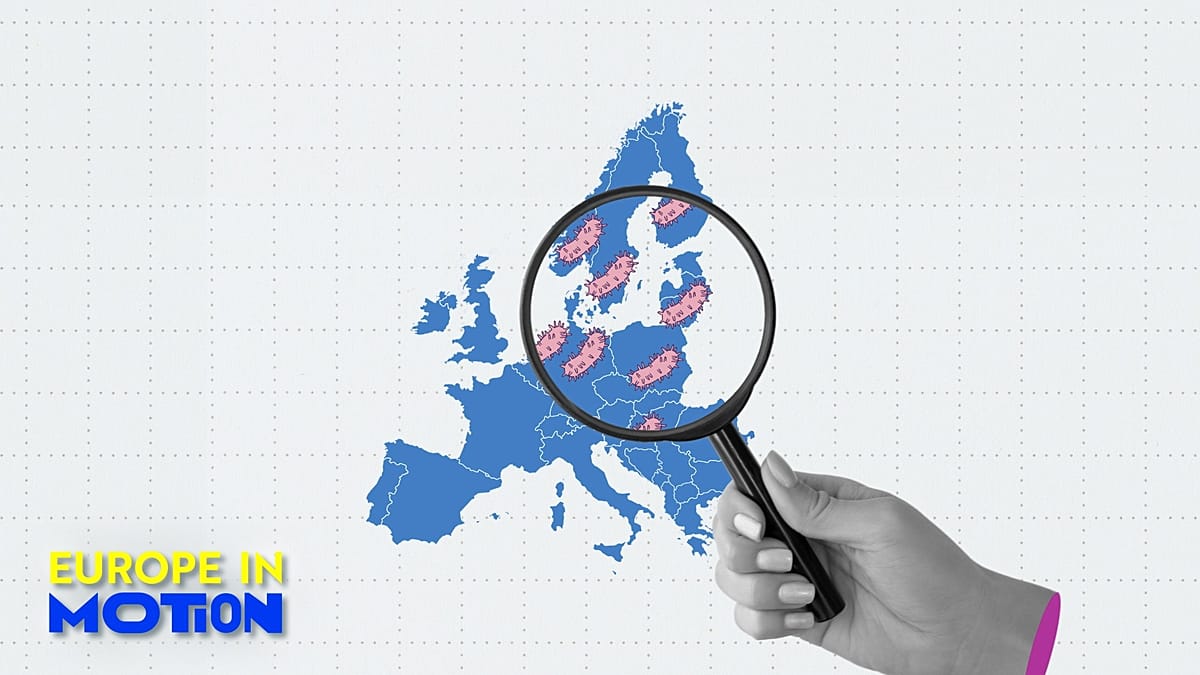
Salmonella is the second-most common foodborne illness in the world, and cases have been steadily increasing in Europe since 2020, according to the European Centre for Disease Prevention and Control (ECDC).
Infants and children up to 4 years old are the most affected.
Between May 2025 and August 2026, there were 341 confirmed cases of Salmonella across the continent, with almost half reported since May 2026, according to the latest ECDC figures.
During this period, the UK reported the most cases (207), followed by the Netherlands (106), Belgium (15), Germany (6), France (4), Austria (2), and Denmark (1).
However, the UK has revised its number of cases upwards, bringing the total to 474.
Investigations in the UK are ongoing, but experts believe people fell ill after eating out rather than cooking eggs at home.
Furthermore, the 15 Belgian cases recorded by the ECDC do not include the country’s recent record outbreak.
In 2024, Germany (12,316), France (12,308), and Spain (11,248) were the most affected in the EU, while Cyprus (80), Estonia (103) and Malta (164) reported fewer cases, according to the agency.
How do people get Salmonella and is it serious?
Salmonella is a group of bacteria that can cause a type of food poisoning called salmonellosis.
Although researchers have discovered more than 2,500 varieties of Salmonella, only around 100 types cause illness when consumed, according to the US Centers for Disease Control and Prevention (CDC).
Infection is usually caused by eating raw or undercooked meat, poultry, and eggs, or by drinking unpasteurised milk.
Warmer weather and unrefrigerated foods create ideal conditions for the bacteria to grow, which leads to the infection being more common during summer.
Most people who get sick recover within a week, but infections can be severe in young children, older adults and people with weaker immune systems.
In the EU, more than 91,000 salmonellosis cases are reported each year, according to the European Food Safety Agency (EFSA), and it’s not just public health that the bacteria harms.
The EFSA estimates that the overall economic burden of Salmonella could be as high as €3 billion a year, with expenses stemming from direct healthcare, hospital stays, and lost work productivity.