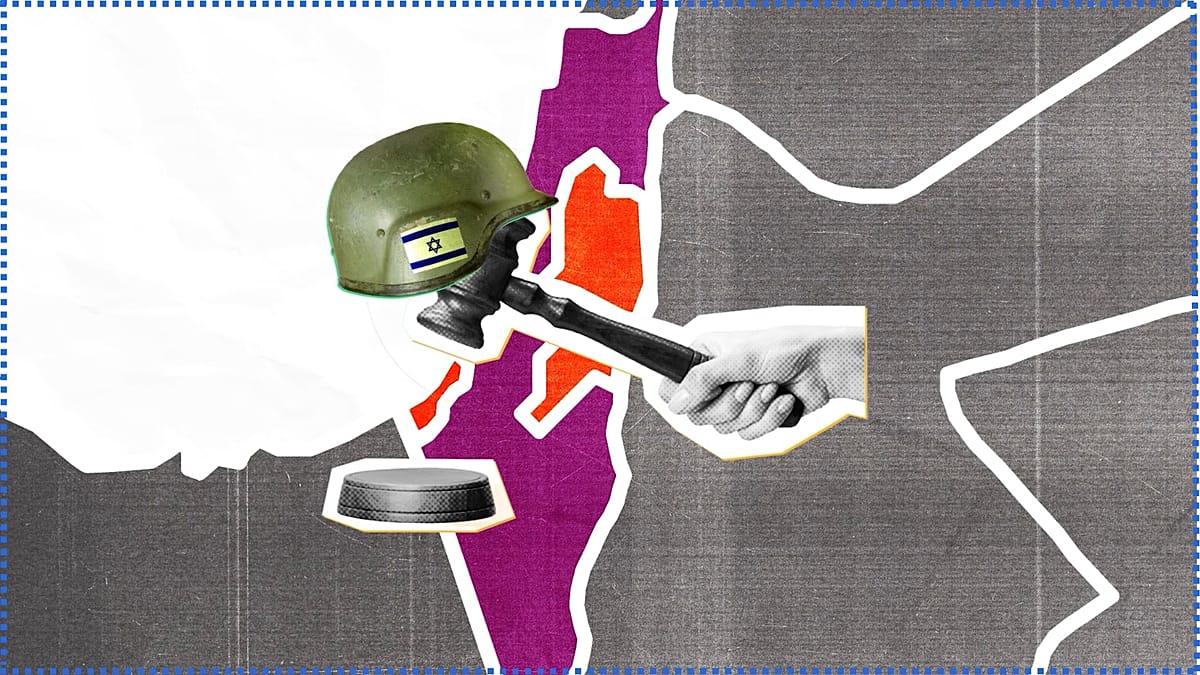

The price cap on Russian oil, one of the Western allies’ leading initiatives to squeeze Moscow’s war chest, might have its days numbered.
In a new package of sanctions, the European Commission has proposed a complete ban on the provision of maritime services to tankers carrying Russian crude, regardless of how much clients pay for the supplies.
Until now, the EU has conditionally allowed its companies to service Russian oil vessels that comply with the G7 price cap, recently adjusted to $44.10 per barrel. Tankers that exceeded the limit were denied access to high-quality insurance, banking and shipping, forcing the Kremlin to set up a “shadow fleet”of ships sailing under obscure ownership.
At its core, the price cap was a compromise between the two sides of the Atlantic: the European push to cripple the Kremlin’s war chest, whose main lifeline is energy revenues, and the United States’ worries of market instability and international backlash.
Since its introduction in December 2022, the Commission has repeatedly defended the groundbreaking initiative and touted its results.
“This mechanism was specifically designed to put further pressure on Russia’s oil revenues, while keeping global energy markets stable through continued supplies,” the executive said in a press release published last month.
But with the war in Ukraine nearing its grim fourth milestone and the negotiations led by the US showing limited progress, the thinking in Europe has shifted.
Sweden and Finland took the lead to demand a full ban on maritime services, arguing it would significantly drive up material costs for Russia’s oil sector, crack down on the spread of falsified documents and make life easier for EU companies.
“No shipments. No insurance. No repairs in port. Pressure on Russia must increase,” said Swedish Foreign Minister Maria Stenergard.
The Commission heeded the call and has added the full ban to the 20th package of sanctions, which also features a prohibition on providing maintenance to Russian icebreakers and liquefied natural gas tankers.
EU officials believe the ban on maritime services will close a glaring loophole created by the price cap’s complex two-tier system, under which some Russian tankers are entitled to services while others are denied.
“It’s clearly a strengthening of the sanctions. Until now, with a price cap, you’d still have exports of oil. With this ban, any export of oil from Russia will be made even more difficult,” said Paula Pinho, the Commission’s chief spokesperson.
“So that’s the logic underpinning this proposal.”
A floating cap
The story of the price cap is one of ups and downs.
Back in 2022, the cap was celebrated as proof of Western unity and audacity in the face of Moscow’s neo-imperialism. The US’s then-president, Joe Biden, took credit for rallying G7 allies and Australia to adopt the unprecedented project, despite accusations of legislative overreach from Russia’s energy clients.
“This is no time to walk away from Ukraine, not at all,” Biden said back then.
But over time, the cap’s impact diminished.
The Kremlin doubled down on purchases of dilapidated ships to expand its notorious “shadow fleet”, effectively bypassing G7 oversight. Starting in mid-2023, the price of Urals crude began rising and surpassing the limit of $60 per barrel agreed upon by Western allies. This fuelled calls to turn up the economic pressure.
“The EU did push for a full ban back in 2022, but circumstances meant that it was not possible: lukewarm support from the Biden administration and tight global energy markets,” says Ben McWilliams, an associate fellow with Bruegel.
“Fast forward to 2026, and global energy markets are more relaxed,” he notes. “I do not see a serious risk of stressing markets too much.”
Last year, the EU proposed turning the cap into a dynamic mechanism that would be periodically adapted according to market trends. Other G7 members agreed to follow suit, but the US opted out and retained the original cap.
Then, in a sudden policy shift, the White House decided to sanction Russia’s two largest oil companies, Rosneft and Lukoil, after sensing that President Vladimir Putin’s maximalist demands remained unchanged.
The double-whammy hit Moscow hard, precipitating a rapid decline in the value of Urals crude. In 2025, Russia’s oil and gas revenues fell by 24% to their lowest level since 2020 under the weight of sanctions, a stronger rouble and weaker global demand.
The succession of events, coupled with reports of Ukrainians enduring sub-zero temperatures without heating due to Russia’s never-ending barrages, laid the groundwork for the Commission to propose the quantum leap.
Now, it is up to the 27 member states – and the G7 allies – to decide if they take it.
“The price cap has failed to achieve its intended goals, largely due to weak enforcement, policy design and widespread circumvention,” says Isaac Levi, a senior analyst at the Centre for Research on Energy and Clean Air (CREA).
“The rapid expansion of Russia’s shadow fleet, which now transports the majority of its crude oil, has made the cap increasingly ineffective. In that context, a move toward a full ban was effectively inevitable. “
The ban has the potential of dealing a significant blow to Moscow’s war chest, Levi adds, but its ultimate effectiveness will lie in its implementation on the ground – and at sea.