
Close Menu
Times Network New Zealand
  • Home
  • Local News
  • World
  • Business
  • Lifetyle
  • Entertainment
  • Technology
  • Travel
  • Food
  • Editor’s Choice
  • Press Release
What's On
Swedish crime kingpin linked to Foxtrot network arrested in Tunisia, police say

Swedish crime kingpin linked to Foxtrot network arrested in Tunisia, police say

May 13, 2026
Where in Europe do employees work the most on weekends?

Where in Europe do employees work the most on weekends?

May 13, 2026
Why are antennas on Russian diplomatic buildings sparking concern in Europe?

Why are antennas on Russian diplomatic buildings sparking concern in Europe?

May 13, 2026
Ireland hopes new Budapest government will facilitate Ukraine’s EU membership

Ireland hopes new Budapest government will facilitate Ukraine’s EU membership

May 12, 2026
UK PM Keir Starmer says he will stay in office as junior minister quits government

UK PM Keir Starmer says he will stay in office as junior minister quits government

May 12, 2026
Facebook X (Twitter) Instagram
Web Stories
Facebook X (Twitter) Instagram
Times Network New Zealand
Subscribe
  • Home
  • Local News
  • World
  • Business
  • Lifetyle
  • Entertainment
  • Technology
  • Travel
  • Food
  • Editor’s Choice
  • Press Release
Times Network New Zealand
Home » Where in Europe do employees work the most on weekends?
World

Where in Europe do employees work the most on weekends?

By Press RoomMay 13, 20263 Mins Read
Where in Europe do employees work the most on weekends?
Share
Facebook Twitter LinkedIn Pinterest Email
By&nbspAlessio Dell’Anna&nbsp&&nbspvideo by Léa Becquet

Published on
12/05/2026 – 10:03 GMT+2

Hundreds of thousands of people across Europe don’t get to treat the weekend as downtime.

ADVERTISEMENT


ADVERTISEMENT

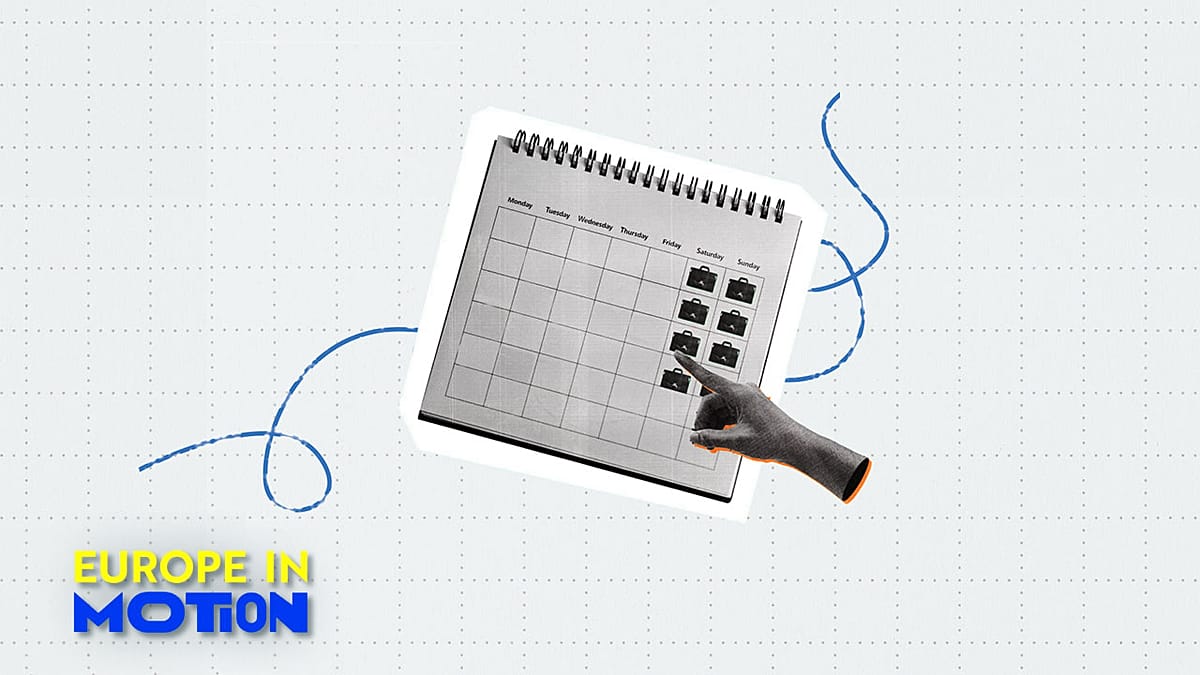
More than one in five workers across Europe — 21.3% — are regularly shifted on Saturdays and Sundays, according to the latest Eurostat data.

And in some countries, the average is well above that, especially across the Balkans and the Mediterranean.

In Greece, a striking 41% of employees and self-employed workers are active on the weekend, 33% in Bosnia-Herzegovina, and 32% Malta, Cyprus and North Macedonia.

At the same time, the continent’s north and east show much lower rates. In Lithuania, only 4% of workers work on weekends, as do 7% in Hungary and 7.5% in Poland.

It’s probably not a huge surprise that business owners get fewer weekends off than employees: 46% of them need to be on the job compared to 18.5% of employees.

When it comes to employees only, Greece, Cyprus, and North Macedonia remain in the top spots with rates above 30%, followed by Switzerland and Malta, just below at 29%.

On the self-employed/employers’ front, Greece again shows the highest rate with an astonishing 75%. The picture changes slightly in the lower spots, occupied here by Belgium (66%) and France (60%).

Working often on weekends doesn’t necessarily mean working more overall. In Greece’s case, however, the numbers are consistent with other Eurostat data showing Greeks tend to work more hours than anyone else in the EU.

In which working sector is it most likely to work on weekends?

Working shifts also largely depend on the job sector.

For example, nearly half of all service and sales workers (47.6%) regularly work weekends, as do people in agriculture, forestry and fishing (47.2%).

That is also the norm for many people in so-called “elementary occupations” (25.7%), meaning routine manual jobs that often involve considerable physical effort.

Which countries have been trialling the four-day work week?

The current trend in Europe seems to be more about compressing the working week rather than extending it.

The latest country to try this out was Poland, a fast-growing economy which has also been grappling with burnout issues.

In summer 2025, it launched a pilot project aiming to reduce the working week from 39 hours to 35, with no pay cuts.

Employees could choose between three options: working six hours a day, getting a three-day weekend or having extra vacation days.

The experiment, launched by the Labour Ministry across 90 public and private workplaces and 5,000 employees, is to be assessed in 2027.

Each participating workplace was compensated with up to €210,000 to help cover any rota disruption caused by the reduced working schedule.

Other European countries that trialled four-day working weeks were the UK, Germany, Portugal, Iceland, France and Spain.
Share. Facebook Twitter Pinterest LinkedIn Tumblr Email

Keep Reading

Swedish crime kingpin linked to Foxtrot network arrested in Tunisia, police say

Swedish crime kingpin linked to Foxtrot network arrested in Tunisia, police say

Why are antennas on Russian diplomatic buildings sparking concern in Europe?

Why are antennas on Russian diplomatic buildings sparking concern in Europe?

Ireland hopes new Budapest government will facilitate Ukraine’s EU membership

Ireland hopes new Budapest government will facilitate Ukraine’s EU membership

UK PM Keir Starmer says he will stay in office as junior minister quits government

UK PM Keir Starmer says he will stay in office as junior minister quits government

‘Farage surge makes Starmer’s EU push more important than ever,’ UK minister tells Euronews

‘Farage surge makes Starmer’s EU push more important than ever,’ UK minister tells Euronews

EU’s €2 trillion budget talks risk becoming ugly and delayed

EU’s €2 trillion budget talks risk becoming ugly and delayed

Newsletter: The EU’s best offence is a good defence

Newsletter: The EU’s best offence is a good defence

Mercosur: How are Europe and South America deepening their economic ties?

Mercosur: How are Europe and South America deepening their economic ties?

MFF mayhem: Should the EU increase its budget, or focus on austerity?

MFF mayhem: Should the EU increase its budget, or focus on austerity?

Editors Picks
Where in Europe do employees work the most on weekends?

Where in Europe do employees work the most on weekends?

May 13, 2026
Why are antennas on Russian diplomatic buildings sparking concern in Europe?

Why are antennas on Russian diplomatic buildings sparking concern in Europe?

May 13, 2026
Ireland hopes new Budapest government will facilitate Ukraine’s EU membership

Ireland hopes new Budapest government will facilitate Ukraine’s EU membership

May 12, 2026
UK PM Keir Starmer says he will stay in office as junior minister quits government

UK PM Keir Starmer says he will stay in office as junior minister quits government

May 12, 2026
Latest News
Swedish crime kingpin linked to Foxtrot network arrested in Tunisia, police say

Swedish crime kingpin linked to Foxtrot network arrested in Tunisia, police say

May 13, 2026
Where in Europe do employees work the most on weekends?

Where in Europe do employees work the most on weekends?

May 13, 2026
Why are antennas on Russian diplomatic buildings sparking concern in Europe?

Why are antennas on Russian diplomatic buildings sparking concern in Europe?

May 13, 2026
Facebook X (Twitter) Pinterest TikTok Instagram
© 2026 Times Network New Zealand. All Rights Reserved.
  • Privacy Policy
  • Terms
  • Advertise
  • Contact

Type above and press Enter to search. Press Esc to cancel.