Close Menu
Times Network New Zealand
  • Home
  • Local News
  • World
  • Business
  • Lifetyle
  • Entertainment
  • Technology
  • Travel
  • Food
  • Editor’s Choice
  • Press Release
What's On
Deepfake Meloni clips distort relations between Italy and Israel

Deepfake Meloni clips distort relations between Italy and Israel

May 14, 2026
Hungary’s Orbán-era wartime state of emergency ended, PM Péter Magyar says

Hungary’s Orbán-era wartime state of emergency ended, PM Péter Magyar says

May 14, 2026
Tariffs, weak demand and climate confusion drag EU business investment rate to 11-year low

Tariffs, weak demand and climate confusion drag EU business investment rate to 11-year low

May 14, 2026
Video. It will be hard to survive if the EU does not speak with one voice, MEP tells Euronews

Video. It will be hard to survive if the EU does not speak with one voice, MEP tells Euronews

May 14, 2026
Why the EU needs to rethink its budget to match its priorities

Why the EU needs to rethink its budget to match its priorities

May 14, 2026
Facebook X (Twitter) Instagram
Web Stories
Facebook X (Twitter) Instagram
Times Network New Zealand
Subscribe
  • Home
  • Local News
  • World
  • Business
  • Lifetyle
  • Entertainment
  • Technology
  • Travel
  • Food
  • Editor’s Choice
  • Press Release
Times Network New Zealand
Home » Tariffs, weak demand and climate confusion drag EU business investment rate to 11-year low
World

Tariffs, weak demand and climate confusion drag EU business investment rate to 11-year low

By Press RoomMay 14, 20263 Mins Read
Tariffs, weak demand and climate confusion drag EU business investment rate to 11-year low
Share
Facebook Twitter LinkedIn Pinterest Email
By&nbspAlessio Dell’Anna&nbsp&&nbspvideo by Loredana Dumitru

Published on
14/05/2026 – 11:20 GMT+2

European businesses are pulling back on their investments.

ADVERTISEMENT


ADVERTISEMENT

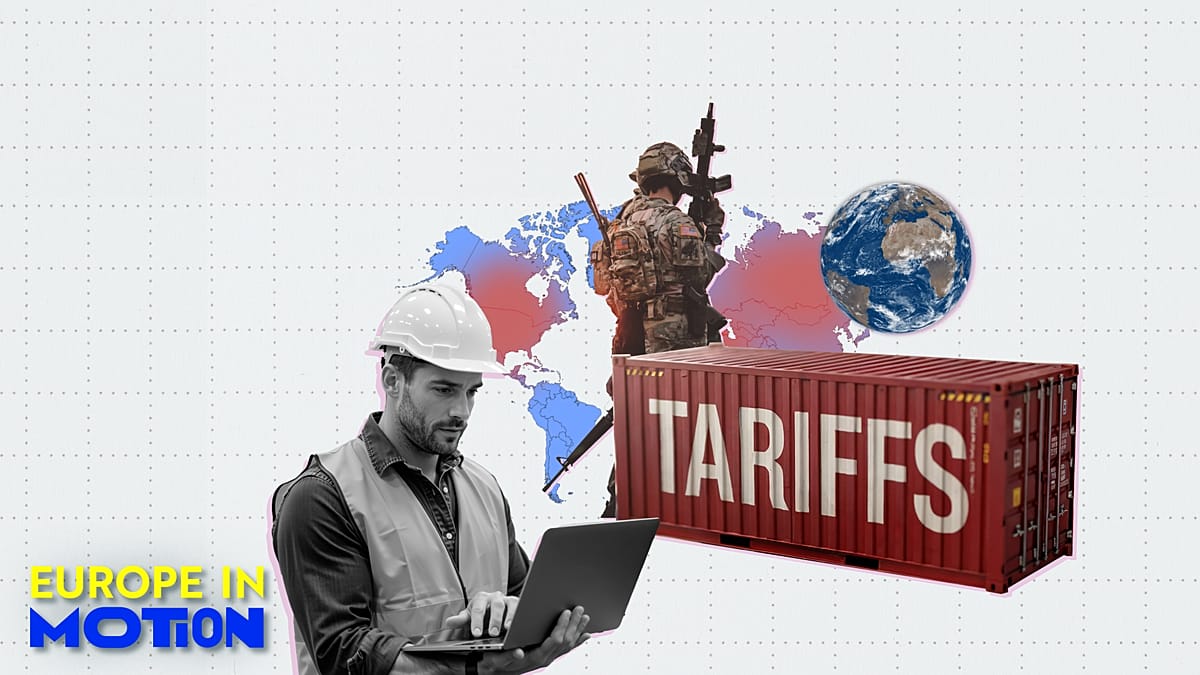
The EU’s business investment rate fell to its lowest level in more than a decade, reaching 21.8% in Q4 2025, according to new Eurostat data.

The rate basically measures how much money companies are investing in things such as machinery and buildings, relative to the total value they create.

The index doesn’t take into account banks and financial corporations but rather “regular businesses”, such as hotels, factories, supermarkets, airlines and so on.

Interestingly, the EU business rate peaked right before COVID-19, in Q4 2019 (26.77%), driven by surges in intellectual property imports and globalisation dynamics, according to Eurostat, while the current rate sits just one point above the deepest point on record, 20.93% (Q1 2010), in the aftermath of the last great financial crisis.

Where are businesses reinvesting the least in the economy?

Strikingly, some of the lowest investment rates came from Europe’s main business hubs: Luxembourg, Ireland, and the Netherlands, all less than 17%.

While Luxembourg’s rate has historically been low, due to the country’s small industrial sector, Ireland has lost 27 percentage points in less than a decade.

“Business investment is a major determinant of GDP growth. Investment in equipment, software, factories…is clearly behind the growth engine of productivity”, INSEAD Professor of Economics Antonio Fatas tells Europe in Motion.

“This is even more important for Europe, as it has been falling behind the US when it comes to productivity growth in recent years”, with a gap of almost 2%, which Professor Fatas deems “shocking”.

At the same time, Greece had one of the fastest increases across the bloc since 2015 — with almost 10% — while Hungary and Croatia saw the highest rates across the bloc, both standing at more than 28% in the latest year on record for single countries.

Why do companies pull back and can defence bring new investments?

The European Central Bank (ECB) has a few answers, after it surveyed 64 leading firms in the Euro area about recent and expected investment decisions, and the factors driving or constraining them.

Some 90% of large businesses surveyed blame their hesitance to spend on the current weak demand.

But they’re also greatly worried about low profitability, regulatory burdens, and labour costs cited by more than 80% of firms.

Geopolitical tensions also took a toll, particularly on manufacturers hit by tariffs and war disruption.

They also said that unpredictable climate regulations are weighing on their long-term plans, even more so than the current energy crisis.

At the same time, “anticipated increased defence spending is quite widely perceived as a potential catalyst for investment,” the ECB said, as “half of the industrial firms and a fifth of services respondents expected increased defence spending to support their investment over the next three years.”

The research was conducted on a majority of 39 businesses active in the industrial sector, while the other 25 focus primarily on services.

Share. Facebook Twitter Pinterest LinkedIn Tumblr Email

Keep Reading

Deepfake Meloni clips distort relations between Italy and Israel

Deepfake Meloni clips distort relations between Italy and Israel

Hungary’s Orbán-era wartime state of emergency ended, PM Péter Magyar says

Hungary’s Orbán-era wartime state of emergency ended, PM Péter Magyar says

Video. It will be hard to survive if the EU does not speak with one voice, MEP tells Euronews

Video. It will be hard to survive if the EU does not speak with one voice, MEP tells Euronews

Why the EU needs to rethink its budget to match its priorities

Why the EU needs to rethink its budget to match its priorities

Europe Today: Trump meets Xi Jinping as Brussels watches nervously

Europe Today: Trump meets Xi Jinping as Brussels watches nervously

Hungary’s Magyar set to outline his red lines over EU funding talks in a letter to von der Leyen

Hungary’s Magyar set to outline his red lines over EU funding talks in a letter to von der Leyen

The EU’s record €2 trillion budget: who wins, who loses?

The EU’s record €2 trillion budget: who wins, who loses?

Watch: Inside the Trump-Xi visit that could leave Europe in the cold

Watch: Inside the Trump-Xi visit that could leave Europe in the cold

Lamine Yamal’s Palestine flag wave revives debate over politics in football

Lamine Yamal’s Palestine flag wave revives debate over politics in football

Editors Picks
Hungary’s Orbán-era wartime state of emergency ended, PM Péter Magyar says

Hungary’s Orbán-era wartime state of emergency ended, PM Péter Magyar says

May 14, 2026
Tariffs, weak demand and climate confusion drag EU business investment rate to 11-year low

Tariffs, weak demand and climate confusion drag EU business investment rate to 11-year low

May 14, 2026
Video. It will be hard to survive if the EU does not speak with one voice, MEP tells Euronews

Video. It will be hard to survive if the EU does not speak with one voice, MEP tells Euronews

May 14, 2026
Why the EU needs to rethink its budget to match its priorities

Why the EU needs to rethink its budget to match its priorities

May 14, 2026
Latest News
Deepfake Meloni clips distort relations between Italy and Israel

Deepfake Meloni clips distort relations between Italy and Israel

May 14, 2026
Hungary’s Orbán-era wartime state of emergency ended, PM Péter Magyar says

Hungary’s Orbán-era wartime state of emergency ended, PM Péter Magyar says

May 14, 2026
Tariffs, weak demand and climate confusion drag EU business investment rate to 11-year low

Tariffs, weak demand and climate confusion drag EU business investment rate to 11-year low

May 14, 2026
Facebook X (Twitter) Pinterest TikTok Instagram
© 2026 Times Network New Zealand. All Rights Reserved.
  • Privacy Policy
  • Terms
  • Advertise
  • Contact

Type above and press Enter to search. Press Esc to cancel.