Since the beginning of Russia’s full-scale invasion of Ukraine in early 2022, Moscow’s main military advantage has been its scale: a large standing force, extensive reserves, and the legacy of a Soviet-era military system that long made it one of the world’s biggest armies.
ADVERTISEMENT

ADVERTISEMENT
Yet more than four years into Moscow’s war, that advantage has been increasingly challenged.
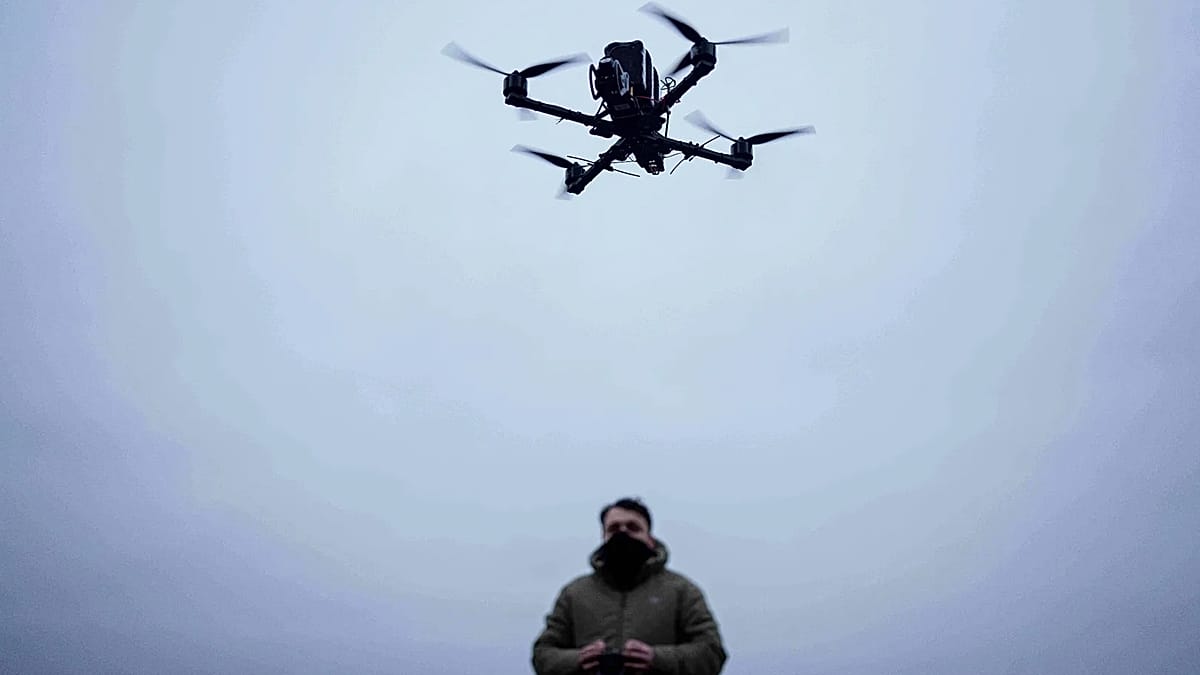
Ukraine’s forces have shown that sheer numbers alone no longer guarantee success on the battlefield, with drone technology helping to largely offset Russia’s demographic weight and reshape the dynamics of modern warfare not only in Ukraine.
Ukraine’s drone revolution
What started in 2022 as a desperate effort by Ukrainian soldiers and volunteers to adapt civilian “wedding drones” for military purposes culminated in history’s first when an enemy position was taken over using robotic systems alone, forcing Russian soldiers to surrender.
Ukraine’s President Volodymyr Zelenskyy said in April that in the first three months of 2026, ground robotic systems performed more than 22,000 missions on Ukraine’s front line.
“In other words, lives were saved more than 22,000 times when a robot went into the most dangerous areas instead of a warrior. This is about high technology protecting the highest value — human life,” Zelenskyy stated.
According to Kyiv officials, Russia now loses about 30,000–35,000 military personnel — killed and critically injured — every month. More to the point, “up to 90% of Russian losses are caused by Ukrainian drones,” Zelenskyy said.
What drones does Kyiv use?
The crucial difference lies in an increasingly effective Ukrainian middle-strike campaign operating between 20 and 200 km from the frontline.
“The number of middle strikes has grown significantly,” Zelenskyy admitted in early May.
“There are now twice as many strikes at distances of 20-plus kilometres compared with March, and four times as many compared with February. And there will be even more. This is a priority area.”
Kyiv forces are specifically targeting ammunition and fuel depots and Russian command posts.
This way, Ukraine is forcing Moscow forces to move further from the front line, putting pressure on already strained Russian logistics and complicating command and control.
Ukraine’s Defence Minister Mykhailo Fedorov said this “logistics lockdown” strategy aims to “increase pressure on the Russian military in the rear and deny the enemy the ability to conduct sustained offensive operations”.
Together with Ukrainian long-range strikes on Russia’s oil infrastructure, Kyiv is causing a fuel crisis with far-reaching military consequences.
Long-range strikes
Kyiv has significantly ramped up its strategy of deep strikes into Russia, targeting mostly Moscow’s oil infrastructure and reducing the Kremlin’s ability to benefit from surging oil prices in the wake of the Iran war.
On 17 May, Ukraine attacked Russia’s Moscow region, targeting military production sites and oil infrastructure.
“This time, Ukrainian long-range capabilities reached the Moscow region. We clearly tell the Russians: their state must end its war,” Zelenskyy said, commenting on the raid.
The targets were located more than 500 km from Ukraine’s border and overcame heavy concentrations of Russian air defences around Moscow, according to the Ukrainian president.
“Territory 1,500 to 2,000 km inside Russia is no longer a ‘peaceful rear,'” Ukraine’s Unmanned Systems Forces commander Robert “Magyar” Brovdi said.
According to Zelenskyy, Ukraine’s Defence Forces struck 15 Russian oil refineries between January and May, contributing to a growing fuel crisis in Russia.
As of May, nearly 40% of Russia’s primary oil refining capacity has been disabled,” Ukraine’s president said on Monday.
Ukraine’s interceptors
Soon after Russia went on its full-scale invasion of Ukraine in 2022, Moscow became heavily reliant on Iran-designed Shahed-type drones.
Launched in waves and coming at civilian and infrastructure targets in hundreds, these one-way attacks by UAVs — now made in Russia on the cheap based on Tehran’s blueprints — have remained a major threat to Ukraine and quickly turned into Moscow’s weapon of choice.
As Russia’s all-out war entered its fifth year, Ukraine’s drone interception rate stands at around 90%, according to Kyiv.
Since 2022, Ukraine has developed a complex and multi-layered air defence system against Russian drones, which includes mobile fire groups, often using pickup trucks armed with heavy machine guns, various electronic warfare systems and Ukraine’s domestically developed interceptors.
According to Ukraine’s defence ministry, as of 7 January, units of the Armed Forces now receive more than 1,500 specialised anti-Shahed interceptor drones per day.
Their widespread use helps preserve high-value surface-to-air missiles, which are costly and limited in supply in Ukraine’s case.
Ranging from €1,000 to €4,000, these interceptors are much cheaper than Shahed drones, which can cost between €25,000 and €50,000, making them Ukraine’s most in-demand drone today.
Since the beginning of the Iran war in late February, Kyiv has signed four “drone deals” with the Gulf states.
The price difference is stark compared to pricey yet sophisticated Patriot air defence systems used against Iran’s drone attacks in the region, where launching a single missile comes at a price of some €3.5 million.
Zelenskyy said nearly 20 countries are interested in a similar agreement as of May 2026, and Kyiv is also preparing “a major drone deal with the EU”.
With Moscow’s recent drone incursions in the Baltic states and Romania, where a Russian drone hit a residential building last week, there is even more interest in Ukraine’s interceptors.
Next chapter?
With the drone interceptor rate at around 90% and cruise missiles up to 80%, there is a glaring gap in Ukraine’s air defence: an anti-ballistic system.
So far, the US-made Patriot missile remains the only effective weapon to take down Russian ballistic missiles. With Washington’s policy towards Ukraine and its war in Iran, the Patriots are in short supply.
Moscow knows it very well and attacks Ukraine with dozens of ballistic missiles within just a few hours.
“60–65 anti-ballistic missiles per month, compared to current challenges, is nothing,” Zelenskyy said on Sunday.
In an overnight attack on Tuesday, Russia launched 33 ballistic missiles at Ukraine.
Zelenskyy has recently asked the US President Donald Trump for a licence to produce Patriot interceptor missiles. Answering a question about whether he had received a response, Zelenskyy said he hoped to get one.
“Europe needs its own anti-ballistic defence so that this war can finally be brought to an end,” Zelenskyy said after at least 20 people had been killed and more than 100 others injured in one of Moscow’s largest attacks.