



Close Menu
Times Network New Zealand
  • Home
  • Local News
  • World
  • Business
  • Lifetyle
  • Entertainment
  • Technology
  • Travel
  • Food
  • Editor’s Choice
  • Press Release
What's On
Europe Today: Hungarian PM-elect vows rapid transition, targets state-controlled media

Europe Today: Hungarian PM-elect vows rapid transition, targets state-controlled media

April 16, 2026
Drone tech evolves every 3-6 months, leaving Europe buying outpaced systems

Drone tech evolves every 3-6 months, leaving Europe buying outpaced systems

April 16, 2026
Trump and Meloni: From close relations to a transatlantic crisis

Trump and Meloni: From close relations to a transatlantic crisis

April 16, 2026
Viktor Orbán to skip his last EU summit after bruising electoral defeat

Viktor Orbán to skip his last EU summit after bruising electoral defeat

April 16, 2026
Hungary’s Péter Magyar says new government could take power at beginning of May

Hungary’s Péter Magyar says new government could take power at beginning of May

April 16, 2026
Facebook X (Twitter) Instagram
Web Stories
Facebook X (Twitter) Instagram
Times Network New Zealand
Subscribe
  • Home
  • Local News
  • World
  • Business
  • Lifetyle
  • Entertainment
  • Technology
  • Travel
  • Food
  • Editor’s Choice
  • Press Release
Times Network New Zealand
Home » Drone tech evolves every 3-6 months, leaving Europe buying outpaced systems
World

Drone tech evolves every 3-6 months, leaving Europe buying outpaced systems

By Press RoomApril 16, 20264 Mins Read
Drone tech evolves every 3-6 months, leaving Europe buying outpaced systems
Share
Facebook Twitter LinkedIn Pinterest Email

Published on
16/04/2026 – 8:00 GMT+2

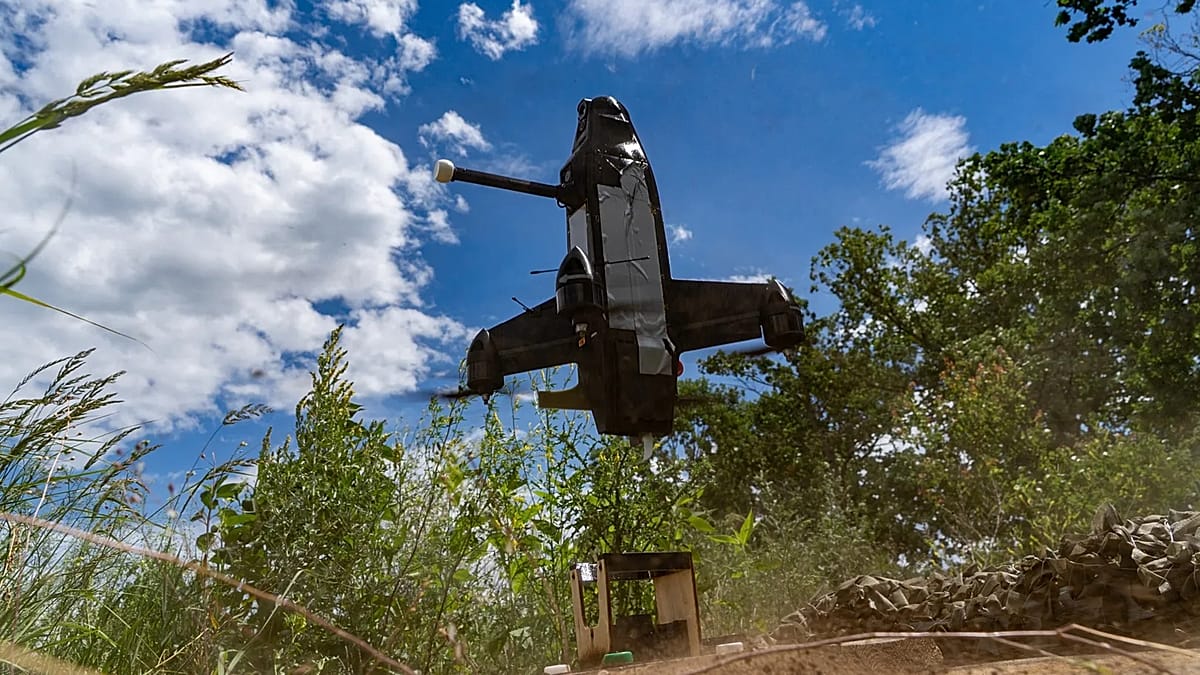
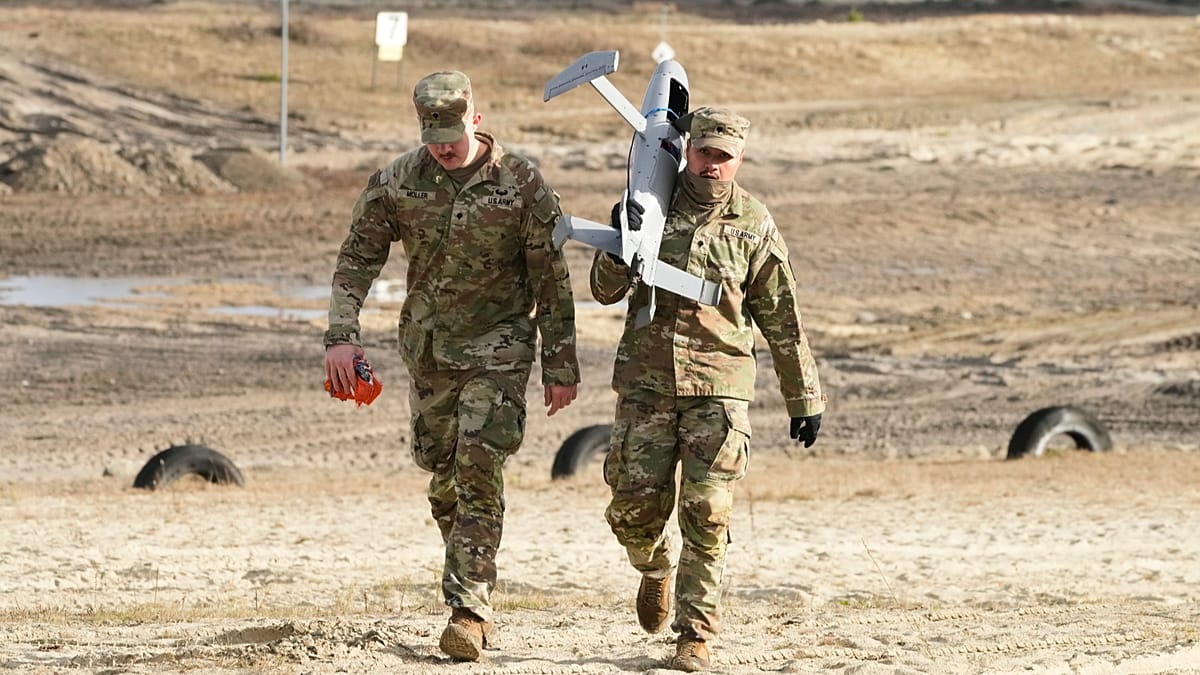
Before Russia’s invasion, no European military fielded more than 2,000 drones. Now, both armies are burning through up to seven million units a year. Drones have vaulted from niche gadgets to the backbone of modern warfare, and Europe is racing to catch up.

ADVERTISEMENT


ADVERTISEMENT

The numbers alone show an extraordinary transformation. Ukraine doubled drone output from 2.2 million in 2024 to 4.5 million in 2025. But sheer volume is only half the battle. The real race is technological; the guts of these machines are obsolete almost as soon as they roll off the line.

“Drones evolve technologically every three to six months,” says Nikolaus Lang, Managing Director and Senior Partner at BCG and Global Leader of the BCG Henderson Institute. “So, it’s also challenging to buy millions of drones that will be obsolete in 12 months from now.” This creates a procurement paradox that no ministry of defence has yet fully solved: by the time a contract is signed, the system it covers may already be outdated.

Countries like Finland are discovering how fast software, communications, navigation, and counter-jamming technologies can age out of strategic usefulness. Ukraine’s battlefield has become the world’s most brutal testing ground, and Ukrainian teams have shortened their design and deployment cycles from months to weeks, allowing real-time battlefield feedback to directly inform engineering improvements in successive drone generations.

This has driven a cat-and-mouse cycle of adaptation: fibre-optic drones were something of a novelty in 2024, yet by 2025, Russian production of just one model reached at least six thousand units per month. The pace is dizzying, and Europe’s traditional procurement machinery was not built for it.

The exploitation gap

Here lies Europe’s core vulnerability. The continent leads in research, churning out world-class papers in AI, quantum tech, and telecoms. But academic output does not win wars. Europe’s labs are not translating breakthroughs into battlefield systems.

“Europe is in the exploration world, and the US is in the exploitation world,” Lang says. Washington has invested roughly $70 billion in defence venture capital over the last decade. Europe has invested approximately $7 billion, one-tenth. That capital gap translates directly into a capability gap. The Pentagon showcased multiple American-made drone prototypes in June 2025, built with off-the-shelf components and developed in an average of just 18 months, a process that typically takes 6 years.

The US also benefits from a single, unified procurement market worth over $900 billion annually. Europe’s combined defence budgets amount to around $450 billion, but they are spread across dozens of national procurement systems. “The 900 billion is one market. The 450 billion is all the EU markets together,” Lang highlights.

Today, 80% of European procurement remains at the national level, and 90% of defence R&D is funded at the national level. The result is duplication, fragmentation, and an inability to achieve the scale required to turn research into real-world capability.

Sovereignty complicates matters. Many European drones use Chinese components, a dependency that worries NATO allies and raises supply chain concerns.

A five-to-ten-year journey

Analysts agree that Europe could build a sovereign defence technology stack, but not quickly. Lang, co-author with General Lavigne, sees it taking “probably five, but more likely ten years.” NATO is already establishing drone innovation hubs and joint programs to standardise swarm tactics, AI, and resilient communications.

The goal is to close the gap between Europe’s research and its slow deployment. That requires more capital for startups, faster procurement, and accepting that in drone warfare, perfect can be the enemy of timely.

“Ukraine is innovating at wartime speed,” Lang warns. “Europe is still in peacetime speed.” Changing that rhythm, before the next crisis forces the issue, is the defining defence challenge of this decade.

Share. Facebook Twitter Pinterest LinkedIn Tumblr Email

Keep Reading

Europe Today: Hungarian PM-elect vows rapid transition, targets state-controlled media

Europe Today: Hungarian PM-elect vows rapid transition, targets state-controlled media

Trump and Meloni: From close relations to a transatlantic crisis

Trump and Meloni: From close relations to a transatlantic crisis

Viktor Orbán to skip his last EU summit after bruising electoral defeat

Viktor Orbán to skip his last EU summit after bruising electoral defeat

Hungary’s Péter Magyar says new government could take power at beginning of May

Hungary’s Péter Magyar says new government could take power at beginning of May

Péter Magyar’s landslide victory in Hungary – what’s the impact on Brussels?

Péter Magyar’s landslide victory in Hungary – what’s the impact on Brussels?

Flotilla carrying activists and aid for Palestinians in Gaza sets sail from Spain

Flotilla carrying activists and aid for Palestinians in Gaza sets sail from Spain

European Parliament proposes 10% increase in EU long-term budget

European Parliament proposes 10% increase in EU long-term budget

Zelenskyy says Patriot missile shortage ‘could not be any worse’

Zelenskyy says Patriot missile shortage ‘could not be any worse’

Fact check: Does a video show Israeli soldiers pushing bodies from a rooftop?

Fact check: Does a video show Israeli soldiers pushing bodies from a rooftop?

Editors Picks
Drone tech evolves every 3-6 months, leaving Europe buying outpaced systems

Drone tech evolves every 3-6 months, leaving Europe buying outpaced systems

April 16, 2026
Trump and Meloni: From close relations to a transatlantic crisis

Trump and Meloni: From close relations to a transatlantic crisis

April 16, 2026
Viktor Orbán to skip his last EU summit after bruising electoral defeat

Viktor Orbán to skip his last EU summit after bruising electoral defeat

April 16, 2026
Hungary’s Péter Magyar says new government could take power at beginning of May

Hungary’s Péter Magyar says new government could take power at beginning of May

April 16, 2026
Latest News
Europe Today: Hungarian PM-elect vows rapid transition, targets state-controlled media

Europe Today: Hungarian PM-elect vows rapid transition, targets state-controlled media

April 16, 2026
Drone tech evolves every 3-6 months, leaving Europe buying outpaced systems

Drone tech evolves every 3-6 months, leaving Europe buying outpaced systems

April 16, 2026
Trump and Meloni: From close relations to a transatlantic crisis

Trump and Meloni: From close relations to a transatlantic crisis

April 16, 2026
Facebook X (Twitter) Pinterest TikTok Instagram
© 2026 Times Network New Zealand. All Rights Reserved.
  • Privacy Policy
  • Terms
  • Advertise
  • Contact

Type above and press Enter to search. Press Esc to cancel.