



The European Parliament and EU countries have failed to reach an agreement on new rules for migrants’ returns, with lawmakers and diplomats clashing over when it will come into force.
ADVERTISEMENT

ADVERTISEMENT
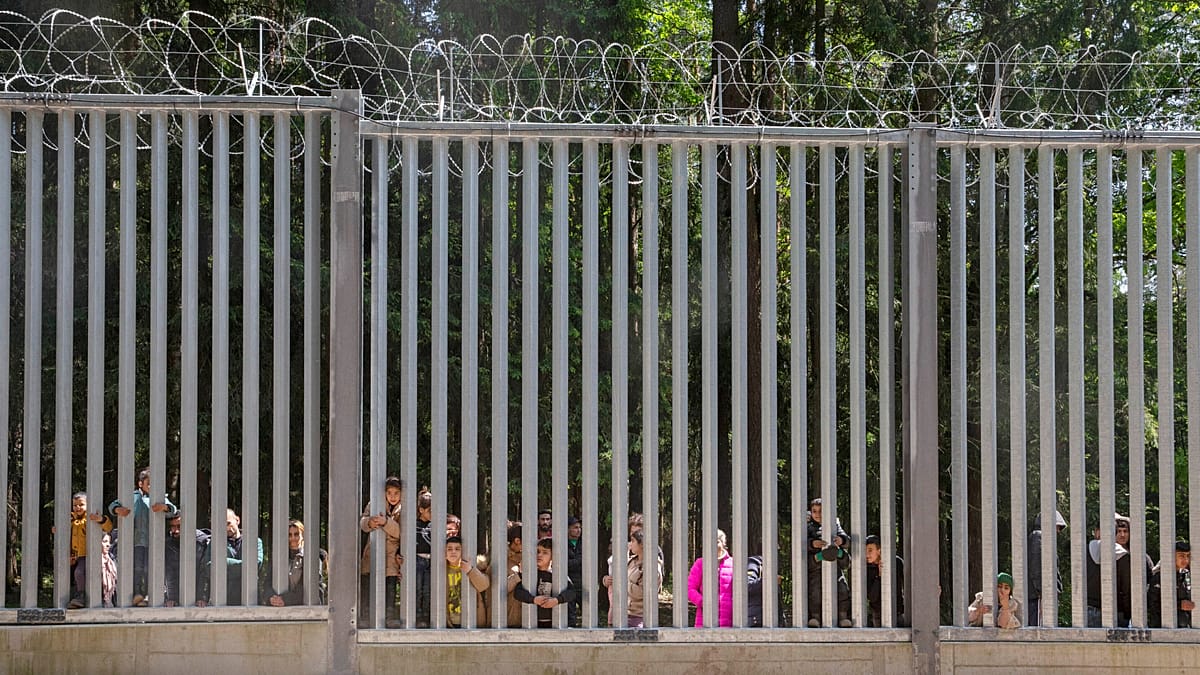
The new law, called the “return regulation”, is set to introduce stricter measures to speed up the return of irregular migrants, among them deportation centres outside the EU, longer detention, and entry bans for third-country nationals who have no right to stay in Europe.
After three sessions of talks in Strasbourg, negotiators gave up and decided to resume talks on 1 June. According to multiple sources in the room, the only point of contention was the timeframe to enforce the law.
While the Parliament wants enforcement to begin immediately, EU member states are pushing to only begin applying most of the regulation’s provisions in two years’ time, with some governments insisting they need time to adjust their systems to the new rules. However, diplomats told Euronews that all remaining issues, including the most controversial ones, have indeed been provisionally agreed.
This does not mean all individual lawmakers are happy with the text. Greens/EFA MEP Mélissa Camara, who was involved in the talks and is very critical of the law, told Euronews the meeting was “a parody of negotiations”.
“Instead of fighting for a dignified and humane text, they chose to focus on a ridiculous battle over when the text would start applying,” she said.
Cracking down hard
According to the provisional text, national authorities will be allowed to search irregular migrants’ “place of residence or other relevant premises”, a provision that has been compared by NGOs and civil society to the notorious raids conducted by the US Immigration and Customs Enforcement.
Any home search has to be “subject to a prior judicial order or an administrative order” and must be “proportionate and duly justified by the urgency of such search”.
The law also enables EU countries to return irregular migrants to third countries unrelated to their origin, as long as they have bilateral agreements in place with a non-EU state to build so-called “return hubs” on their territory.
This point has never been up for negotiation, as it was fully supported by Parliament and Council, with some member states already teaming up to build return hubs outside Europe and the Italian government already running a similar project in Albania. Both MEPs and EU countries also wanted to allow third-country deportations of families with children, excluding only unaccompanied minors.
However, negotiators have scrapped a controversial provision backed by the European Parliament allowing talks with non-recognised third-country entities for the purposes of readmission.
This proposal was widely criticised as it could result in cooperation with non-democratic regimes such as Afghanistan’s Taliban, though the EU is already cooperating on the matter with problematic governments in countries such as Libya, Egypt and Syria.
The law will increase the maximum legal detention period for irregular migrants waiting to be returned from six months to two years, with an unlimited duration for persons considered as posing a security risk. It will extend the duration of entry bans in the EU applied to returned people from five to ten years, with potential lifelong bans for individuals posing a security risk.
The Parliament and member states even agreed to change the automatic suspensive effect of appeals. Under current law, any deportation of a migrant is automatically suspended until a final judgment is rendered; the new law seeks to remit this decision to the judicial authorities on a case-by-case basis.
Aligning on migration
Despite the postponement of the talks, the Parliament and Council are fully aligned on the push to crack down on irregular migration and a deal on 1 June seems to be within reach.
The European Commission, which has insisted on the need to increase the return rate, will push to finalise the agreement before the EU Pact on Migration and Asylum comes into force in mid-June. According to the latest Eurostat data, around 28 percent of migrants ordered to leave are effectively returned outside Europe.
After an agreement is reached, the final text will need to be formally approved by MEPs and EU countries.
In the Parliament, the European People’s Party will most likely align with far-right groups to get it over the finish line, as has happened with other migration-related files in this legislature, despite a backlash over their cooperation in drafting the bill at the committee level via a secret WhatsApp chat.
Left-wing groups will vote against the law, and most of their MEPs have already raised concerns about its compatibility with fundamental rights.