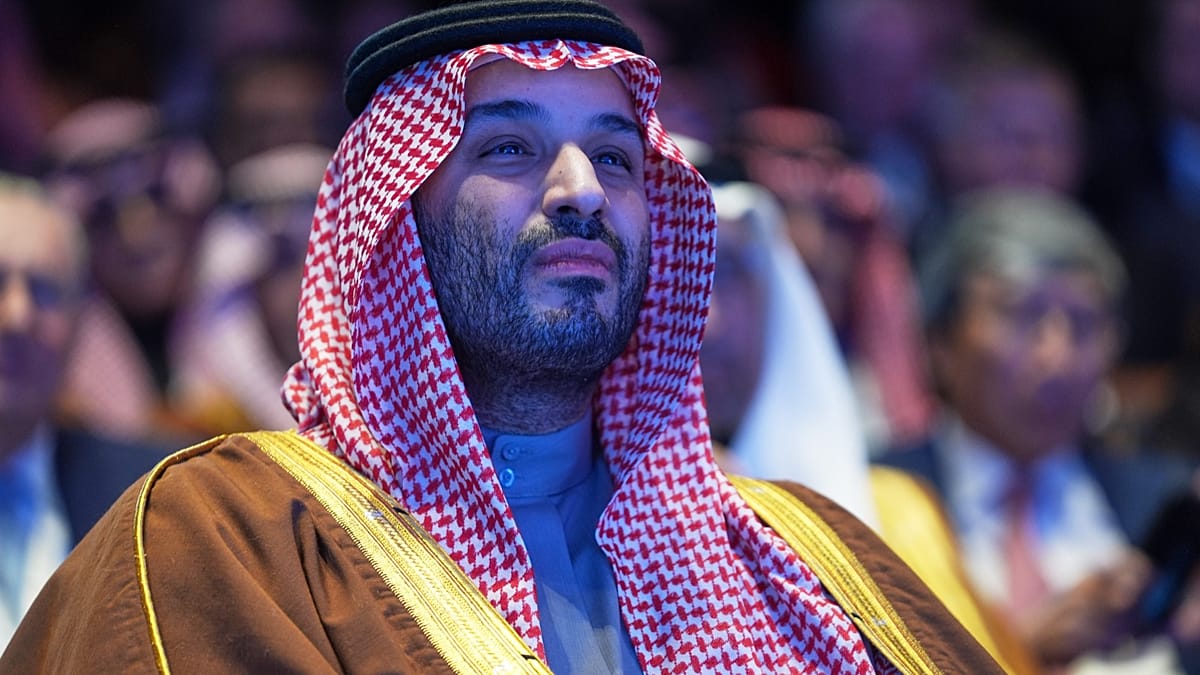
Following a complaint filed by the NGOs Trial International and Reporters Without Borders (RSF) against Saudi Crown Prince Mohammed bin Salman, a French investigating judge is to look into the disappearance of Saudi journalist Jamal Khashoggi.
ADVERTISEMENT

ADVERTISEMENT
The dissident journalist, who was living in the United States, was murdered in 2018 inside the Saudi consulate in Istanbul. His body, which was dismembered, has never been found. US intelligence services had pointed to the direct responsibility of Mohammed bin Salman.
In July 2022, during a visit to France by the Saudi crown prince, Trial International and Democracy for the Arab World Now (DAWN), the organisation that employed Jamal Khashoggi, took legal action, and were later joined by a complaint from RSF.
But the National Anti-Terrorism Prosecutor’s Office (PNAT) had opposed the opening of an investigation in France, arguing that the NGOs did not have standing to file a complaint for this type of crime. This decision was sharply criticised by RSF’s lawyer, Emmanuel Daoud, who denounced “a realpolitik in the name of France’s superior economic interests so as not to anger the Saudi authorities”.
The NGOs accuse Mohammed bin Salman of complicity in acts of torture and enforced disappearance as part of an organised group, notably accusing him of having “ordered the murder by asphyxiation” of Jamal Khashoggi by his subordinates.
According to the court of appeal, “the possibility that these acts could be classified as crimes against humanity cannot be ruled out”.
The PNAT has confirmed that “an investigating judge from the crimes against humanity unit will now examine the complaint”.
DAWN, which in the end cannot join the case as a civil party, has for its part hailed “an important step towards justice”.
After being ostracised by the international community, Saudi Arabia has since been brought back into the fold. During a meeting with Donald Trump at the White House in late 2025, Mohammed bin Salman described the killing as “a huge mistake”, while still refusing to acknowledge his own role.