



Close Menu
Times Network New Zealand
  • Home
  • Local News
  • World
  • Business
  • Lifetyle
  • Entertainment
  • Technology
  • Travel
  • Food
  • Editor’s Choice
  • Press Release
What's On
EU considering excessive profit taxes on oil and gas companies, foreign profits remain unclear

EU considering excessive profit taxes on oil and gas companies, foreign profits remain unclear

April 11, 2026
Italian arms dealer pleads guilty to selling ammunition to Russia in US court

Italian arms dealer pleads guilty to selling ammunition to Russia in US court

April 11, 2026
Turbulence on the tarmac: These European airports have the worst delays

Turbulence on the tarmac: These European airports have the worst delays

April 10, 2026
Trump issues NATO ultimatum to reopen Strait of Hormuz ‘within days’

Trump issues NATO ultimatum to reopen Strait of Hormuz ‘within days’

April 10, 2026
‘NATO not obliged to reopen the Strait,’ Turkey’s trade minister tells Euronews

‘NATO not obliged to reopen the Strait,’ Turkey’s trade minister tells Euronews

April 10, 2026
Facebook X (Twitter) Instagram
Web Stories
Facebook X (Twitter) Instagram
Times Network New Zealand
Subscribe
  • Home
  • Local News
  • World
  • Business
  • Lifetyle
  • Entertainment
  • Technology
  • Travel
  • Food
  • Editor’s Choice
  • Press Release
Times Network New Zealand
Home » Tighter EU migration controls fail to curb departures from Africa, report says
World

Tighter EU migration controls fail to curb departures from Africa, report says

By Press RoomApril 10, 20263 Mins Read
Tighter EU migration controls fail to curb departures from Africa, report says
Share
Facebook Twitter LinkedIn Pinterest Email

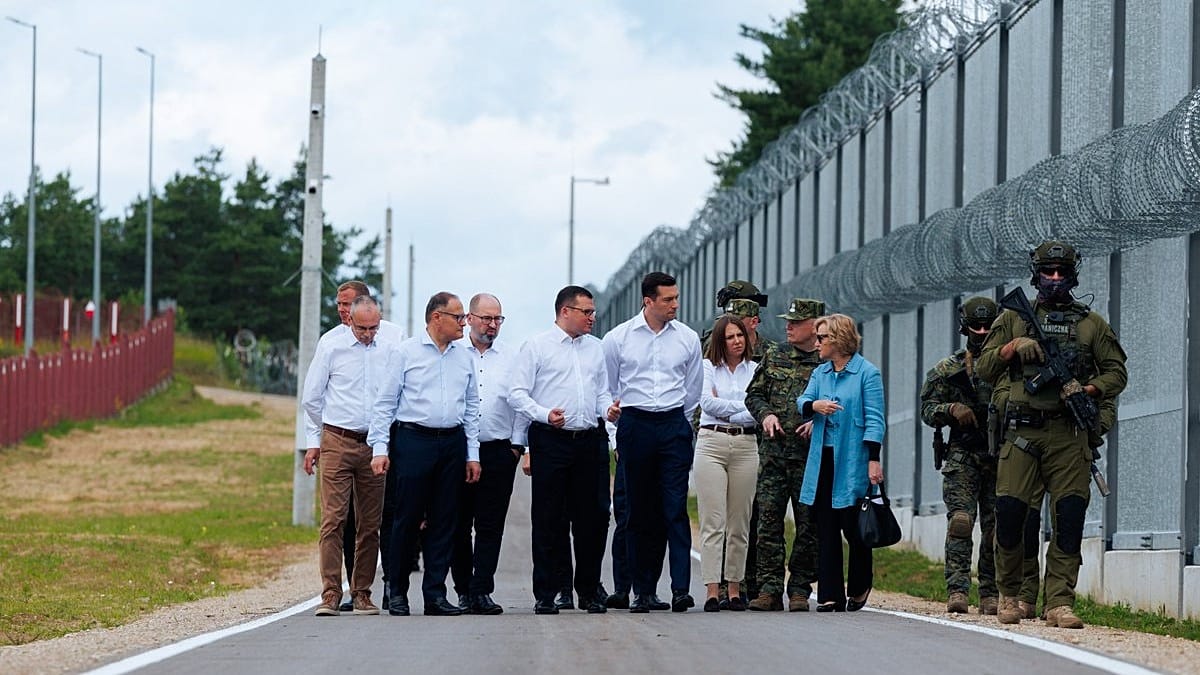
Tighter EU borders and migration deals with African countries have failed to reduce the number of departures from Africa, but merely temporarily diverted irregular routes, according to a report by the International Centre for Migration Policy Development (ICMPD), seen by Euronews.

ADVERTISEMENT


ADVERTISEMENT

The ICMPD, an organisation that works for the EU and European governments to develop migration policies, analysed the major mobility trends in Sub-Saharan Africa, revealing that “recent patterns show that intensified controls do not necessarily reduce overall mobility but instead redirect movement towards alternative, often longer and riskier routes”, the report says.

In recent years, the EU has expanded its migration partnerships with African countries such as Tunisia, Egypt, Morocco, Senegal, and Mauritania. These agreements typically involve local authorities strengthening border controls to curb irregular departures toward Europe, while the EU provides financial support and invests in a wide range of development and cooperation projects in return.

At the same time, the EU revised its internal migration management framework through the Asylum and Migration Pact, a package of laws approved during the last mandate that harmonises border procedures and establishes common rules for handling irregular arrivals across member states.

The reforms reduced access to asylum and overall arrivals to Europe. However, the situation could evolve in different ways, including the emergence of new routes — potentially toward Europe.

“Tightening border controls across key migration routes is expected to further reshape routes in 2026, without fundamentally reducing overall mobility levels”, the document says.

New flows to Europe?

On several occasions, the EU has celebrated a reduction in the number of third-country nationals, mainly from Africa, the Middle East, and Central Asia, arriving in Europe via African transit routes.

However, reshaping of mobility could also lead to new irregular flows towards Europe, particularly noting the impact that instability in the Middle East may have on mobility in Africa.

“The impact of these escalations cannot be assessed at the time of writing; however, it cannot be ruled out that migrants from Africa going to the Gulf countries may wish to seek alternative destinations in 2026, including in Europe”, the document says.

The irregular route from the Horn of Africa via Somalia and Djibouti to Gulf countries is still one of the most used. Data from the UN agency for migration (IOM) shows that there has been a sharp increase of departures from Sub-Saharan Africa to Gulf countries by 34% between 2024 and 2025.

Root causes and routes diversification

Increasing border controls reshape mobility but do not address migration structural drivers, such as protracted conflicts or insecurity, significant demographic growth, limited labour absorption, climate shocks, as well as drastic recent cuts in humanitarian assistance by the US and European governments, the document says.

But number of arrivals to Europe are temporarily lower. According to the latest data from the EU border agency Frontex, irregular border crossings at the EU’s external border “fell by over one-quarter (26 %) in 2025”.

The sharper decrease occurred alongside the Western African route, that “could be explained by recent partnerships between the EU and key African countries (Morocco, Senegal and Mauritania)”, the document says.

But the route from Mauritania to the Canary Islands have been diverted. Departures occurs now from Gambia or Guinea, the document says, making the transit via sea longer and riskier.

Frontex also said that the Eastern Mediterranean migration route towards Europe registered a less pronounced decrease overall, as the corridor connecting Eastern Libya to the island of Crete remained active and even tripled in 2025.

Share. Facebook Twitter Pinterest LinkedIn Tumblr Email

Keep Reading

EU considering excessive profit taxes on oil and gas companies, foreign profits remain unclear

EU considering excessive profit taxes on oil and gas companies, foreign profits remain unclear

Italian arms dealer pleads guilty to selling ammunition to Russia in US court

Italian arms dealer pleads guilty to selling ammunition to Russia in US court

Turbulence on the tarmac: These European airports have the worst delays

Turbulence on the tarmac: These European airports have the worst delays

Trump issues NATO ultimatum to reopen Strait of Hormuz ‘within days’

Trump issues NATO ultimatum to reopen Strait of Hormuz ‘within days’

‘NATO not obliged to reopen the Strait,’ Turkey’s trade minister tells Euronews

‘NATO not obliged to reopen the Strait,’ Turkey’s trade minister tells Euronews

Europe Today: Vance heads to Pakistan for peace talks as Iran truce under strain

Europe Today: Vance heads to Pakistan for peace talks as Iran truce under strain

‘Alarming’: Von der Leyen to raise Hungary’s ‘Russia leaks’ with EU leaders

‘Alarming’: Von der Leyen to raise Hungary’s ‘Russia leaks’ with EU leaders

Fact-checking JD Vance’s claims that Brussels is ‘harming Hungary’

Fact-checking JD Vance’s claims that Brussels is ‘harming Hungary’

MEPs warn of ‘serious’ risks to Hungary election, urge Commission to act

MEPs warn of ‘serious’ risks to Hungary election, urge Commission to act

Editors Picks
Italian arms dealer pleads guilty to selling ammunition to Russia in US court

Italian arms dealer pleads guilty to selling ammunition to Russia in US court

April 11, 2026
Turbulence on the tarmac: These European airports have the worst delays

Turbulence on the tarmac: These European airports have the worst delays

April 10, 2026
Trump issues NATO ultimatum to reopen Strait of Hormuz ‘within days’

Trump issues NATO ultimatum to reopen Strait of Hormuz ‘within days’

April 10, 2026
‘NATO not obliged to reopen the Strait,’ Turkey’s trade minister tells Euronews

‘NATO not obliged to reopen the Strait,’ Turkey’s trade minister tells Euronews

April 10, 2026
Latest News
EU considering excessive profit taxes on oil and gas companies, foreign profits remain unclear

EU considering excessive profit taxes on oil and gas companies, foreign profits remain unclear

April 11, 2026
Italian arms dealer pleads guilty to selling ammunition to Russia in US court

Italian arms dealer pleads guilty to selling ammunition to Russia in US court

April 11, 2026
Turbulence on the tarmac: These European airports have the worst delays

Turbulence on the tarmac: These European airports have the worst delays

April 10, 2026
Facebook X (Twitter) Pinterest TikTok Instagram
© 2026 Times Network New Zealand. All Rights Reserved.
  • Privacy Policy
  • Terms
  • Advertise
  • Contact

Type above and press Enter to search. Press Esc to cancel.