
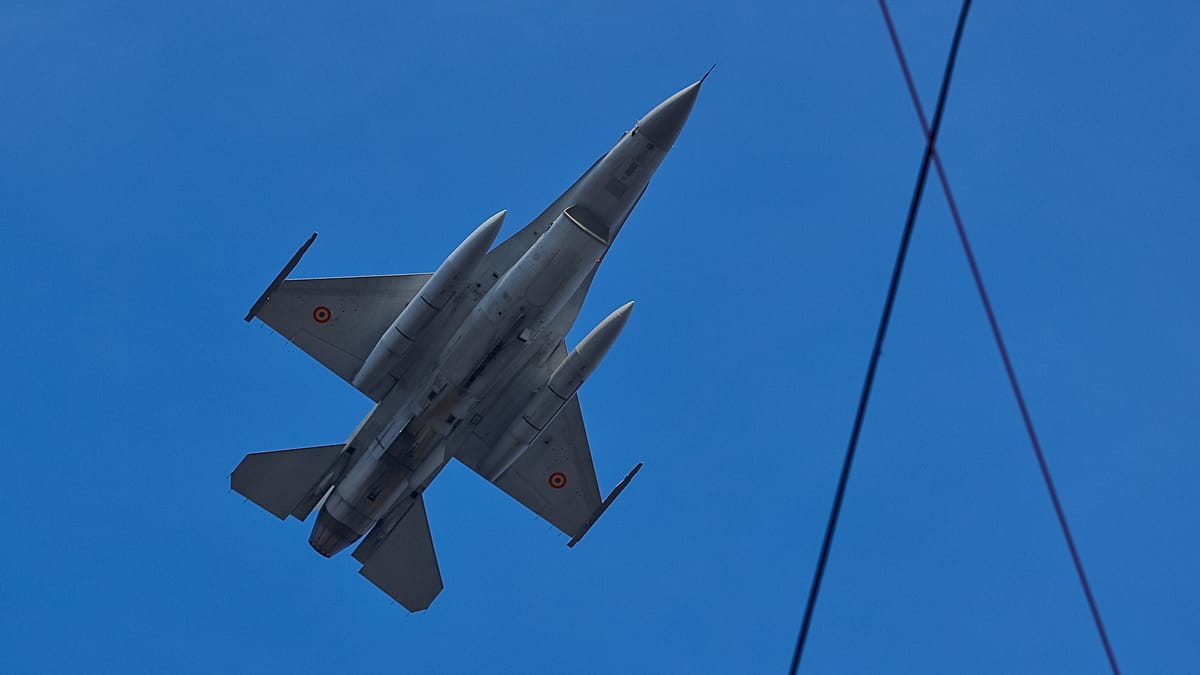

The EU is hopeful it can reach a deal on a raft of measures aiming to slash red tape, increase transparency and supercharge domestic production to respond to growing security threats – but significant issues remain regarding autonomy, risking the continent’s security.
ADVERTISEMENT

ADVERTISEMENT
On Tuesday, members of the European Commission, the European Parliament and the Cypriot EU Council presidency representing member states met in Brussels to rubber-stamp the so-called “Defence Readiness Omnibus” — a set of measures proposed a year ago and aimed at streamlining processes for the defence industry.
But divisions have emerged regarding the details of the proposals, particularly the eligibility criteria. The talks expose a longstanding tension between deeper European defence integration and governments’ desire to retain sovereign control over procurement and industrial policy.
Europe’s ability to deter aggression and respond to crises has been thrust to the limelight following Russia’s full-scale invasion of Ukraine in 2022 amid an increasingly distanced US President Donald Trump from transatlantic relations.
Trump has repeatedly threatened to pull out of the NATO (North Atlantic Treaty Organisation) and has escalated rhetoric about annexing Greenland. The EU high representative Kaja Kallas has warned of Moscow’s motivations and stressed the importance of Europe becoming more self-reliant.
“Russia is gearing up its military for a long-term confrontation with the West,” Kallas recently cautioned in Tallinn, Estonia.
“Whether (Vladimir) Putin dares to test NATO at some point, depends entirely on us. Deterrence works if it is credible, showing weakness only invites aggression.”
Amid institutional calls to rearm, Europe’s defence industry has asked for more consistency and less red tape. The EU executive has itself acknowledged delays of up to one-year when it comes to greenlighting certain defence authorisation processes.
“We aren’t procuring what we have pledged and Russia sees weakness,” one diplomatic source told Euronews on condition of anonymity, adding that stockpiles are empty and the industry claims no orders have been filled by governments.
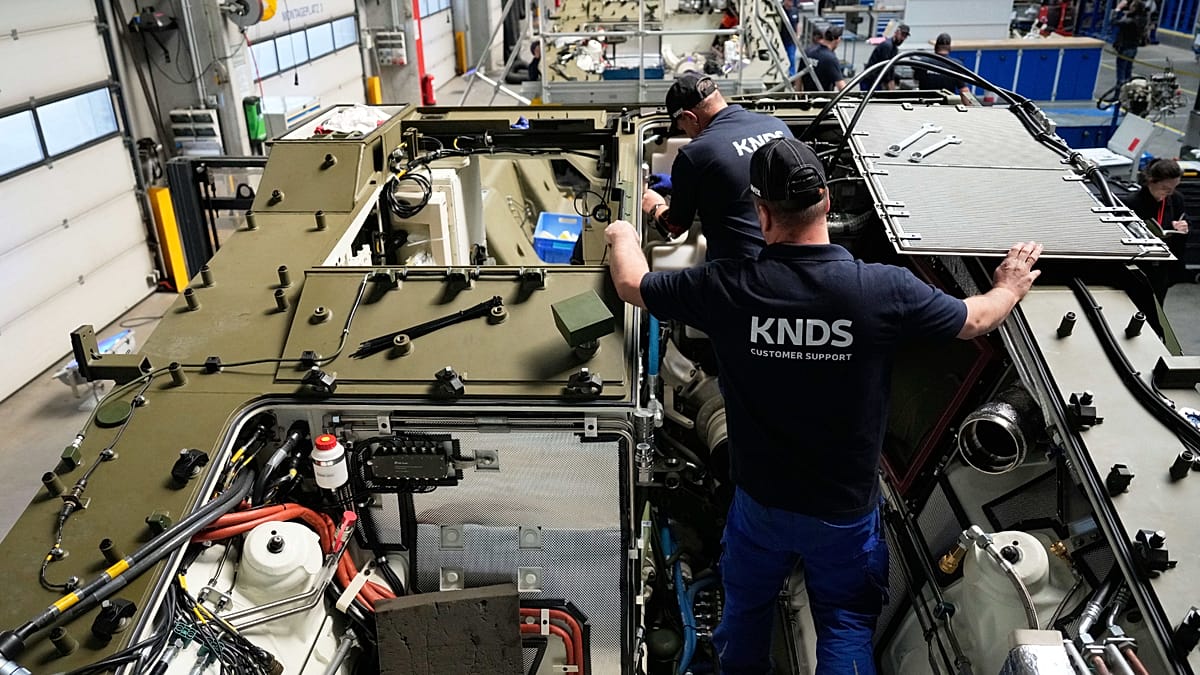
As a result of this, the Commission has proposed the omnibus — spanning three key files — born out of the input of over 34 European defence companies on how to scale-up production and meet this need. These spans streamline joint procurement rules, simplifying access to the European Defence Fund (EDF) and creating more predictable rules for industry.
A Cypriot official said they are “working hard” to deliver the entire omnibus package within their term, which winds up at the end of June. Another negotiator close to the work say there are “many open issues”.
Henrik Dahl, a Danish MEP and one of the key negotiators behind the omnibus file focussing on permits, said early Tuesday morning before another round of trilogue debates kicked off that compromises could be within reach, despite their slow pace.
“We would like to conclude the trialogue today,” Dahl said.
He said he expected middle ground to be found on issues like a transparency register and establishing a single point of contact for communication — but that Europe cannot wait and some files are moving “really slowly”.
“We have to be ready by 2030 now. Each day counts,” he said, adding, “I hope we can finish this.”
A source close to the negotiations has confirmed that after much discussion there was a breakthrough on defence readiness and permit-granting – with one of the biggest headaches, eligibility criteria, remaining.
Eligibility criteria proving problematic
The Commission’s proposal aims to incentivise defence procurement for projects that include the participation of three member states, among other caveats.
This preference varies from each member state, with the French traditionally pushing for stricter European preference rules, while countries like Poland wanting variety.
European governments jealously guard any issues that might affect their national sovereignty in an area as sensitive as defence policy.
One diplomatic source said the tightening of the criteria rules could “have an impact on the sovereignty of member states for defence-related matters.” Another source reiterated this, stating: “European governments might have different interests at stake to determine when a product is sensitive or not.”
“The Commission cannot just remove this national prerogative saying this is too complicated,” they said.
The latest report by the European Defence Agency (EDA), collating the major trends defence across the continent, stated last year that defence expenditure reached an unprecedented €343 billion. This represents a 19% rise from 2023, bringing spending to 1.9% of gross domestic product. The EDA attributes most of this to “geopolitical shifts” and calls from Trump to ramp-up NATO defence spending targets.
However, factors such as “legitimate industrial interests, bureaucratic complexity, protracted decision-making processes and unaligned planning cycles often hamper collaborative defence programmes”, the report states. More “collaboration” and less “fragmentation” is required.
But the trilogue is not the end of the road. Once approved at negotiations, it would then need to be rubber stamped at the European Parliament before requiring support from the 27 EU member states at a summit attended by the Council of the European Union.
Questions remain, however, over whether time is on the bloc’s side.
Several national security services have warned that Russia could be able to attack the European Union by the end of the decade, and that the 27 EU member states are not yet adequately prepared.
European Commissioner for Defence Andrius Kubilius has also previously stressed that the EU is not “grasping the biggest challenge”.
“We need to be ready to fight not only the wars of today but also the wars of tomorrow,” he said roughly a month before proposing the omnibus, last year.
“And our ability to fight the future wars will very much depend on our ability to radically innovate in defence.”