Good morning, readers. Angela Skujins here, guiding you into the final stretch of the working week. A quick reminder: there’ll be no newsletter or Europe Today on Monday for the Whit Monday holiday.
ADVERTISEMENT

ADVERTISEMENT
But before Brussels empties out for a sun-soaked public holiday weekend, Friday’s political menu is already sizzling. It’s stuffed with economic tensions, transatlantic ties and the question of how much Europe can still count on Washington.
Let’s start with the cash crunch.
European Commissioner for the Economy Valdis Dombrovskis spoke to Euronews’ Europe Editor Maria Tadeo about his economic analysis from February to April – a period compounded by energy price shocks triggered by the war in Iran and inflation. The short of it: “We do not see a recession but rather further slowdown of the economy,” Dombrovskis said.
Despite the financial pain, of inflation expected to reach 3.1% this year, the EU’s economic chief was firm that that Europe would not turn to Russia for relief.
“We already saw back in 2022 that Russia tried to use its fossil fuel supplies as a tool for blackmail and manipulation, and we paid a quite dear economic price for having this dependency,” he said, adding: “There’s no point of going back to this.”
Earlier this week, Italian Prime Minister Giorgia Meloni urged the European Commission to treat the energy crisis like the defence ramp-up and demanded the loosening of fiscal rules. The aim: ease rules for households and industries struggling with soaring energy costs.
Dombrovskis said flexibility already exists in the framework and any new support measures need to be “temporary and targeted”.
Brussels would not be giving Rome the total cold shoulder, though. “We have a number of automatic stabilisers which can play out, which allows for, in a sense, certain fiscal buffers,” Dombrovskis said. “We are doing this assessment and preparing it.” Watch the whole interview on Europe Today.
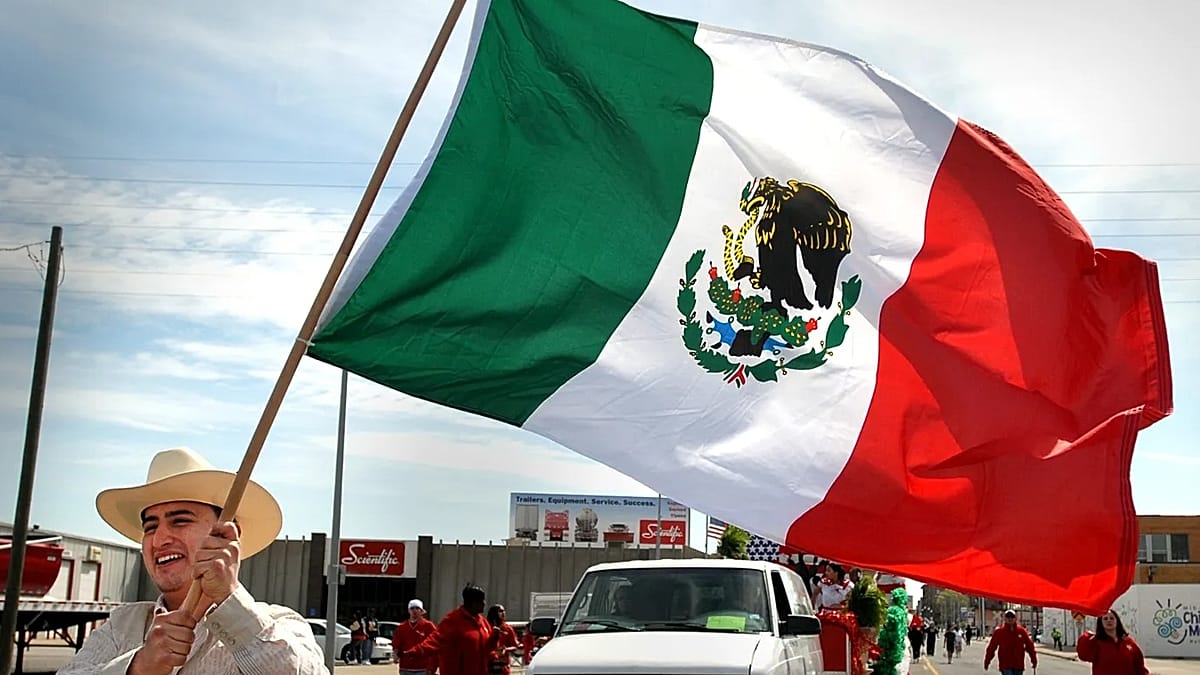
Roughly 9,200 kilometres away, the bloc’s top brass will aim to solidify a renewed trade deal that would not only slash import duties and lower costs on a range of goods, but also send a strong signal across the Atlantic.
The Mexico City summit will be attended by Mexican President Claudia Sheinbaum and Presidents of the European Commission and Council – Ursula von der Leyen and António Costa. Negotiator Javi López, the European Parliament’s Vice-President, will also be in the crowd.
Speaking to Mared Gwyn Jones on Europe Today, the politician said the deal will “modernise” EU-Mexico ties and ensure “predictable trade” where commercial relationships are being used in a coercive manner.
“After the rise of Trump to the White House, we have been forced to think more strategically and act more maturely in the world,” López said.
A senior EU official said the summit is also Brussels sending a geopolitical message. According to reporting by Peggy Corlin, Mexico is seen by the Europeans as a like-minded partner – an entity adhering to the rules-based order which seems to be increasingly challenged by China and the US.
“Both sides are looking to diversify and de-risk,” the same official said.
Now, two brief notes on defence.
NATO foreign affairs ministers are meeting for the second day of talks in Helsingborg, Sweden, amid growing unease over the future of European security and the transatlantic alliance, our NATO expert Shona Murray reports.
Ministers are awaiting further details from the US about which military capabilities will no longer be available to NATO. This is part of Washington’s plans to scale back the support it would provide Europeans in the event of invasion or war.
But questions about how this strategy fits with the news that came in overnight that US President Donald Trump would deploy an additional 5,000 American troops in Poland. We wonder how this U-turn will be swallowed by military officials in the Swedish city, so keep an eye on Euronews for more analysis.
Meanwhile, Ukrainian President Volodymyr Zelenskyy is set to speak with UK Prime Minister Keir Starmer, French President Emmanuel Macron and German Chancellor Friedrich Merz about “joint pressure” and whether this can strengthen Kyiv’s position in negotiations with Moscow over Russia’s full-scale invasion of Ukraine.
Merz’s plan of ‘associate EU membership’ for Ukraine gets mixed reviews
German Chancellor Friedrich Merz’s groundbreaking plan to grant Ukraine “associate membership” in the European Union has received mixed reviews in Brussels, with questions raised about its legality, feasibility and political implications.
In a letter to his fellow leaders, seen by Euronews, Merz proposes a tailor-made status that would give Ukraine access to decision-making bodies without voting rights and certain EU-funded programmes on a “step-by-step” basis. He also envisions Kyiv able to request assistance from other member states in the event of a new Russian aggression through Article 42.7 of the EU treaties.
“It is now time to boldly move on with Ukraine’s EU integration through innovative solutions as immediate steps forward,” Merz tells his peers.
The European Commission, which oversees the accession process and wants to break the stalemate on Ukraine’s bid, welcomed the proposal as showing a “strong commitment from member states to make enlargement a reality as soon as possible”.
But diplomats were noticeably sceptical. “I don’t see how this could work from a legal point of view,” one said. The letter is “a rather hasty statement, and not very well coordinated. The timing is strange,” said another.
Will Merz succeed in convincing his peers? It’s a big test for his European influence. Jorge Liboreiro and Maïa de la Baume break down the mixed reviews.
Israel says all Gaza flotilla activists have been deported amid global outrage over their treatment
Israel’s foreign ministry said on Thursday that foreign activists from the Global Sumud Flotilla detained by Israeli forces have been deported, as international outcry over their treatment by authorities continues.
“All foreign activists from the PR flotilla have been deported from Israel,” the ministry said in a statement posted on X. “Israel will not permit any breach of the lawful naval blockade on Gaza.”
The roughly 430 activists from countries around the world had been placed in detention in Israel after being intercepted at sea on Monday near Cyprus. They were undertaking the latest in a string of attempts to break the blockade of Gaza by Israel.
Leaders across the world had been calling for the detainees’ release after video footage emerged of Israeli National Security Minister Itamar Ben-Gvir taunting them while in custody.
Footage posted to his X account showed Ben-Gvir berating detainees and waving a large Israeli flag as they were forced to kneel with their hands tied behind their backs. “Welcome to Israel, we are the landlords,” he can be heard saying in the video.
Italian Foreign Minister Antonio Tajani on Thursday said their treatment was “unacceptable” and called on the European Union to sanction the minister. Ireland and Spain are also pressing for EU sanctions against Ben-Gvir. Nathan Rennolds has more.
More from our newsrooms
Eiffel Tower staircase section sells at auction for over €450,000
The artwork? Just 24 rust-coloured steps, arranged in a spiral. Yet this section of staircase sold for €450,160 on Thursday 21 May at an auction at the Artcurial auction house. And with good reason: these 24 steps once formed part of the 1,665 that run up the Eiffel Tower. Célia Gueuti has the story.
Rubio says US focused on changing politics in Cuba as Havana accepts €86m in aid
Secretary of State Marco Rubio warned Cuba on Thursday that the United States was laser-focused on changing the communist system, after the island was stunned by a US indictment of its former president Raúl Castro. Rubio also said Cuba had tentatively accepted an offer by the United States of $100 million (€86 million) in aid in return for reforms. Juan Carlos de Santos and Gavin Blackburn dig in.
European carmakers face EU pressure to diversify chip suppliers
European carmakers will be required to buy chips from at least two suppliers in certain cases and to incorporate supply chain resilience into their procurement decisions, according to a draft law the European Commission is expected to present next month. After a series of supply chain shocks, the EU is set to impose mandatory measures on the likes of Volkswagen, Stellantis and Renault to prevent excessive dependence on a single chip supplier, most notably from China, according to two EU officials. Luca Bertuzzi offers his analysis.
We’re also keeping an eye on
- Finance ministers from the eurozone will meet in Nicosia, Cyprus.
- A roundtable on how Europe can be better prepared for crises starts at 2:30pm in Brussels.
- European Commissioner for Startups, Research and Innovation Ekaterina Zaharieva will meet with President of the European Cancer Organisation (ECO) Isabel Rubio in Brussels, Belgium.
That’s it for today. Peggy Corlin, Mared Gwyn Jones and Shona Murray contributed to this newsletter.